Author: A4KENYA

  • HOW TO CHOOSE BETWEEN DESIGN OF A HOUSE FOR SALE COMPARED TO A RENTAL HOUSE

    HOW TO CHOOSE BETWEEN DESIGN OF A HOUSE FOR SALE COMPARED TO A RENTAL HOUSE

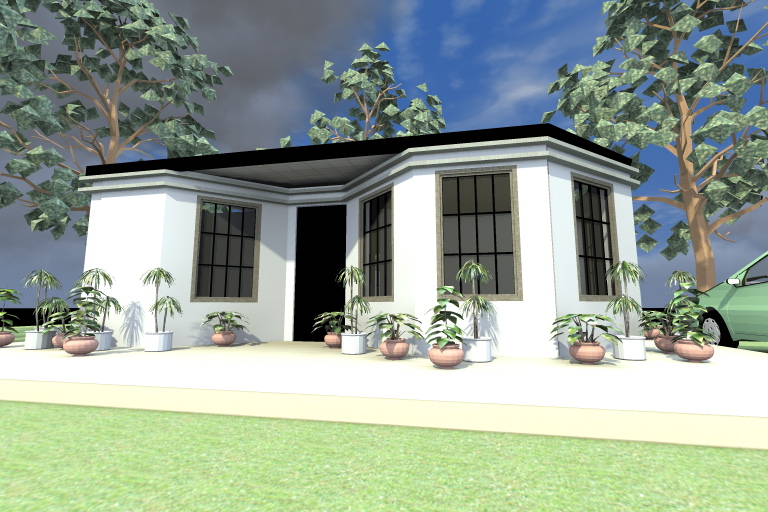
    From HAITI HOUSE FLAT ROOF

    Before design works commence, check with the local Authority Planning department to find out how many levels are allowable for construction.
    For example, areas such as Syokimau are only allowed for 1 single family unit in a 50 x 100 plot. Areas such as Utawala Embakai are allowed for multi family development in 3 levels.

    THE DIAMOND HOUSE PLAN

    From Haiti House Plan
    From Haiti House Plan
    From Haiti House Plan

    Floor Area: 45m2 .
    The units can be for rent or for sale. Most banks in Kenya give up to 85 % financing on units for sale and around 70% financing for rental units.
    The time period to recover the money invested in sale units is shorter, usually 1 year while the time taken to recover the monies in rental units is longer-usually 5 to 10 years.

    DESIGN OF THE UNITS

    On the 2 bedroomed rentals, these are usually smaller [70 sq.m] so as to make them more affordable for rent. If the rental units are bigger, this will cost much more hence to recover the costs, the rents go higher.

    When the rents go higher, the house lacks tenants. Investors who construct units without prior consultation with their architects are more likely to make mistakes such as having rental units of very large floor area for the given location.
    For example, rental units in middle income areas such as Kitengela and Ngong should be in the range of 60 to 70 m2. This makes the construction cost smaller and hence a rent of KES 15,000 can cater for the initial construction cost. Investors who put up larger units for rent, say 100 m2 and above will be forced to increase the rents to recover their costs of construction. The houses will stay vacant for many months and when they get tenants, the tenants will not stay for more than 2 months before they move to a house that charges a lower rent that is the average for the given area. The land – lord will be forced to lower his/her rent while still giving the tenants more house-space than the surrounding neighboring plots. This means it will take them over 30 years to recover their costs which is not viable.

    Likewise, if an investor builds small rental units[50 to 70m2] in high income areas such as Lavington, he/she will not recover their true value since the tenants in such areas require much space and can afford to pay for the extra luxury of having larger rooms.

    COST OF CONSTRUCTION

    Rental units are not built as intricate as sale units. The finishes are moderate so as to reduce costs. Sale units are built to perfection and the materials are more expensive. This is because people are more specific and choosy when it comes to buying houses than renting. If a sale house is built with lower quality materials, average design and average workmanship, the investor risks being stuck with a house that can not be sold or he will be subjected to selling it below market value.
    A sale house should have a very unique design and very keen workmanship so as to fetch good returns to the investor.

    Frank Gichuhi.
    Architect.
    www.a4architect.com

  • HOW TO SUBDIVIDE 1 ACRE OF LAND IN KENYA FOR HOUSING PURPOSES.

    HOW TO SUBDIVIDE 1 ACRE OF LAND IN KENYA FOR HOUSING PURPOSES.
    There are 2 methods to subdivide 1 acre of Land in Kenya.
    Method 1.Surveyor.
    This method you use a land surveyor to subdivide the land into 1/8th acre plots. In most local authorities in Kenya, the minimum plot size is 1/8th acre in size. This method usually brings about 7 parcels of 1/8th acre plots per acre.
    Method 2. Architect
    In this method you use www.a4architect.com to come up with a housing estate scheme and have it approved by the relevant local authorities . Titles are then issued under sectional properties act. This method produces an average of 14 plots per acre.

    Method 1. Surveyor

    Costs:

    Assuming Land is within Thika Municipal Council near Mangu High School Area:

    If survey is Mutation:
    Consulting Land surveyor: KES 14,000 per plot
    Ministry of Lands: KES 1000 per plot.
    Total per plot: 15,000
    Total per acre=KES 105,000

    If Survey is Cadastral[most urban areas]:

    Consulting Physical Planner: 2,000 per plot.
    Municipal Planner 1,000 per plot.
    Lands Officer: 2,000 per plot
    District Surveyor: 1,000 per plot.
    Consultant Surveyor: 40,000 per plot.
    Total per plot:46,000.
    Total per acre[7plots]=KES 322,000.

    Average sales revenue[7plots @ KES 800,000 per plot]=KES 5.6M less KES 322,000[Survey fees] =KES 5,278,000.

    In this method, the land owner hires a Registered Physical Planner and Land Surveyor to come up with a subdivision report to be presented to the relevant Local Authority for approval.
    The report is presented in the council meeting and discussed by the technical commitee. Here, suggestions such as ceeding some land for social ammenities such as schools , plot size ,road size are heard.
    Suggestions such as whether the roads to be murram grade or tarmac are heard.
    The Physical Planner and Land Surveyor will then go back to the drawing board and ammend the subdivision plan to conform to the council suggestions.
    Once the council is satisfied with the subdivision report by the Physical Planner and the Surveyor, the Council Planner issues a letter approving the subdivision of land as per the surveyed plots and sets out conditions that the land owner should meet before the Ministry of Lands issue titles to the plots.
    Such conditions include issues such as infrastructure development[roads, water, storm water drainage, sewer, comunication]. In most cases, the council allows the land owner to be issued with 30% of the title deeds so that he/she can sell them off to finance infrastructure development.
    Once all the conditions for subdivision as stated in the subdivision approval letter are met, the council inspects and issues a letter allowing the Ministry of Lands to issue all the remaining titles.
    The land owner takes the letter to the Ministry of Lands to begin processing individual land title deeds.
    This ensures that no lands in Kenya will be subdivided into smaller plots without infrastructure development such as roads and sewers being put in place by the land owner.
    This is mainly enforced to the letter in subdivisions around Nairobi CBD. Subdivisions further from Nairobi CBD sometimes circumvent this requirement and titles are issued without any infrastructure whatsoever .

    Advantages.
    In this method, the buyers of the 1/8th acre plots can construct what they want so long as it conforms to the local authority requirements.
    Disadvantages.
    The land owner can not subdivide the land into sizes less than 1/8th hence less profits.

    Method 2. Architect.

    Costs:

    Assuming Land is within Thika Municipal Council near Mangu High School Area:

    Architectural Plan Approval fees:First 1000 square feet charged @ KES 1,500. Subsequent 100 square feet are charged at KES 1,000 .
    House floor area: 130m2 =1,300 square feet. Council charges for 1,300 sq.ft =KES 4,500.per unit.
    Public health/Physical Planning fees: KES 10,000
    www.a4architect.com consulting fees per plot= KES 40,000
    Total for 1 plot= KES 54,500.
    Total for 14 plots=KES 763,000

    Average sales revenue[14plots @ KES 800,000 per plot]=KES 11.2M less KES 763,000[Survey fees] =KES 10,437,000 per acre.
    This method earns approximately 100% more revenue sales per acre than the Survey method.

    Check this similar project nearby selling at KES 800,000 per plot.

    http://www.propertyunit.com/detail/1981/

    In this method, the land owner hires a registered architect such as www.a4architect.com to come up with a housing estate design.
    The architect submits the drawing to the local authority planning department [development control section]. Here,the project is subjected to a technical commitee discussion where issues such as space for social ammenities, size of roads , house unit design , building code conformity, sewerage disposal are analysed.
    Any suggestions and recommendations are then relayed upon to the architect for ammendments. Once the architect ammends the design to conform to the council requirements, the council approves the development.
    The architect comes up with sectional titles under the sectional properties act.
    An acre can on average produce 14 units.
    Advantages.
    The land owner can have more plots to sell under sectional title[14 plots] as opposed to certificate of title[7 plots].
    The plot buyers do not have to apply for plan approvals once they buy since this has already been done.
    The plot value rises higher since the area becomes controlled in development since buyers can only build the specified building design with minor amendments.
    Such an example is the estates next to Imara Daima, off Mombasa road whereby once someone buys the plot, they are issued with the architectural plans to guide them on how to build.
    Disadvantages.
    Some plot buyers would like to buy a plot and develop flats or smaller units for rent. In this scenario, its not possible unless some part of the scheme had been pre-designed for highrise buildings.

    Francis Gichuhi
    Architect.
    www.a4architect.com
    +254721410684

  • 5 STEPS TO ACQUIRING YOUR DREAM HOUSE IN KENYA

    5 STEPS TO ACQUIRING YOUR DREAM HOUSE IN KENYA

    1. Acquire your land

    You can check online for available land in your areas of choice anywhere in Kenya here. Common plot sizes in Kenya are 33 feet by 66 feet, 50 feet by 100 feet[1/8th acre], 100 feet by 100 feet[1/4 acre], half acre and 1 acre sizes.
    In some areas the local Authorities have zoned them for only one residential unit per plot. Such areas around Nairobi are Karen, Muthaiga, Runda, Kahawa Sukari, Syokimau along Katani Road and Kitengela Chuna Housing estate.

    2. Choose a House that you like on www.a4architect.com

    Each person has a particular taste and liking for a particular design.
    When choosing a house, select a design that you honestly like. This helps to give the necessary morale, drive and boost through the tedious process of acquiring a house.

    Budget is also very important in selecting the house design. Most Construction finance banks in Kenya,namely Shelter Afrique Bank, KCB SnL, Housing Finance, Coop Bank and Consolidated Bank give between 70% to 90 % of the total cost of construction. You will require to fund the remaining 10 % to 20% of the cost of construction. They usually require you to fund the small bit so as to get you commited and involved in the project so as to ensure that the project commences and moves on smoothly to completion without the house owner loosing interest.

    3. Finance:Construction Loan

    Once you have selected a house design and have secured land, we arrange construction loan documentation[Approved Plans,Land Ownership Document, Personal or Company details, Bills of Quantities, Feasibility study and Business Plan] and introduce you to Construction finance banks of your choice : K.C.B SnL, Housing Finance, Coop Bank or Consolidated bank for financing. If your project value is larger than KES 80 million, we introduce you to Shelter Afrique Bank.

    Shelter Afrique bank has introduced a new product into the market whereby they work on a Joint Venture agreement with the developer/land owner to come up with a housing estate for sale then they share the profits or losses. The project value must be higher than KES 80 million.
    We will arrange for all Local Authority approvals for Architectural design, Structural design and for large housing schemes, infrastructure design[roads, storm water drainage, sewer and water reticulation, street lighting& telecommunication].

    We will also arrange for Bills of Quantities prepared by Registered Quantity Surveyors.

    We also do a feasibility study and Business Plan to establish Project Viability. This is also a requirement for financing by Banks.
    Once we compile all documentation required by Banks for financing, we arrange and facilitate for a meeting between the customer and the bank .

    4. Employ a Building Contractor.

    Peruse the Construction Contract here

    http://www.a4architect.com/2010/04/15/standard-tender-document-for-procurement-of-works-building-and-associated-civil-engineering-worksconstruction-contract/

    and The Construction Contract Agreement here

    http://www.a4architect.com/2009/11/12/sample-construction-contract-agreement/

    and sign.

    We furnish the potential house owners with construction contracts to be signed between them and the selected contractors.
    Throughout the construction process, we facilitate and chair construction site meetings bi-monthly or monthly between the house owner , various consultants and contractor as we track the project step by step. This ensures that all parties involved, namely the house owner and contractor are able to have issues addressed timely and problems amicably arbitrated throughout the construction process using Best Practices.

    5. Construction process supervision to completion.

    Once Bank finances the project, supervision of the works commence untill satisfactory completion. Satisfactory completion of a construction project is determined once the house owner is satisfied with the works carried out by the contractor and reported as such in the site meeting chaired by www.a4architect.com. www.a4architect.com then releases a Completion certificate to the contractor marking the end of the construction to the satisfaction of the house owner. This document is also forwarded to the Local Authority for application of an occupation certificate to show that the house is complete and ready for human habitation as described in the Kenyan Laws[Building Code].

    Francis Gichuhi
    Architect.
    www.a4architect.com

  • JOINT VENTURE AGREEMENT-CONSTRUCTION PROJECT

    JOINT VENTURE AGREEMENT

    THIS JOINT VENTURE AGREEMENT (“Agreement”), made and entered into as of this _____ day of _____, 20___, by and between __________of __________ (“_”) and __________ of __________ (“_”).

    ARTICLE I GENERAL PROVISIONS

    1.01 Business Purpose. The business of the Joint Venture shall be as follows: [Construction of Residential Units for Sale]

    1.02 Term of the Agreement. This Joint Venture shall commence on the date first above written and shall continue in existence until terminated, liquidated, or dissolved by law or as hereinafter provided.

    ARTICLE II GENERAL DEFINITIONS

    The following comprise the general definitions of terms utilized in this Agreement:

    2.01 Affiliate. An Affiliate of an entity is a person that, directly or indirectly through one or more intermediaries, controls, is controlled by or is under common control of such entity.

    2.02 Capital Contribution(s). The capital contribution to the Joint Venture actually made by the parties, including property, cash and any additional capital contributions made.

    2.03 Profits and Losses. Any income or loss of the Partnership for federal income tax purposes determined by the Partnership’s fiscal year, including, without limitation, each item of Partnership income, gain, loss or deduction.

    ARTICLE III OBLIGATIONS OF THE JOINT VENTURERS

    __________ is responsible for all operations and decisions of the Joint Venture and will be compensated for providing various services.

    ARTICLE IV ALLOCATIONS

    4.01 Profits and Losses. Commencing on the date hereof and ending on the termination of the business of the Joint Venture, all profits, losses and other allocations to the Joint Venture shall be allocated as follows at the conclusion of each fiscal year: __________ _____% __________ _____%

    ARTICLE V RIGHTS AND DUTIES OF THE JOINT VENTURERS

    5.01 Business of the Joint Venture. __________ shall have full,exclusive and complete authority and discretion in the management and control of the business of the Joint Venture for the purposes herein stated and shall make all decisions affecting the business of the Joint Venture. At such, any action taken shall constitute the act of, and serve to bind, the Joint Venture. __________ shall manage and control the affairs of the Joint Venture to the best of its ability and shall use its best efforts to carry out the business of the Joint Venture. __________ shall not participate in or have any control over the Joint Venture business nor shall it have any authority or right to act for or bind the Joint Venture.

    ARTICLE VI AGREEMENTS WITH THIRD PARTIES AND WITH AFFILIATES OF THE JOINT VENTURERS

    6.01 Validity of Transactions. Affiliates of the parties to this Agreement maybe engaged to perform services for the Joint Venture. The validity of any transaction, agreement or payment involving the Joint Venture and any Affiliates of the parties to this Agreement otherwise permitted by the terms of this Agreement shall not be affected by reason of the relationship between them and such Affiliates or the approval of said transactions, agreement or payment.

    6.02 Other Business of the Parties to this Agreement. The parties to this Agreement and their respective Affiliates may have interests in businesses other than the Joint Venture business. The Joint Venture shall not have theright to the income or proceeds derived from such other business interests and, even if they are competitive with the Partnership business, such business interests shall not be deemed wrongful or improper.

    ARTICLE VII PAYMENT OF EXPENSES

    All expenses of the Joint Venture shall be paid by _____ and shall be reimbursed by the Joint Venture.

    ARTICLE VIII INDEMNIFICATION OF THE JOINT VENTURERS

    The parties to this Agreement shall have no liability to the other for any loss suffered which arises out of any action or inaction if, in good faith, it is determined that such course of conduct was in the best interests of the Joint Venture and such course of conduct did not constitute negligence or misconduct. The parties to this Agreement shall each be indemnified by the other against losses, judgments, liabilities, expenses and amounts paid in settlement of any claims sustained by it in connection with the Joint Venture.

    ARTICLE IX DISSOLUTION

    9.01 Events of the Joint Venturers. The Joint Venture shall be dissolved upon the happening of any of the following events: (a) The adjudication of bankruptcy, filing of a petition pursuant to a Chapter of the Bankruptcy Act, withdrawal, removal or insolvency of either of the parties. (b) The sale or other disposition, not including an exchange of all, or substantially all, of the Joint Venture assets. (C) Mutual agreement of the parties.

    ARTICLE X MISCELLANEOUS PROVISIONS

    10.01 Books and Records. The Joint Venture shall keep adequate books and records at its place of business, setting forth a true and accurate account of all business transactions arising out of and in connection with the conduct of the Joint Venture.

    10.02 Validity. In the event that any provision of this Agreement shall beheld to be invalid, the same shall not affect in any respect whatsoever the validity of the remainder of this Agreement.

    10.03 Integrated Agreement. This Agreement constitutes the entire understanding and agreement among the parties hereto with respect to the subject matter hereof, and there are no agreements, understandings, restrictions or warranties among the parties other than those set forth herein provided for.

    10.04 Headings. The headings, titles and subtitles used in this Agreement are for ease of reference only and shall not control or affect the meaning or construction of any provision hereof.

    10.05 Notices. Except as may be otherwise specifically provided in this Agreement, all notices required or permitted hereunder shall be in writing and shall be deemed to be delivered when deposited in the Republic of Kenya mail,postage prepaid, certified or registered mail, return receipt requested,addressed to the parties at their respective addresses set forth in this Agreement or at such other addresses as may be subsequently specified by written notice.

    10.06 Applicable Law and Venue. This Agreement shall be construed and enforced under the laws of the State of __________.

    10.07 Other Instruments. The parties hereto covenant and agree that they will execute each such other and further instruments and documents as are or may become reasonably necessary or convenient to effectuate and carry out the purposes of this Agreement.

    IN WITNESS WHEREOF, the parties hereto have executed this Agreement as of the day and year first above written.

    Signed, sealed and delivered in the presence of:
    __________ __________
    __________ __________
    __________ __________

  • GREENVILLE ESTATE NAIROBI- SUPERIOR BUILDING FINISHES

    GREENVILLE ESTATE NAIROBI- SUPERIOR BUILDING FINISHES

    Greenville estate located in Nairobi boasts of superior building finishes.
    These finishes have been carefully selected by the Architects to ensure that they offer the best performance and value to home owners.

    [youtube http://www.youtube.com/watch?v=AiVTDqYX4Xk&fs=1&hl=en_US&rel=0]

    EXTERNAL WALLING.

    The front wall of Greenville Estate next to the external parking has hand-dressed masonry stone wall finished to a smooth texture.
    The masonry walling on the first 3 stone courses from the ground floor is bush-dressed. This gives a unique pattern and also helps to prevent dust from making visible stains at the external wall bottom. This assists in making it easier to help maintain a clean external walling appearance hence lowering the cost of cleaning and maintaining the wall.

    The upper part [after the first three courses] has smooth-dressed masonry walling. The stones have been carefully selected and stone color chosen-only the blue-gray stone has been used for this.

    This stone is very hard hence offering a very long lasting walling that is completely water-proof. The stone also has a color and texture that is very appealing to the eye.
    A small masonry extrusion at the end of each unit serves to demarcate each individual maisonette boundary and also increases the aesthetics by making the wall more interesting as opposed to being simple and plain.

    BALCONY RAILINGS.

    The Greenville balcony railings have been specially designed with a combination of normal steel balustrade railing and 150mm wide wooden planks.

    The planks are painted dark-green. These give Greenville estate a unique character. The steel railings prevent small children from falling off the balcony since they are spaced close to each other.

    WINDOWS.

    The windows have a 150mm wide plastered frame so as to articulate the window openings thereby resulting with a unique appearance exclusive to Greenville Estate only. This fame is painted the same color with the roof.

    CAR PARK AREA, DRIVEWAYS AND WALKWAYS.

    The external car park area, driveways and walkways have a machine-cut masonry stone finish. The 200mm thick machine – cut stone walling offers more strength than cabbro road works. This can support even the heaviest of Lorries without cracking hence will require no maintenance in the long run.
    The stone paving also enhances the beauty of the estate since it gives out a natural feeling.

    The parking space under each individual house has the masonry paving along the two car tracks.
    This frees most of the ground floor surface so that greenery and natural ground is maintained.

    Floor finishes.
    The floor finishes are made of patterned high quality ceramic tiles with each room having its own unique pattern and color.

    ROOF.

    The roof material is natural clay roof tiling. This tiling has no added color thereby making it very safe for the rain water surface runoff to be harvested for consumption.
    The clay roof tiles also long lasting and become more aesthetically appealing with age therefore the more the house grows old, the more beautiful it becomes.
    The roof for each maisonette has been separated to as to demarcate the boundaries of house ownership. This enables the house owner to know their boundaries when fixing roof aerials or repairing .

    CONCLUSION

    Greenville Estate finishing materials have been carefully chosen to offer the building owners the best performance over time. These materials will require little or no maintenance hence saving on periodic costly regular building maintenance costs.

    These materials also increase the value of the Greenville Estate home since they enhance the aesthetics, save on maintenance costs and offer convenience such as safe rain water harvesting among other factors.

    Francis Gichuhi Kamau.
    Architect.
    www.a4architect.com

  • GREENVILLE ESTATE NAIROBI- PERFECT HOME AND OFFICE

    GREENVILLE ESTATE NAIROBI- PERFECT HOME AND OFFICE

    Greenville estate offers practical 3 bedroom residential maisonette units at an affordable price.

    [youtube http://www.youtube.com/watch?v=AiVTDqYX4Xk&fs=1&hl=en_US&rel=0]

    Advantages include:

    1. Abilitiy to separate the 3 bed roomed maisonettes into two different 1 bedroomed units each with its own external entrance. This helps incase the owner would like to re-sell or rent a part of his house. This also offers flexibility to the owner in case they want to use part of their residence as an office.

    2. Landscaped 24 hour irrigated gardens.
    3. 2 No. Car parking spaces per house.
    4. Secure community with electric fencing.

    HOME OFFICE

    The Greenville estate unit design enables people who might require home offices to operate at ease with their offices within their residential quarters.
    With the current never-ending rise in fuel costs and traffic jams, home offices are becoming part of the norm especially in the developing world.

    The Greenville Estate home owner can use the first floor living room, kitchen and bedroom as a 1 bed roomed unit and use the second floor master bedroom as the office.
    The other second floor bedroom can either be used as an extension to the office or as a second bedroom depending on the owner’s space needs requirements.
    Visitors to the office can be directed to the second floor where they do not have to come in contact with the first floor living room area.

    SAVING THE ENVIRONMENT

    Use of home offices apart from saving on transport and office rental costs will also save the environment on the carbon that could have been released into the atmosphere if the home owner had travelled to a town office.
    This helps make the world a little bit more ‘Green’.

    INCREASED PRODUCTIVITY

    Home offices also offer convenience and flexibility to the home owner in that he or she can work odd hours such as very late within the comfort of their home.

    This unique design conceptualized by the architectural firm of www.a4architect.com will go a long way in making the Greenville Estate home owner more comfortable in their work environment which in turn will lead to higher productivity levels.

    CONCLUSION

    The advantages of working from home are numerous such as flexible time schedules including very late at night, extra time to spend on families, savings on office rent , transport and meals costs.

    Another great advantage of working from home is that you give your customers a perceived sense of security in that they are sure to find you at the same location next time they visit hence higher trust levels as opposed to customers who visit offices in tow office setups.

    The Greenville Estate maisonette has been designed to facilitate such a home office whereby visitors to the office are separated from the visitors to the living room area completely with each having a separate external entry point.

    The home office advantages should go a long way in increasing the home owner’s productivity levels hence a great investment in the long run.

    Francis Gichuhi Kamau

    Architect

    www.a4architect.com

    +254721410684

  • THE GREENVILLE HOUSE PLAN: 3 BEDROOMED MAISONETTE THAT CAN BE EASILY CONVERTED TO 2 SEPARATE 1 BEDROOMED UNITS.

    THE GREENVILLE HOUSE PLAN:
    3 BEDROOMED MAISONETTE THAT CAN BE EASILY CONVERTED TO 2 SEPARATE 1 BEDROOMED UNITS.

    [youtube http://www.youtube.com/watch?v=AiVTDqYX4Xk&fs=1&hl=en_US&rel=0]
    The Greenville house plan has been designed by the firm of www.a4architect.com.

    The typical unit comprises of a 3 bedroom maisonette with ground floor housing the parking, first floor housing the lounge, kitchen and one bedroom and the second floor housing two ensuite bedrooms.
    This unit has been specially designed such that the first floor lounge, kitchen and bedroom can be converted to a separate one-bed roomed unit and the second floor ensuite bedrooms can be converted into a separate one-bed roomed unit whereby the master bedroom becomes the lounge, the master bathroom becomes the kitchen and the other bedroom remains the same.
    This unique ability to easily convert the 3 bed roomed maisonette into two separate 1 bed roomed units has several advantages.

    http://picasaweb.google.com/s/c/bin/slideshow.swf
    RE-SELL

    High-Return Investment Plan.

    The owner of the Greenville 3 bed roomed maisonette unit can easily re-sell the unit as two separate 1 bed roomed units in future. Property as an asset increases in value. Therefore, over time, the property value of the bulding wll have increased and the owner may want to capitalize on this. The owner can decide to either sell off one or both units or live in one unit and sell the other depending on their specific needs and requirements. This re-sell after the value of the property goes up makes alot of business sense to the owner .It is therefore a very solid investment plan for property speculators.

    Urgent Financial requirement solutions.

    The ability to re-sell a part of the house should give the Greenville house owner a great sense of financial security in case an urgent need for money comes up. Such occasions can be caused by many factors that are beyond human control such as sudden unprecedented medical costs after an accident.

    COLLATERAL FOR LOANS

    The Greenville house plan also comes in handy when the owner of the 3 bed roomed maisonette requires collateral for a bank loan. The ability to hold two title deeds for each one bed roomed house within the maisonette assists the home owner greatly in that they can easily use the title to secure a loan from a bank without risk of losing a basic human need: shelter.

    We all have heard of harrowing tales on how some home owners have been kicked out of their houses after auctioneers have been called in after home owners have defaulted on bank loans.

    All these house owners initially borrow the money thinking that they will be able to comfortably repay it back but the eventuality is different. With the Grenville house plan, owners of the 3 bed roomed maisonette can rest assured that incase the unfortunate loan default happens, they can only loose half their house since they can use the one-bedroom house title as collateral and continue enjoying the un-encumbered title for the remaining one-bed roomed unit.

    RENTAL INCOME

    The Greenville house plan is useful in enabling the maisonette owner to rent out a one-bedroom unit as they continue to live in the other one –bed roomed unit.
    The rent can be used to offset the monthly mortgage repayments or to subsidize on the daily living expenses.

    MAXIMUM SPACE UTILISATION AFTER CHANGE IN FAMILY UNIT SIZE

    Family unit sizes are dynamic in that they change over time. Currently, urban family sizes are becoming smaller with an average of two to three kids per family. The large five to seven average number of kids per urban family that was very common years ago is now slowly becoming extinct.

    The basic unit starts with a single man or woman .The size increases as a spouse moves in with the other to make it two people. At this stage, a 1 bed roomed house is enough to cater for the space needs. Later on, kids are born into the family and this also attracts house helps hence the need for more than two bedrooms.
    The kids grow and move out of the house at a later stage. The need for house-helps decreases. The family unit decreases in size and the family can now comfortably live in a one-bed roomed house.

    The Greenville house plan assists the owner to make maximum use of space that they are not using. For example, when the family unit decreases after the kids have moved out, the home owners can easily sell off or rent the extra space created. This extra space becomes useful and adds to the financial kitty for the family.

    CONCLUSION

    The Greenville house plan designed by www.a4architect.com will enable many a Kenyan family obtain value from their home in terms of less risky collateral, added rental income and high-return investment after re-sell. The classic story of a family unit being evicted by auctioneers after using the home as collateral for a bank loan will hopefully be a thing for the past.
    The Greenville house plan addresses these issues whereby the home owner can go home and rest assured [pun intended] that their investment is safe.

    Francis Gichuhi Kamau B.Arch. U.o.N M.A.A.K[A]
    Registered Architect.
    www.a4architect.com

  • EXTERIOR WALL FINISHES FOR TALL BUILDINGS

    EXTERIOR WALL FINISHES FOR TALL BUILDINGS

    Exterior wall finishes for tall buildings are a very important part of the building. They are responsible for giving the building its uniqueness among other factors such as shape.
    They are also very critical in determining the building safety in times of disasters such as earthquakes.
    For example, the 1989 Loma Prieta earthquake in San Francisco, U.S.A where 5 people were killed when the brick facade collapsed on the side walk.
    In Kenya, we have witnessed the collapse of the Sunbeam Supermarket canopy in 1996 resulting to several deaths.
    During a conference on building structures held at Grand Regency hotel, Nairobi in the year 2006, the current Permanent Secretary in the Ministry of Roads, Engineer M.S.M Kamau gave a speech on the role of Structural Engineering in Buildings. He noted that most people assumed that the role of Structural Engineers in Buildings was only limited to the building frame and structure which should not be the case. He said that Structural Engineers have a role to play until final completion of buildings including finishes and gave an example of external wall finishes. He explained that to the layman, external wall finishes such as wall tiles look simple to fix but to the structural engineer, they mean that their self-weight should be taken into consideration and the mechanism of holding the tiles to place carefully structurally analyzed to ensure that they do not fall on passersby below and cause injuries.
    He explained that a single tile could be weighing up to 5 kgs of which if not fastened to the wall adequately using the required strength, this could cause serious injuries to passersby below.

    From NAIROBI CBD BUILDINGS

    The tiles above are quite heavy and if not structurally designed by a qualified structural engineer to hold in place, can fall on an unsuspecting pedestrian below.

    CERAMIC TILES.

    Ceramic tiles of various sizes are used to clad the exterior of tall buildings.
    As stated above, it’s important that all building industry consultants including structural engineers get involved in the decision to use ceramic tiles on the exterior walls.
    Large tiles which are heavier require care infixing to avoid them falling down and casing injuries.
    The most used adhesive in Kenya that sticks these tiles to the walls is cement slurry-regularly termed as ‘wet-set’.
    Other adhesives are available such as ‘thin-set’. This is a mixture of cement, sand and a chemical called methylcellulose. Methylcellulose holds water allowing the tile to be laid dry.
    Organic adhesives.
    These are manufactured by Construction chemical manufactures, mostly paint manufacturers and come in pails. These are pre-mixed and come with manufacturer’s instructions on use.

    From NAIROBI CBD BUILDINGS

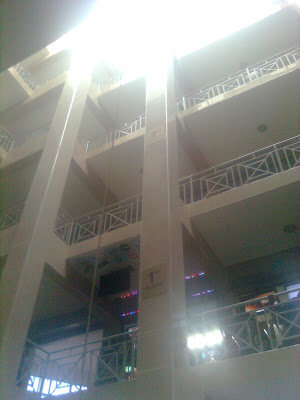
    This building above, which used to be the famous Luthuli Fish and Chips and currently a shopping mall, has ceramic tiles wall finishes in the lobby area.
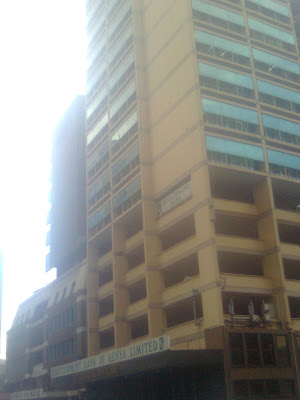
    This building below-Corner House, considered to be the mid-point / centre of Nairobi CBD in Valuation profession circles also has ceramic tile exterior wall finishes.

    From NAIROBI CBD BUILDINGS

    The ceramic tiles are the small type. This type poses a minimum risk in injury if a tile falls off since the tile is small and light-weight. This is also easy to repair since only a small portion of tile can fall off at a time compared to a wide sized tile.

    GRANITE AND MARBLE TILES

    These are quite expensive compared to ceramic tiles. The advantage is in the aesthetics. Granite and Marble looks very appealing to the eye. Granite and Marble tiles also require little or no maintenance since these are naturally occurring.

    From NAIROBI CBD BUILDINGS
    From NAIROBI CBD BUILDINGS

    The building above, located along Kenyatta Avenue has Granite tile wall cladding.
    The main difference between Granite and Marble is the appearance. Granite is mostly gray in color and contains tiny specs and dots due to its igneous formation when hot lava cools off.
    Marble appears in several colors and shades with colored streaks showing the sediments in the initial rock formation.

    PAINT ON CEMENT SCREED PLASTER

    From NAIROBI CBD BUILDINGS

    This method is relatively lower in cost compared to Ceramic, Granite and Marble tiling.
    A good example is the KENCOM building along Moi Avenue.
    This method requires minimal maintenance, only the periodic painting. Painting on such surfaces requires specialized expertise in terms of supporting structures for the painters to stand on.
    The advantage is that its easy for the building owner to easily change the color in case of rebranding as opposed to tile finishes.

    From NAIROBI CBD BUILDINGS

    COLOURED TEXTURED CEMENT PLASTER

    From NAIROBI CBD BUILDINGS

    This type of wall finish makes it easy to have a combination of colors and textures on a facade.
    A good example is the Emperor Plaza building along Koinange Street.
    Its quite costly compared to paint on cement plaster and ceramic tiles.

    From NAIROBI CBD BUILDINGS

    Textured cement comes in various textures.
    Some paint manufacturers also offer a similar type of rough textured exterior paint.

    PATTERNED REINFORCED CONCRETE

    From NAIROBI CBD BUILDINGS

    This type of exterior finish gives a unique appearance.
    Such an example is K.I.C.C. Building and the Hilton hotel.
    The ballast component in the reinforced concrete is carefully selected to the right size so as to leave the ballast-dotted outward finish.

    HAND-DRESSED MASONRY WALLING

    From NAIROBI CBD BUILDINGS

    This type of finish is common in the buildings constructed in the early 1900s.
    Currently, very few new buildings have this type of finish. This is because hand-dressing masonry stone takes alot of time and hence expensive in terms of labour costs. Most of these buildings were built during the colonial period whereby labour was virtually free since the colonies could have the natives work at little or no pay.

    This type of finish is long lasting as can be attested by Kipande House, which has stood the test of the test of time.
    Currently, there is availability of polished natural stone tiles in the market such as the tiles on the walls of the former U.S.A Embassy at Moi Avenue.

    BRICK CLADDING

    From NAIROBI CBD BUILDINGS

    This type of finish is very long lasting, requires little or no maintenance and very cost =effective.
    Such an example is the Stanbic Bank House along Kenyatta Avenue.
    This type of finish gives the building a unique and natural feel.

    GLASS

    From NAIROBI CBD BUILDINGS

    Glass facades make a building look modern. This type of all finish is cost-effective in that it acts as a building element [wall] and at the same time acts as the wall finish.
    Disadvantage is mainly due to letting in heat and glare from the sun. This problem is usually solved by using a tinted toughened thick glass and adding window film to its surface.

    CONCLUSION

    There are many types of wall finishes for tall buildings available in the market locally and internationally. It’s up to the owner of the building to liaise with their Architect ,Structural Engineer, Quantity Surveyor and other relevant professionals in their Building Design team to choose the most appropriate wall finish.

    Francis Gichuhi Kamau
    Architect.
    www.a4architect.com

  • How to Demolish a Building after a Disaster-Earthquake.

    How to Demolish a Building after a Disaster-Earthquake.
    [youtube http://www.youtube.com/watch?v=UUg2hBIU4vo&fs=1&hl=en_US&rel=0]
    Building demolition has become common now that cases of building collapse due to natural causes such as earthquakes and man-made causes such as poor workmanship are beginning to show up more commonly. Recently in Kenya, two high-rise buildings collapsed in Kiambu town .
    Also, Haiti and Chile have recently been hit by a severe earthquake.

    Lack of Enforcement of the Building Code by the Local Authorities in provision for earthquake design factors in Haiti-2010[7.0 on the Richter scale] and China-Sichuan-2008[7.9 on the Richter scale] is largely blamed for the disasters since earthquakes do not kill people…only badly designed buildings do.

    These earthquakes which killed over 100,000 peole when compared to the Loma Prieta earthquake that struck the San Francisco bay area of California in 1989 with a magnitude of 7.1 on the Richter scale[higher than the recent Haiti earthquake-7.0 on the Richter scale], you will notice that only 59 people died as a direct result of the 1989 Loma Prieta earthquake San Francisco earthquake.

    From earthquake pics

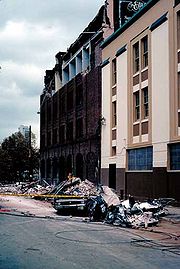
    Five people were killed on Bluxome Street near Fifth Street and Townsend in San Francisco as a brick facade collapsed onto the sidewalk and street.[You will notice that fatalities were caused by flying debris such as brick facades as opposed to people getting trapped in collapsed buildings as in the Haiti situation.

    This is mainly due to the stringent enforcement of the Building Code in U.S.A as opposed to Haiti where the Building Code is not as effectively enforced.

    From earthquake pics

    China Sichuan Earthquake-2008

    A well-designed building with a good earthquake Load Factor will withstand any typical earthquake without fatalities.
    The earthquake loading factor should be high in areas which are seismically unstable and it’s the duty of the Government through the relevant Local Authority to ensure that these Building Codes are followed. For example, the earthquake Load Factor for Nakuru which is in the Rift Valley should be higher than in Nairobi.

    Demolition Method.

    In such cases whereby people are still trapped in the buildings, careful choice of demolition method is important so as not to injure trapped people.

    In the Haiti earthquake, only around 70 people have been rescued alive so far and more than 100,000 dead. These figures show that a quick response to freeing trapped people from the collapsed buildings can go a very long way to save lives.
    The method chosen should be very fast to implement, low-cost and should not require specialized labour.

    1.Pneumatic and Hydraulic Breakers

    These are suitable for demolishing pavements, roads and reinforced concrete slabs.
    They can be mounted on the back-hoe Excavator or hand held.
    Factors such as the size of the hammer and strength of the reinforced concrete will determine how fast the demolition work will be performed.
    The main disadvantage of this method is that it requires specialized machinery,skilled labour and it generates noise, dust and vibrations.

    2. Pressure Bursting: Mechanical Bursting and Chemical Bursting

    Pressure Bursting has two categories: Mechanical Bursting and Chemical bursting.
    Mechanical Bursting:

    From earthquake pics

    mechanical bursting of concrete slab

    In this method, a splitting machine operating on hydraulic pressure is inserted in a hole inside the concrete slab and forces the slab open to crack it.

    Chemical Bursting.

    In this method, a crack agent is mixed with cold water to form a slurry mortar which is poured into a pre-drilled hole inside the concrete. It reacts chemically [hydration] and starts to swell, exerting pressure of more than 500kg/cm2 which is far much stronger than the concrete’s tensile strength.

    From earthquake pics

    holes drilled on concrete ready for chemical bursting

    The holes are drilled along the desired cracking line. The holes are usually around 2 cm wide and around 10 to 20 cm apart. This pressure cracks the concrete after a certain period of time-usually between 6 hours to 24 hours.

    The cracking time is dependent on the ratio of the chemical to the added water and by the temperature of the surrounding area. The higher the dose and temperature, the faster the cracking.

    The advantage of this method is that it does not require machinery, skilled labour and does not create noise and dust.
    The disadvantage is that there is risk of blow-out explosion from the holes within the first 3 hours as the chemical reacts if the chemical is the explosive type such as CRACK-AG.

    Other non-explosive agents such as BETONAMIT CHEMICAL BURSTING will work without the risk of an explosion.
    In earthquake situations such as in Port-au-Prince, Haiti, or in the Kiambu disaster in Kenya, this method would be very effective since in both situations, the financial ability to mobilize heavy machinery is not high due to their being in 3rd world economies.

    3. Dismantling

    This is done by slicing concrete elements and then removing them with the excavator or crane. This method is good for demolishing part of a building since it does not structurally affect the remaining structure.

    From earthquake pics

    concrete slab being broken piece by piece usng the ‘crunching’ method

    By cutting concrete elements, and then removing them by crane, the demolition of an entire concrete structure may be carried out with a minimum of noise, dust, and impact on surrounding structures.

    Frank Gichuhi
    Architect.
    www.a4architect.com
    +254721410684

    Read more: http://www.articlesbase.com/construction-articles/how-to-demolish-a-building-after-a-disasterearthquake-1765067.html#ixzz14I5g1Y9p
    Under Creative Commons License: Attribution

  • HOW TO ESTABLISH YOUR PLOT BOUNDARIES. THE MLOLONGO CHAIN SAW MASSACRE-

    HOW TO ESTABLISH YOUR PLOT BOUNDARIES.

    THE MLOLONGO CHAIN SAW MASSACRE-
    Actors:
    Main Actor: Mlolongo town building owners
    Other Actors:
    Ministry of Lands.
    Ministry of Roads.
    Location: Mlolongo town.

    From Drop Box

    Mlolongo town is located along Mombasa road, 15 minutes drive form Nairobi CBD.
    The town’s buildings were ‘chain sawed’ and sliced to remove the parts that had encroached into the main Mombasa road road-reserve.
    To avoid such a scenario on your plot, it’s important to understand how plot boundaries are created and the processes to be followed before constructing your building.

    REGISTERED PHYSICAL PLANNER

    The procedure begins with the original land owner who consults a Physical Planner to come up with a sub-division plan.
    The Physical Planner comes up with a plan on how the large piece of land will be sub-divided into smaller plots. The subdivision plan is then submitted to the relevant Local Authority for deliberations by the Town Planning department. The local authorities have bye-laws that regulate the plot sizes. For example, land in Karen and Muthaiga areas can be subdivided to a minimum of 0.5 acre size while land in Eastlands area can be subdivided to a minimum of 1/8th of an acre.
    These bye-laws regulate the zoned areas so as to maintain certain required atmospheres within specific neighborhoods.
    After the Local Authority planning department reviews the subdivisions, they may request the land owner through his appointed Physical Planner to make ammmendments such as increasing the plot size, increasing the road and road reserve sizes.
    The common road sizes [road carriageway plus road reserve] are 9m, 12m, 15m, 18m 25m and 30m depending on the opinion of the Physical Planner and Local Authority town planning department.

    For example, if the traffic envisaged is high, the Local Authority might request the Physical Planer to expand the road reserve.
    The land acquisition act allows the Government to compulsorily acquire land for expansion of roads and compensate the land owner at an agreed amount as per the act. This is happening on the Thika road expansion whereby the owners of plots that have been affected have been handsomely compensated for the expansion.
    The Local Authority have a duty to make this wise decision on whether to allow for future expansion of the road in the initial subdivision application or let the Land Acquisition Act take action in future when the expansion will be needed.

    6 METER BUILDING LINE SETBACK

    The local authority enforces a bye law that requires plot owners to set-back their buildings six meters form the main access road. The 6 meter line setback also aims to allow for such infrastructure expansions. This is enforced during the application for building plans approval by the plot owner through a registered Architect.

    INFRASTRUCTURE

    Once the Physical Planner makes the required changes and resubmits the subdivision plans, the Local authority approves the subdivision plans and instructs the Land owner to develop the infrastructure within the subdivided area to a certain standard. The infrastructure includes the road works, water works, storm water drainage works and Street lighting.
    The Land owner is required to undertake the infrastructure works to the satisfaction of the Local Authority. The Local Authority can then give the Ministry of Lands a go-ahead to issue land title deeds to individual subdivided plots.
    The Bye Law established in 1978 aims to ensure that as the Country grows and more plots get subdivided into smaller units, the infrastructure such as roads, sewer, water, street lights and storm water drainage grows in tandem. The cost of the infrastructure works is pushed to the Land owner as opposed to the Local Authority. Once the Land owner completes the infrastructure works, the Local Authority takes over to maintain the works with tax payers money.

    OTHER COUNTRIES

    Other countries that don’t have such laws do not benefit from infrastructure growth that is in tandem with population growth. In such countries, you will notice that land outside the CBD is poorly serviced, no quality roads, poor sewerage network, no street lights e.t.c.
    Examples of such towns are Lusaka in Zambia and Kampala in Uganda.
    If this law is followed to the letter by all Local Authorities in Kenya, we will not have plots being sold without the necessary services such as roads, sewers and street lights. Since some local authorities flaunt such laws, this is the reason we have some city suburbs that do not have any infrastructure at all.

    LAND SURVEYORS

    After the Local authority approves the subdivision plan, the land owner then utilizes the services of a registered Land surveyor to mark the individual plot boundaries with a beacon consisting of a short steel rod encased in concrete.
    The surveyed plans are then submitted to the Ministry of Lands for record keeping.
    After the local authority certifies that the infrastructure is in place to the required standard, the Ministry of Land issues title deeds to each plot which the land owner can then transfer to potential buyers.

    PLAN APPROVALS

    Once the land owner transfers the new sub divided title deed to the new owner, it’s his/her prerogative to ensure that when developing the plot, he/she requests the architect to liaise with a surveyor to establish the extents of the plot boundaries. The surveyor will check with the Ministry of Lands records at Survey of Kenya offices, Thika road.
    The surveyor will buy a copy of the subdivision plan and use it to establish the boundaries. He/she will look for an existing beacon and use it as a datum to measure and countercheck the exact location as per the records held by the Ministry of Lands.

    Once a Registered surveyor has established the boundaries for the plot, the developer can then request the architect to come up, with architectural designs which will be submitted to the Local authority for approval.
    The Local Authority will then guide on the set-back and building line from the main access road.
    Once the drawings are approved, the plot owner can then commence construction works and rest assured that the building will not be ‘chain sawed’ in future.

    LAND ACQUISITION ACT

    In the event that the Government requires to expand its roads, the plot owner will then be compensated as per the ‘Land Acquisition Act’.
    Buildings along Thika and Mombasa roads that were not in line with the necessary statutory approvals such as Mlolongo town and Nakumatt Thika Road had to be pulled down at owners’ costs without compensation. Likewise, building owners that had all statutory approvals along these roads were handsomely compensated.

    Francis Gichuhi Kamau
    Architect
    www.a4architect.com