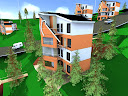
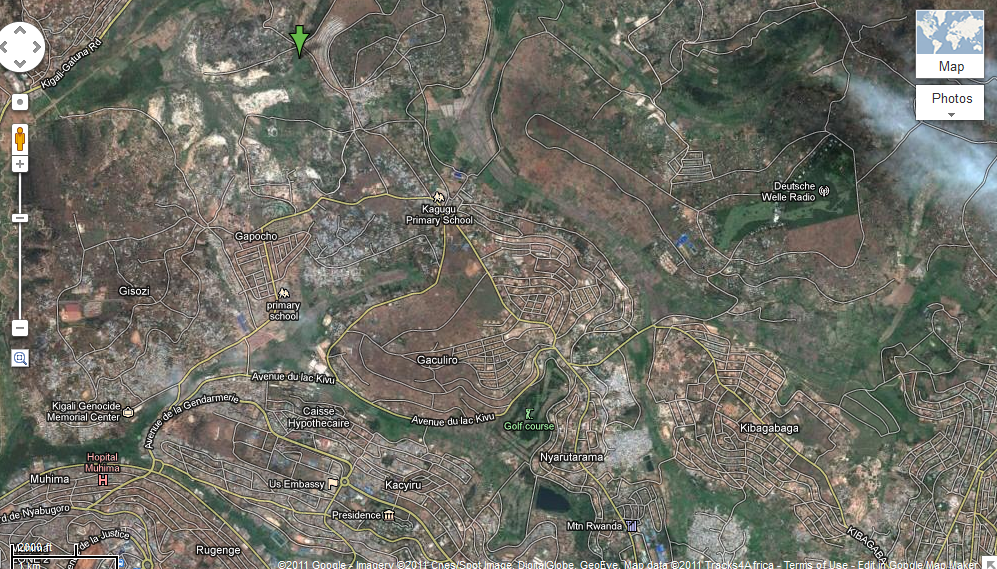
Kigali Batsinda Estate is located in the outskirts of Kigali City, Rwanda.
Its financed through a Joint Venture between Kigali Batsinda Estate and Phatisa, a fund management corporation that manages Shelter Afrique’s Pan African Housing funds.
http://www.shelterafrique.org/index.php/pan-african-housing-fund-ends-year-with-first-close-at-us-41-5-million/
We have documented how a huge construction project starts from the very simplest idea and develops into a Mega structure years later. Check Part 1,2 and 3 here.
Part 1.
See Part 1 here https://www.a4architect.com/2016/02/kigali-batsinda-estate-the-making-of-a-joint-venture-project-in-rwanda/
Part 2.
See Part 2 here https://www.a4architect.com/2016/02/kigali-batsinda-estate-the-making-of-a-joint-venture-project-in-rwanda-part-2/
Part 3.
See Part 3 here https://www.a4architect.com/2016/03/kigali-batsinda-estate-the-making-of-a-joint-venture-project-in-rwanda-part-3/
Part 4.
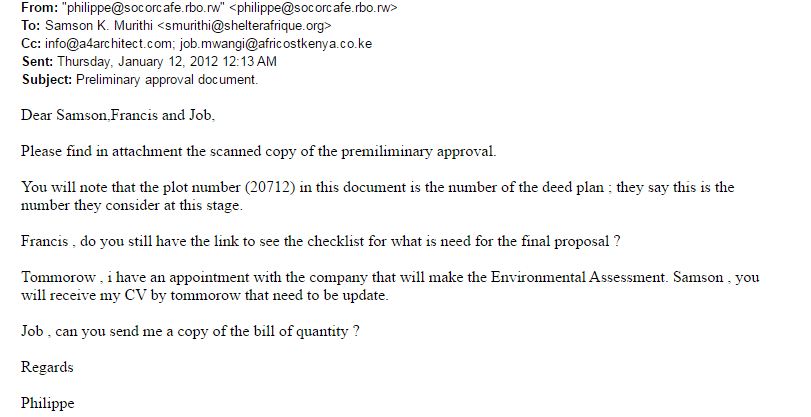
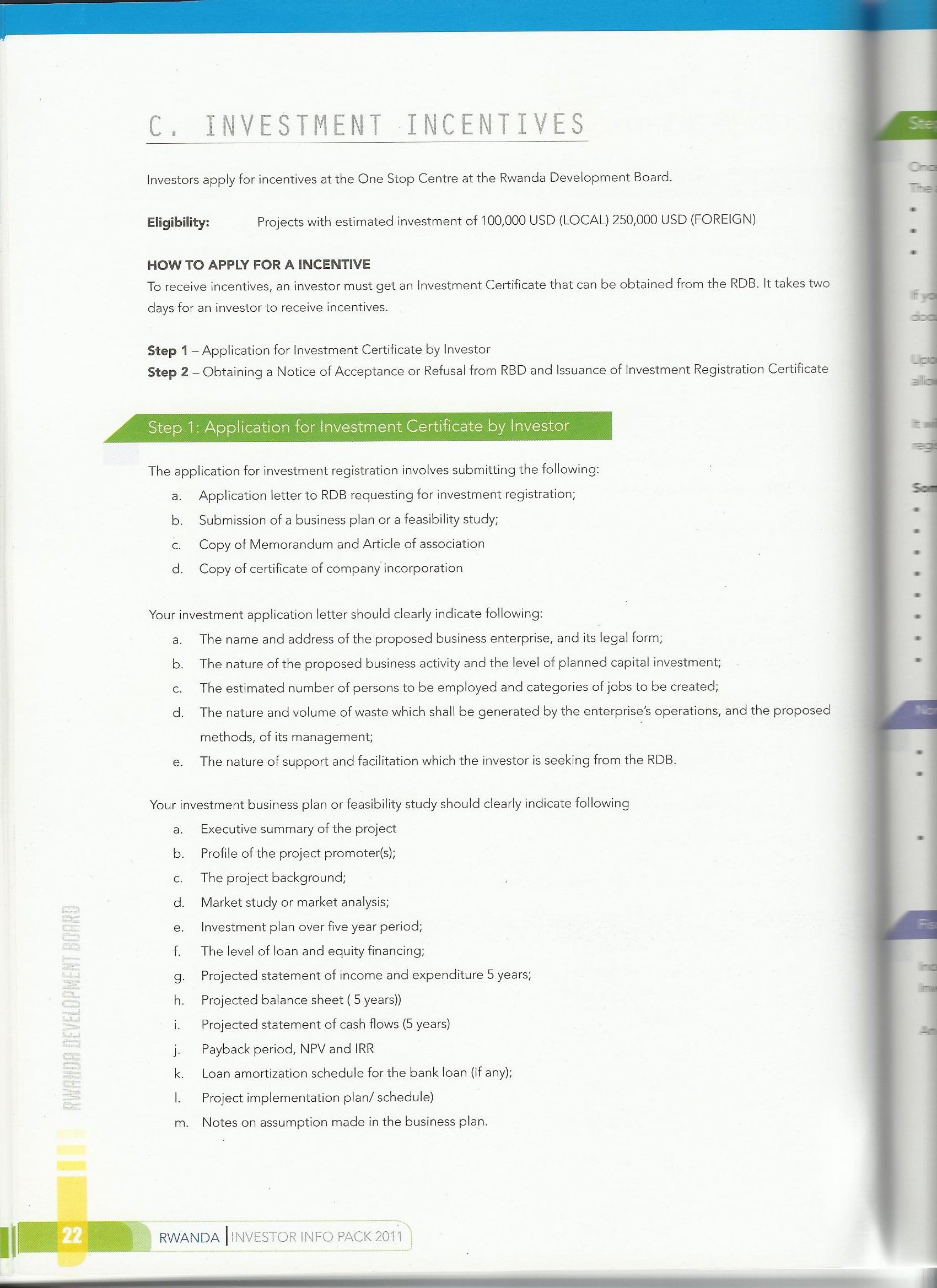
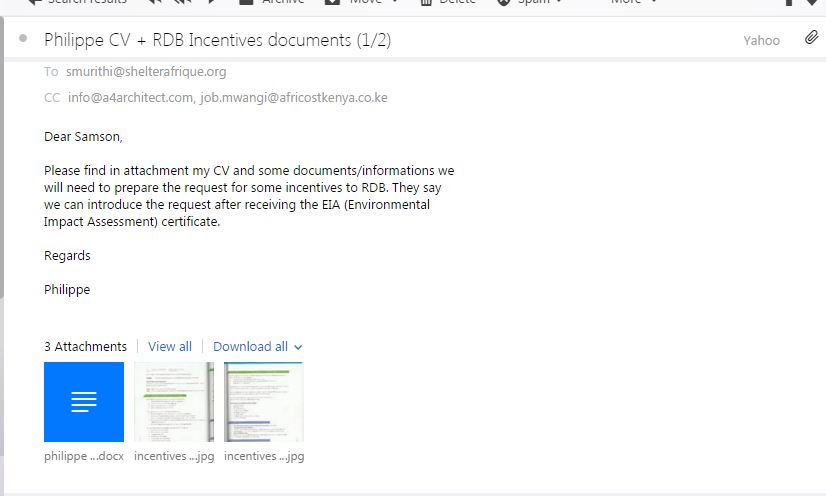
Application for Rwanda Development Board incentives.
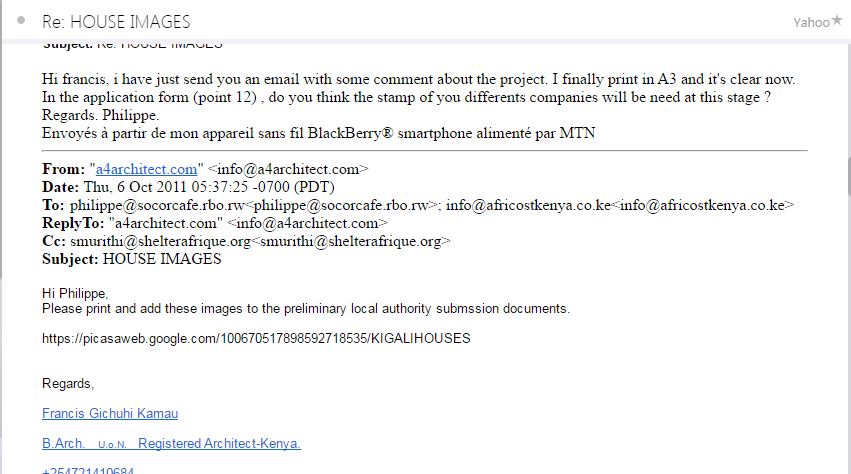
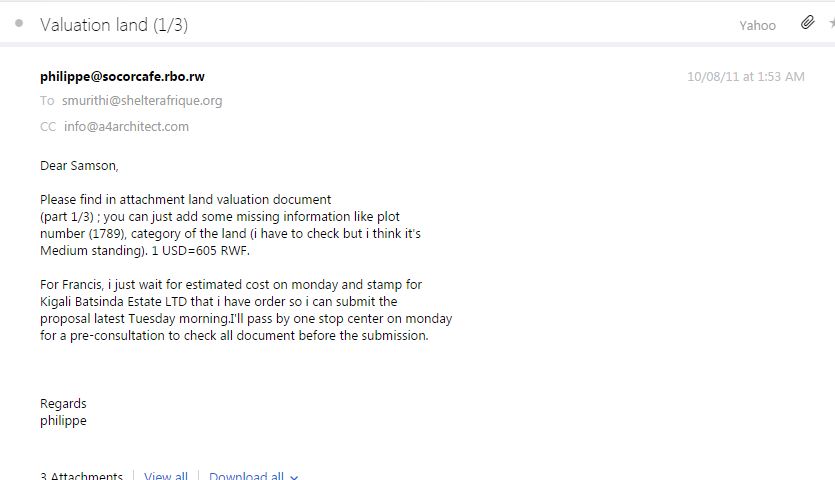
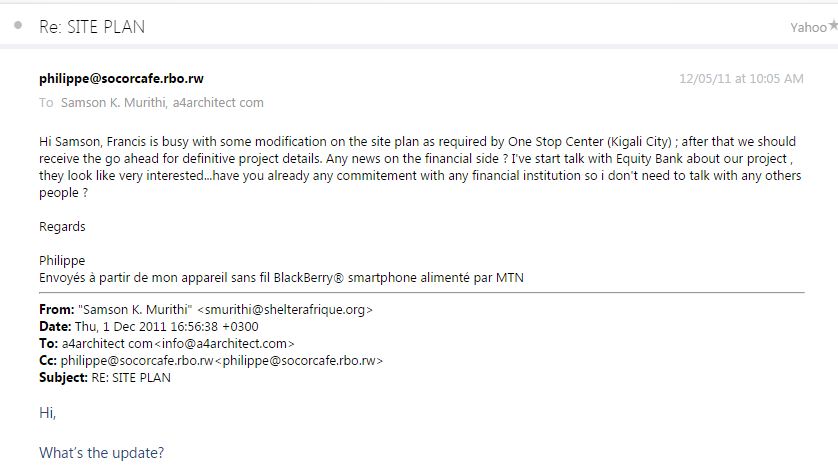
Here Philippe Kubwimana starts the process of applying for the Rwanda Development Board incentives so as to help reduce the eventual construction cost.
Water treatment designs.
2nd February 2012.
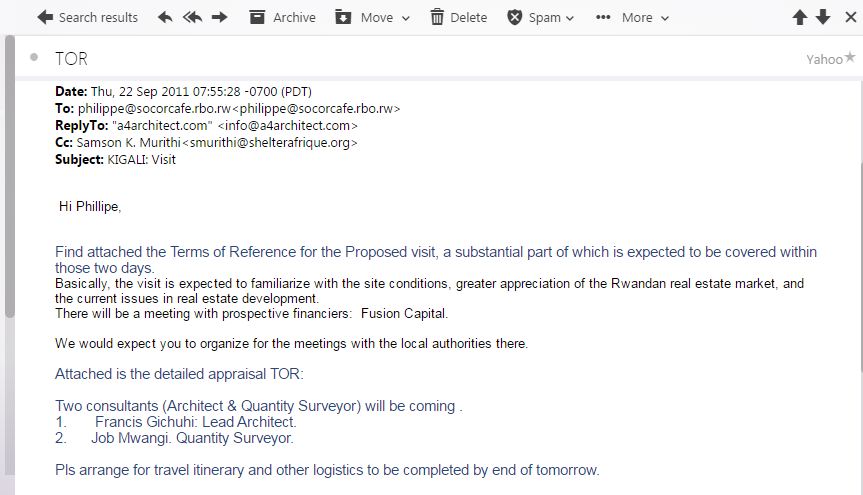
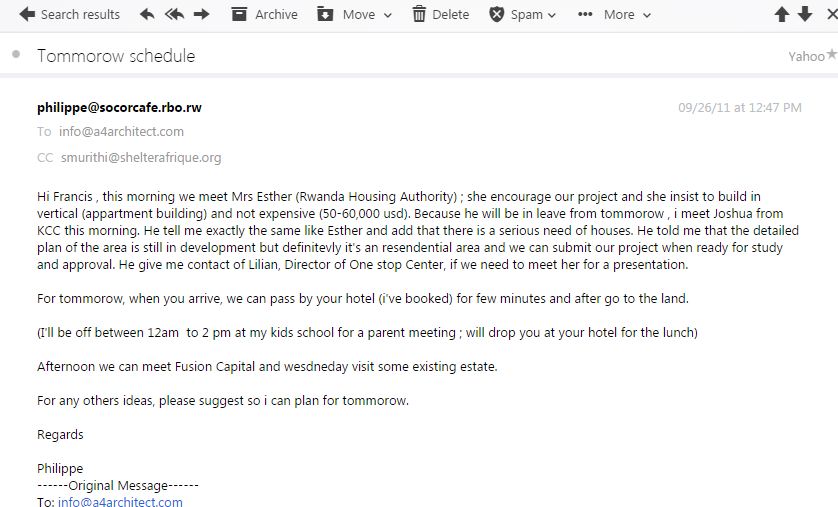
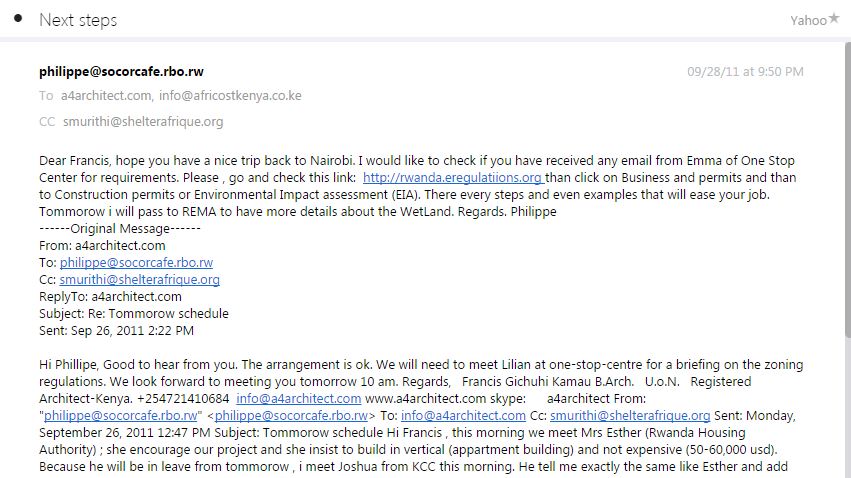
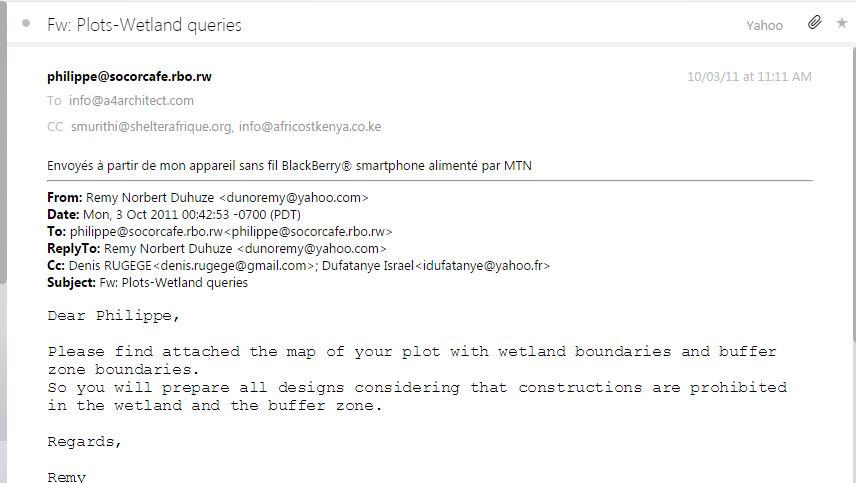
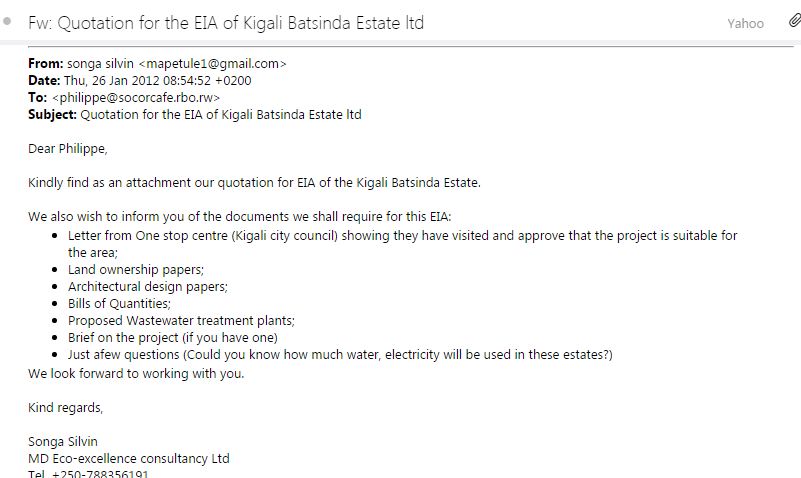
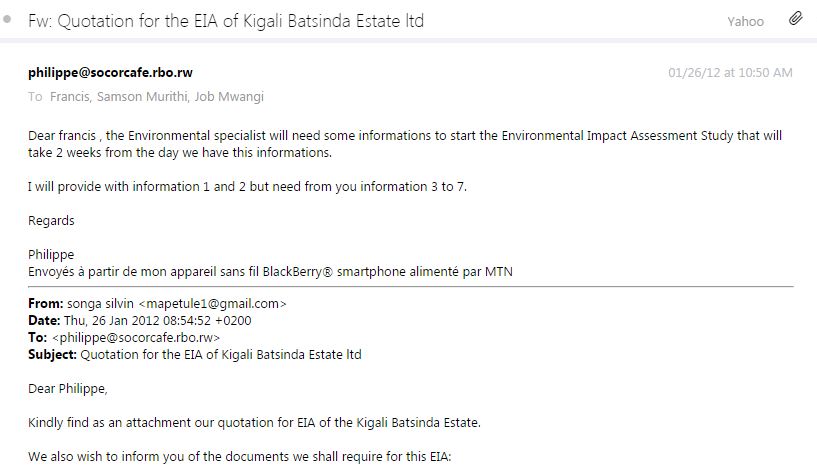
Philippe was requested by the Rwanda Environmental Management Agency for the waste water treatment designs since the land slopes into a river/swamp. a4architect.com organised for this consultancy service.
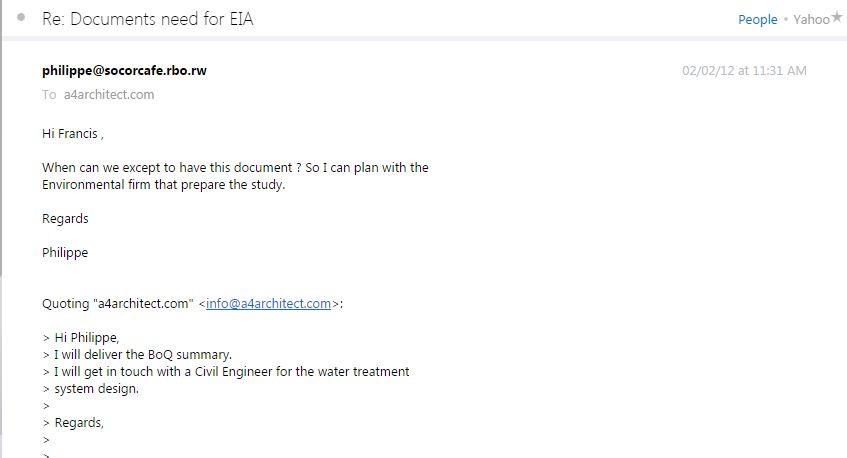
Songa Silving, the E.I.A expert, requested Philippe Kubwimana for the waste water engineering designs. At this point, a4architect.com added a further consultant, civil engineer to assist in the design, as per the earlier contract that stated that a4architect.com was to manage the rest of theconsultants involved. At this point, Job Mwangi, the Project Qs is now solidly in the picture and gets copied on every email conversation to enable smooth flow of information.
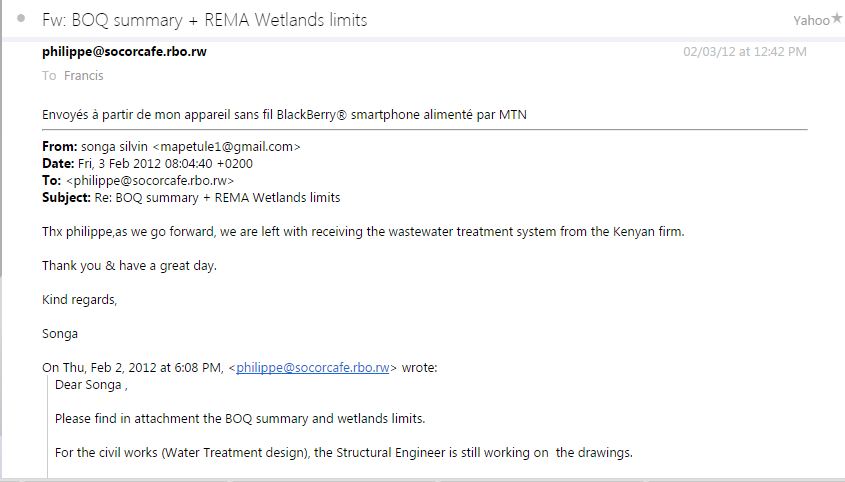
Feedback from Fusion Capital.
3rd March 2012.
Philippe Kubwimana asks Samson Murithi of Shelter Afrique if there is any feedback from Fusion Capital.
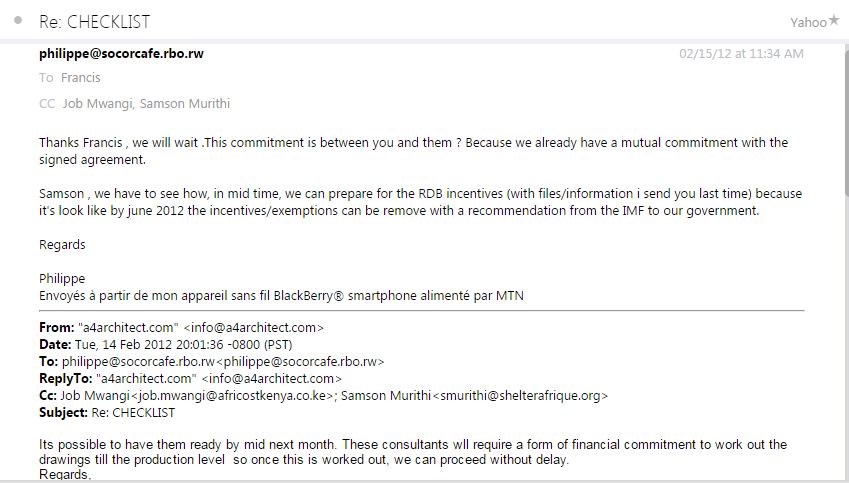
Re confirmation of consultancy agreement.
15th February 2016.
Philippe reconfirmed his commitment on the consultancy service to be provided by a4architect.com.
Fusion Capital Response.
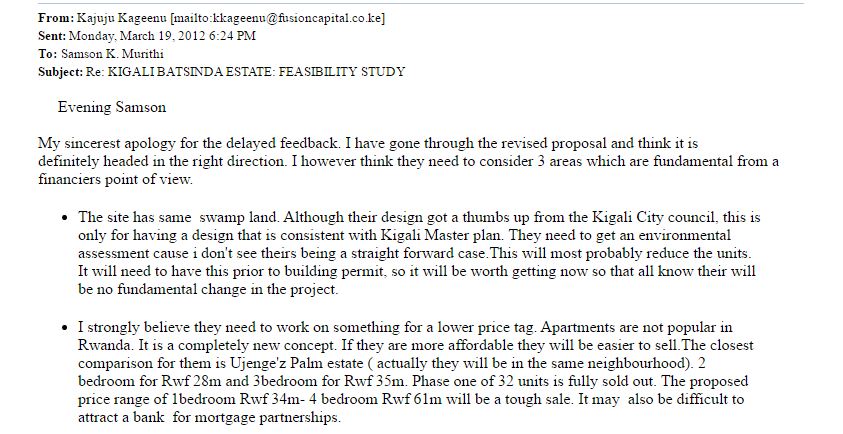
19th March 2012.
Kajuju Kageenu of Fusion capital emailed and assured the team that the project is headed in the right direction.
Value Engineering.
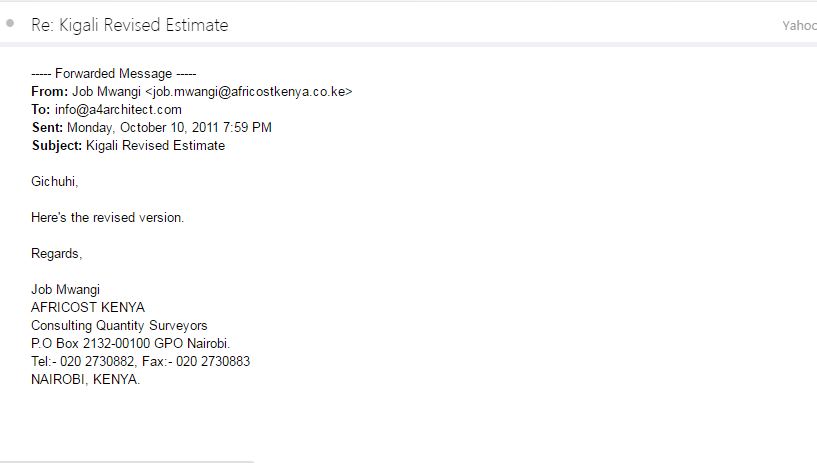
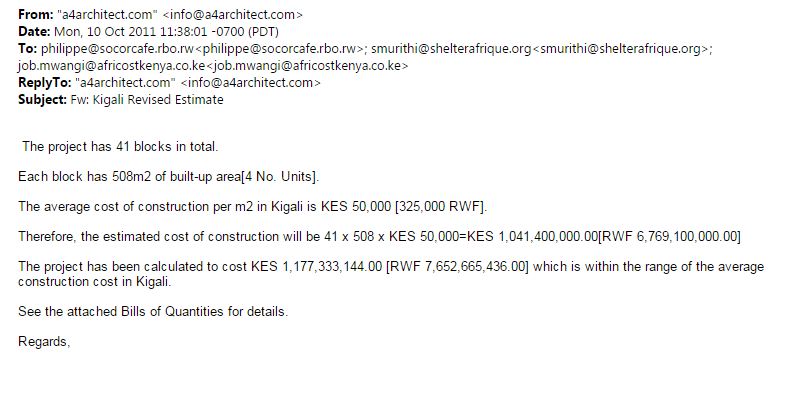
A4architect.com engaged in value engineering to ensure the project cost doesnt shoot up, remaining at the kes 1 billion/rwF 6 billion range.
Investment Certificate.
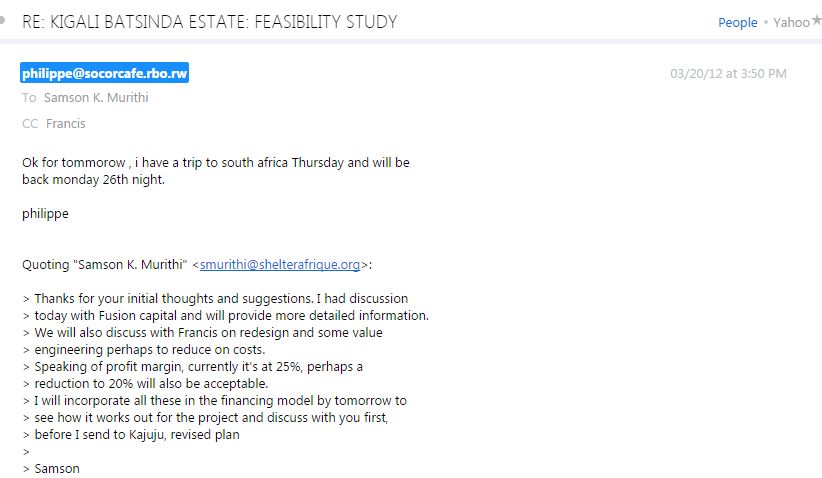
March 28th 2012.
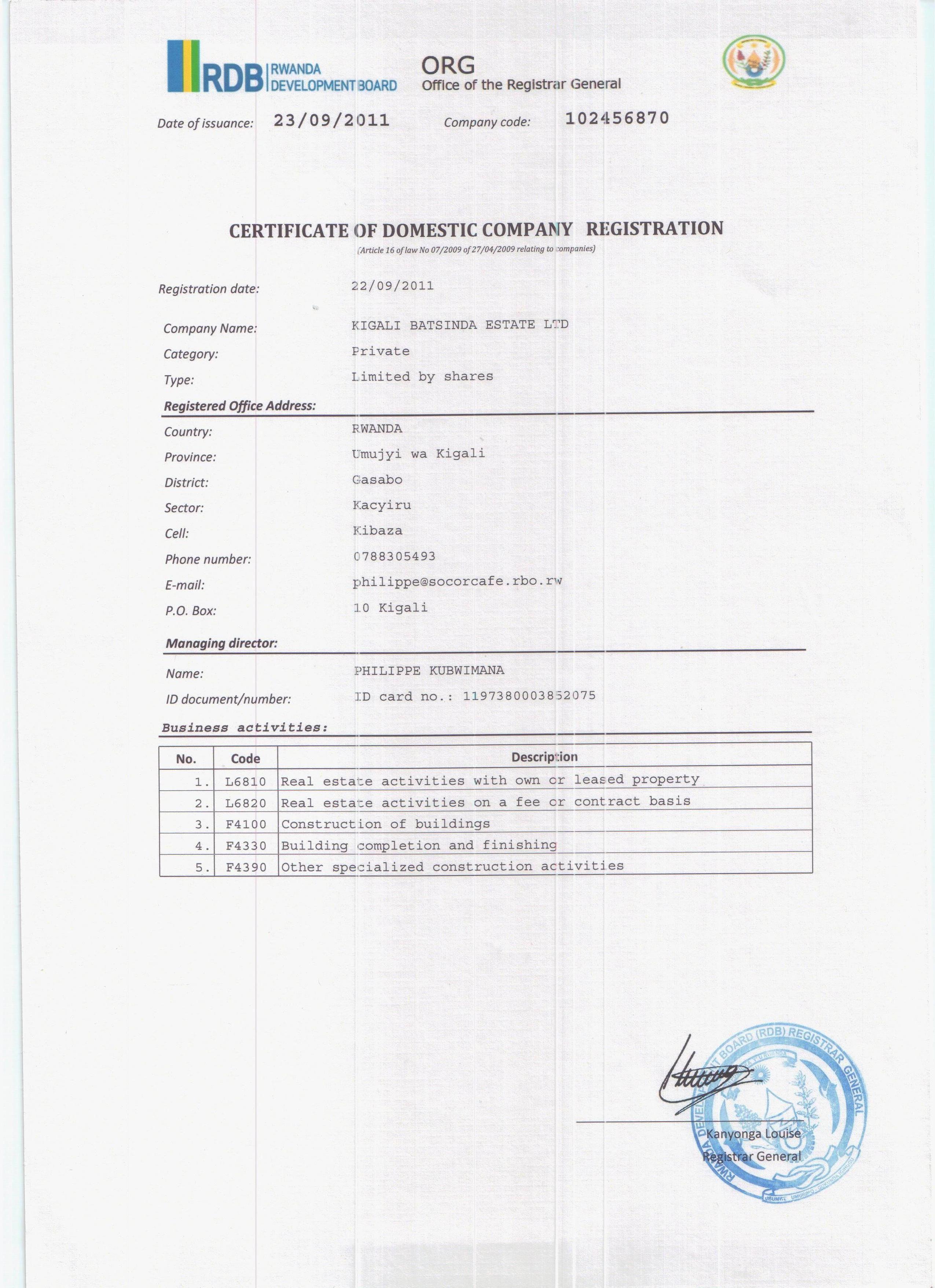
The RDB finally releases the investment certificate.
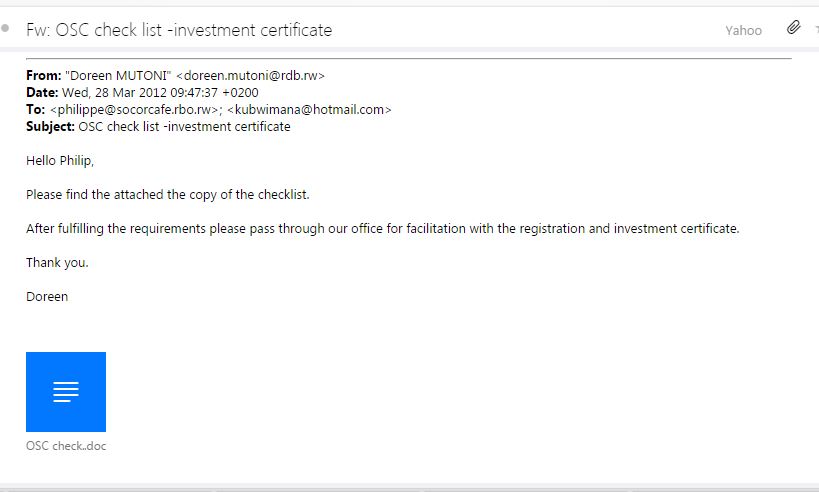
Philippe Kubwimana responds to Fusion Capital’s request on cost reduction. He suggests that the neighbouring project doesnt have a high construction cost because the owner is both Architect and Project Manager, so he has reduced consultancy costs.
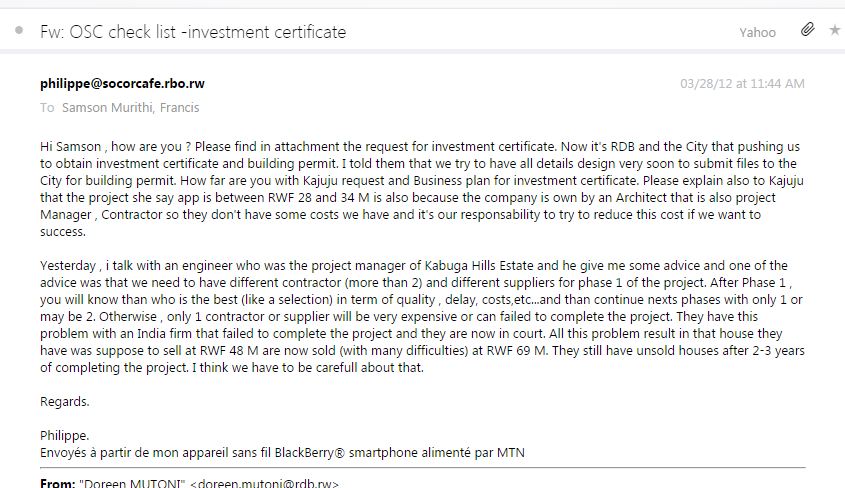
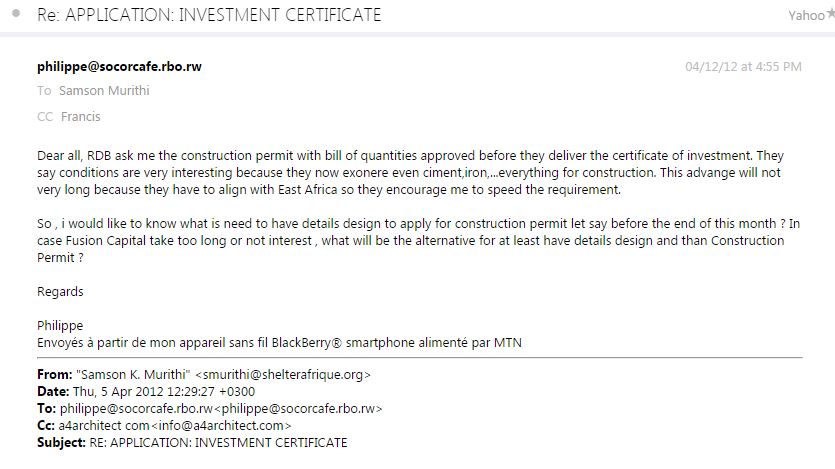
Philippe informed team that the RDB has asked for the Kigali City planning approval and Bill of Quantities so as to release the investment certificate.
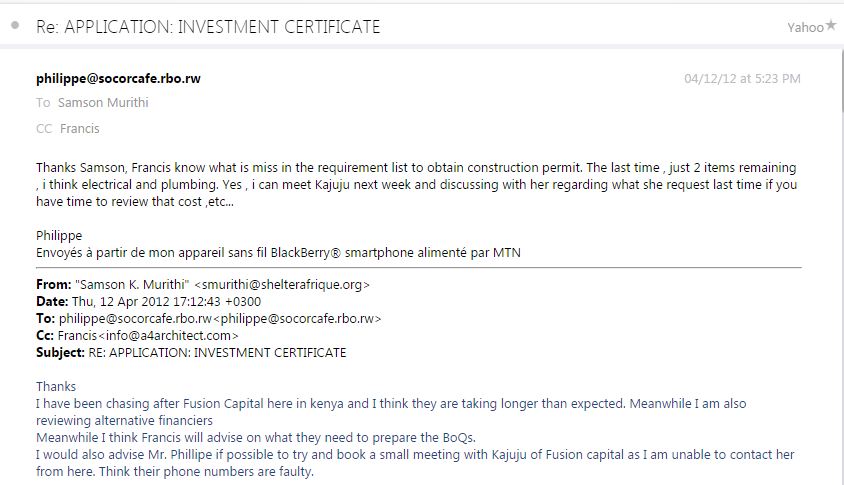
New Financiers.
Samson Murithi of Shelter Afrique informed the team that Fusion Capital, the intended financiers are taking too long and he is commencing discussions with new financiers for the project.
Partial Payment.
16th April 2012.
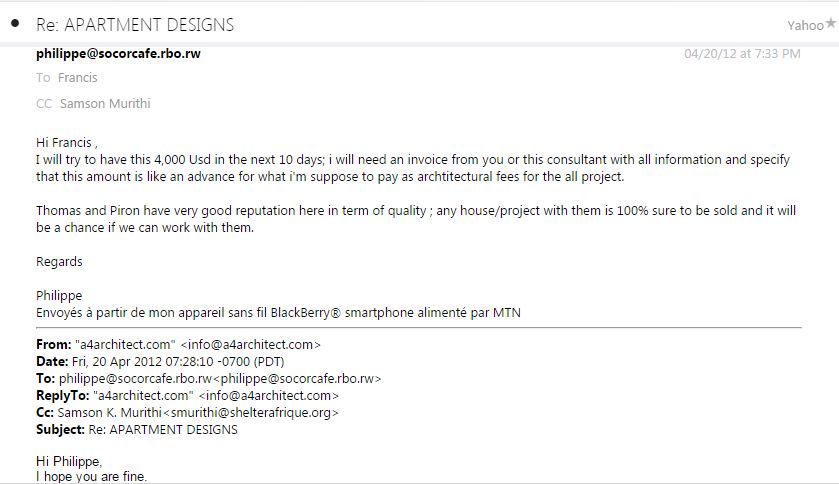
Philippe Kubwimana agrees into partial payment as a4architect.com assists him to get financing so that the rest of the payment can follow.
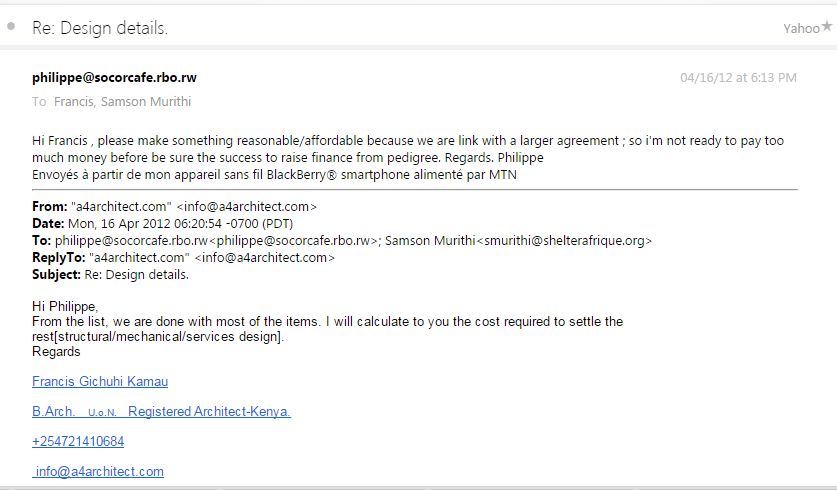
A fee of usd 4000 is agreed to enable production of drawings untill financing comes through, where the ealier agreed fee of 4% of construction cost of kes 1 billion/rwF 6 billion will be disbursed.
Contractors.
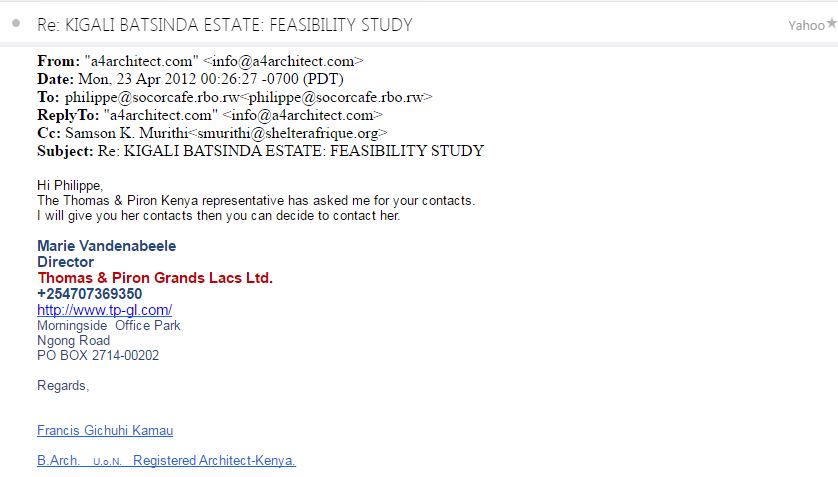
At this stage, possible contractors come into play, with a4architect.com suggesting Thomas and Piron, a Rwanda and Kenya based contractor that recently completed the Rwanda NSSSF building in Kigali.
Ist National Property Exhibition.
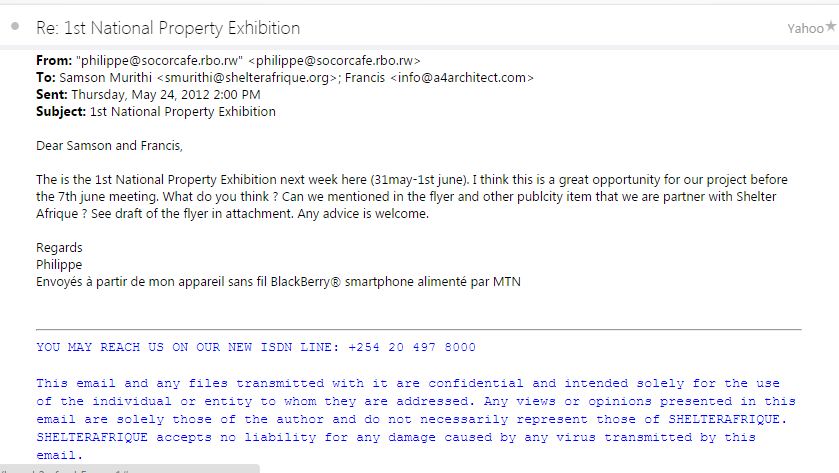
Philippe Kubwimana suggested for a4architect.com and Shelter Afrique to attend the 1st National Property Exhibition in Kigali.
Shelter Afrique Director.
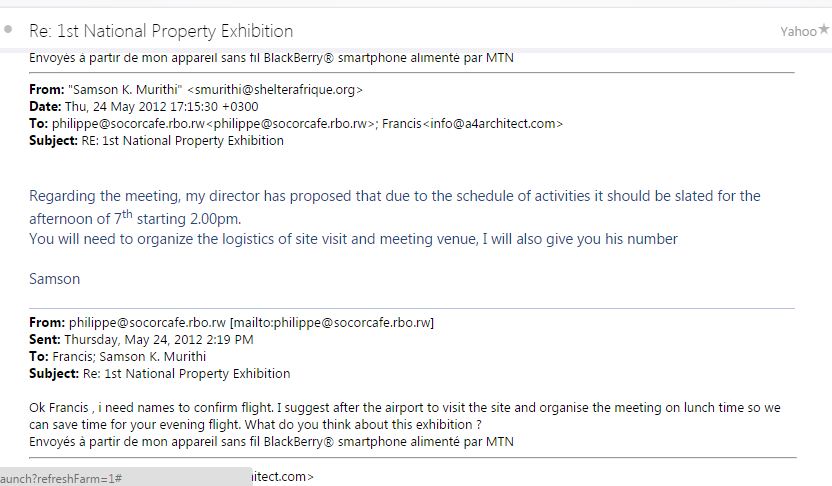
Shelter Afrique Director Architect Femi Adewole confirmed his attendance. Philippe Kubwimana organised for a4architect.com and Quantity Surveyor to be in attendance.
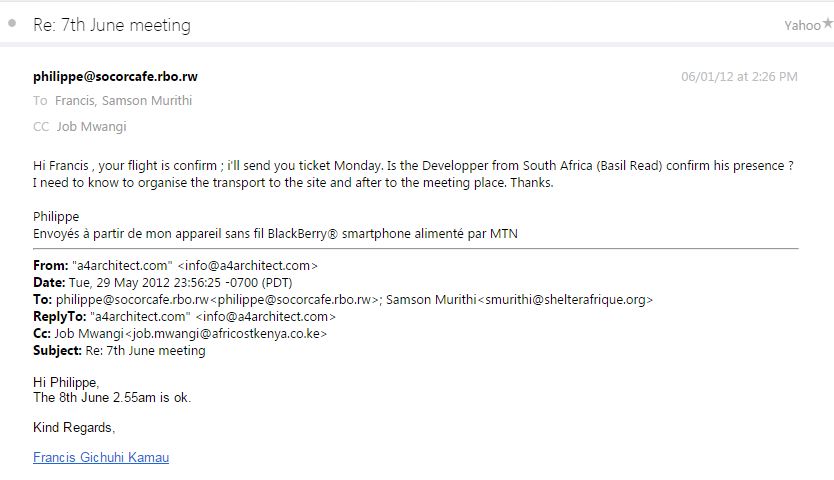
7th June Meeting.
Basil Read, developers from South Africa, who had keen interest in financing the initial Tatu City , Kenya, confirmed attendance.
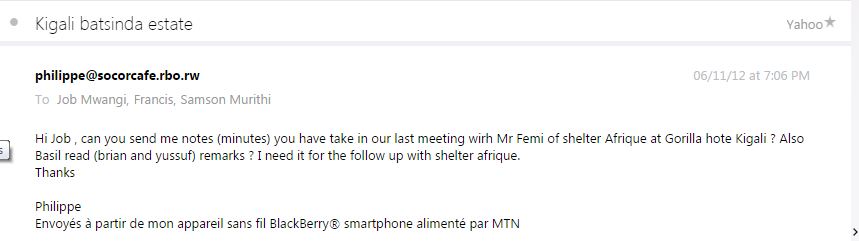
Minutes.
Qs Job Mwangi took minutes for the meeting.
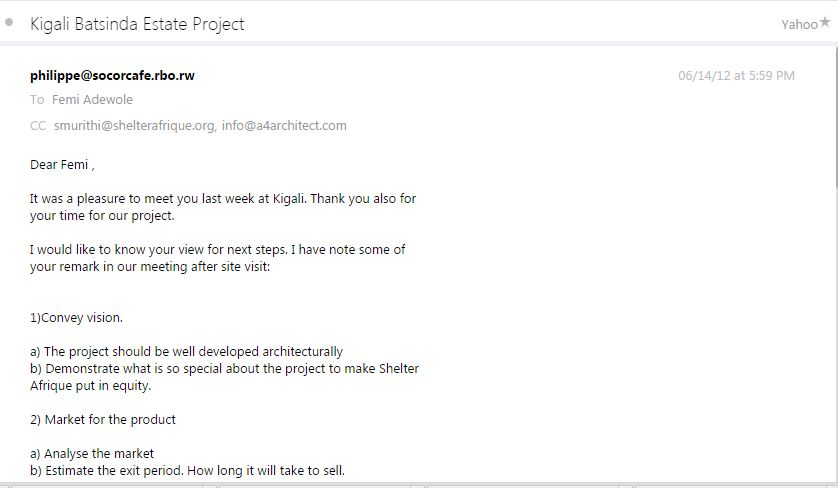
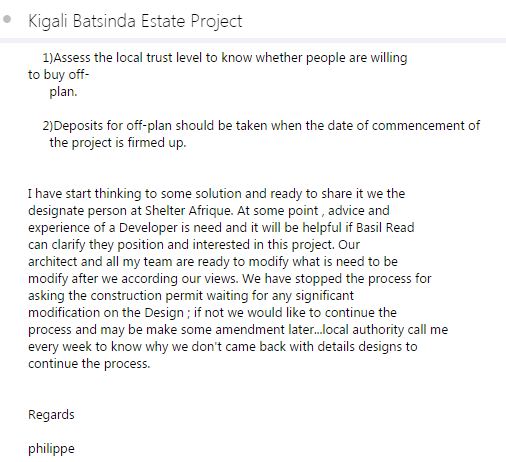
Awaiting Shelter Afrique design input.
After checking the minutes, Philippe Kubwimana asked Femi Adewole to give his design inputs so that a4architect.com can use them to change the drawings slightly before final detailed approvals at Kigali City.
Shelter Afrique funding.
16th July 2012.
Samson Murithi of Shelter Afrique finally clarifies that the funding through Fusion Capital is not successful, but a new financier, Shelter Afrique, is interested.
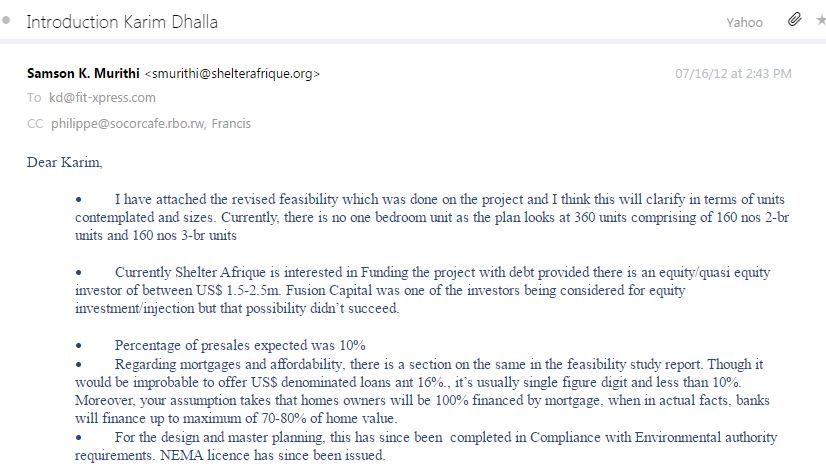
360 units in total have deen designed by a4architect.com at this stage.
Contractor redrawing.
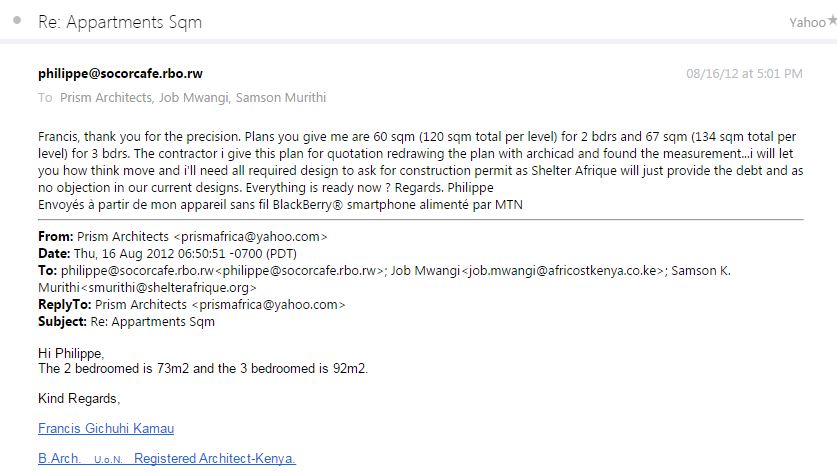
Philippe Kubwimana’s contractor redrawing the plans.
Philippe Kubwimana asked a local contractor to redraw the plans .
Hard copy Bills of Quantities.
9th June 2012.
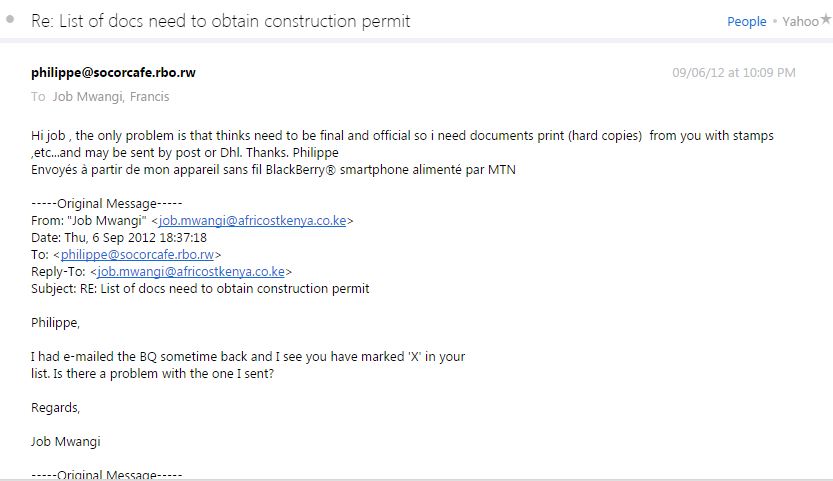
Philippe Kubwimana requested Qs Job Mwangi for a hard copy of his Bills of Quantities.
Kigali Visit.
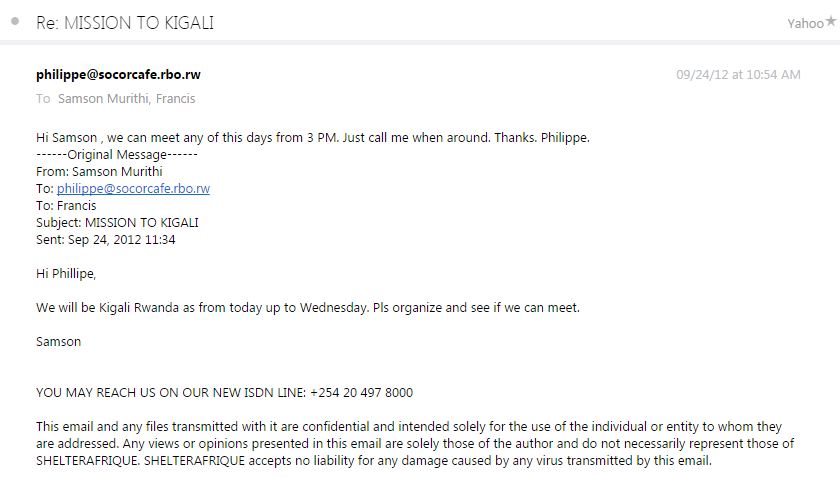
Samson Murithi visit to Kigali.
September 24, 2012.
Samson Murithi informed Philippe that he will be in Kigali and would like a meeting.
New Design.
Philippe suggests new design after Meeting with Murithi in Kigali.
26th September 2012.
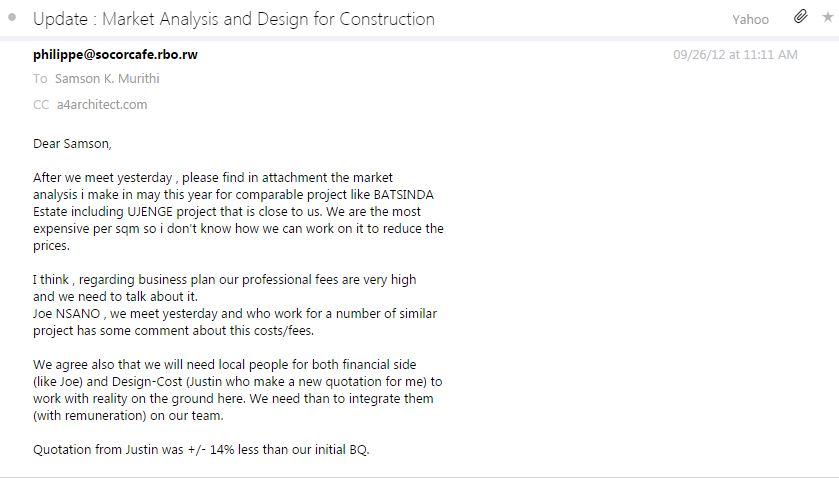
Local Design and Cost Consultancy suggestion.
Philippe Kubwimana suggested that a new local design and costing team after meeting with Samson Murithi in Kigali.
26th September 2012 until October 15th 2015.
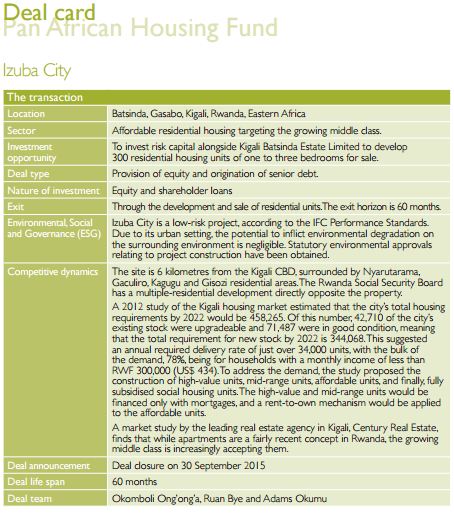
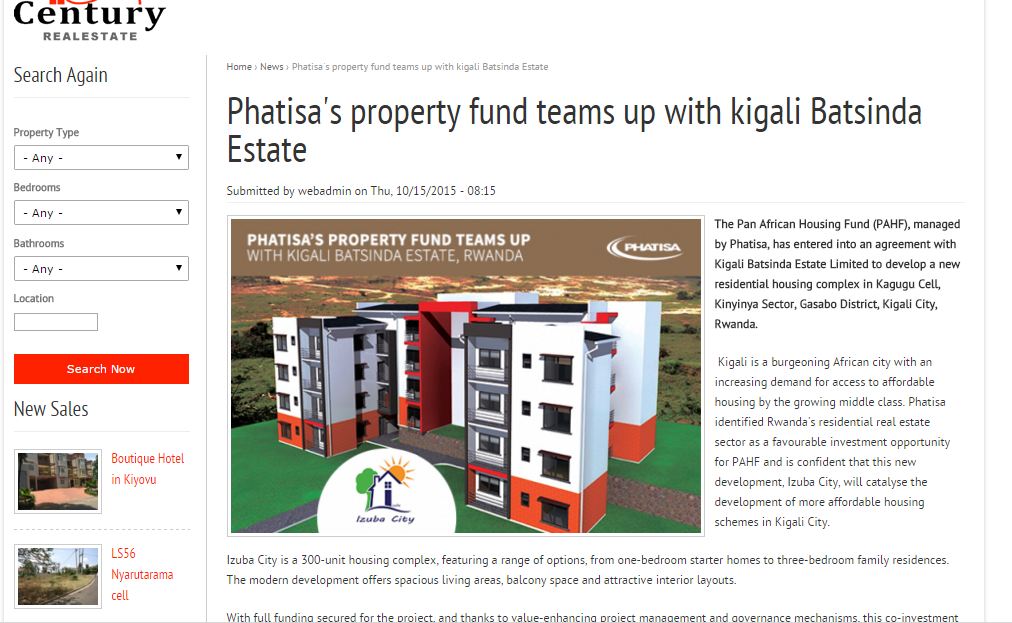
Philippe Kubwimana’s Kigali Batsinda Estate anounced a Joint Venture partnership deal with Phatisa, a fund manager firm that manages Shelter Afrique’s Pan African Housing Fund.
http://phatisa.appyourgame.com/wp-content/uploads/2015/11/PAHF-Izuba-City-Deal-Card-2015.pdf
http://www.centuryrwanda.com/news/2015/10/15/phatisas-property-fund-teams-kigali-batsinda-estate
RwF 11 Billion cost from RwF 7 Billion.
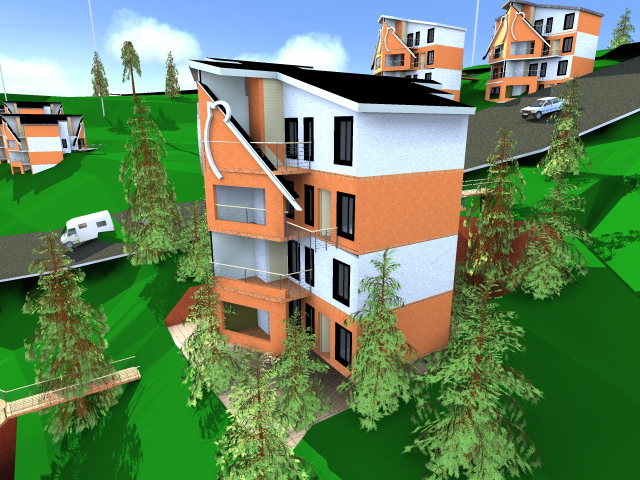
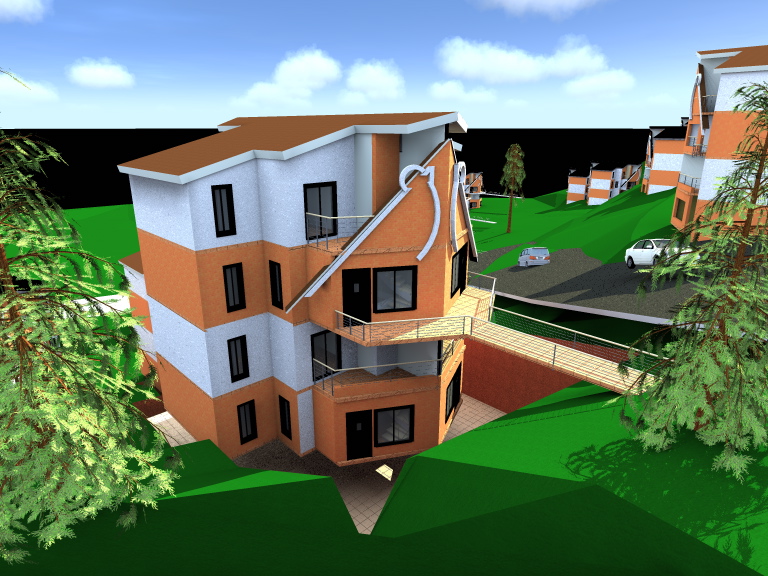
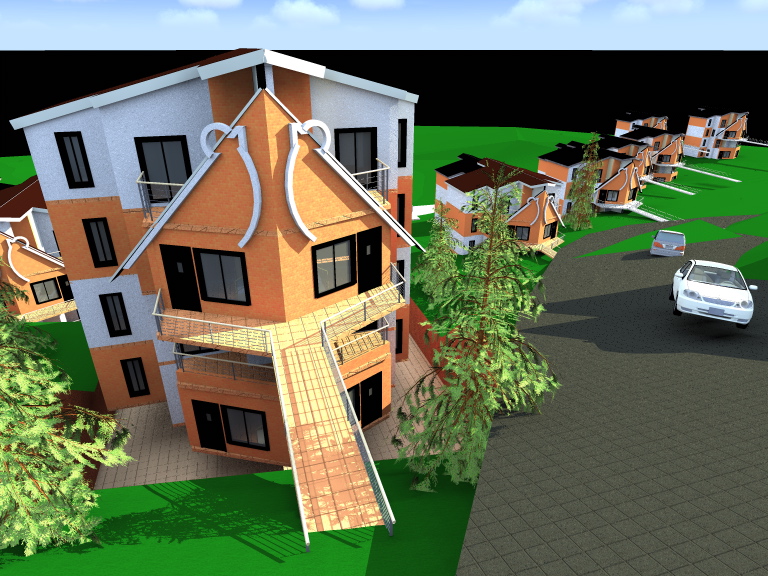
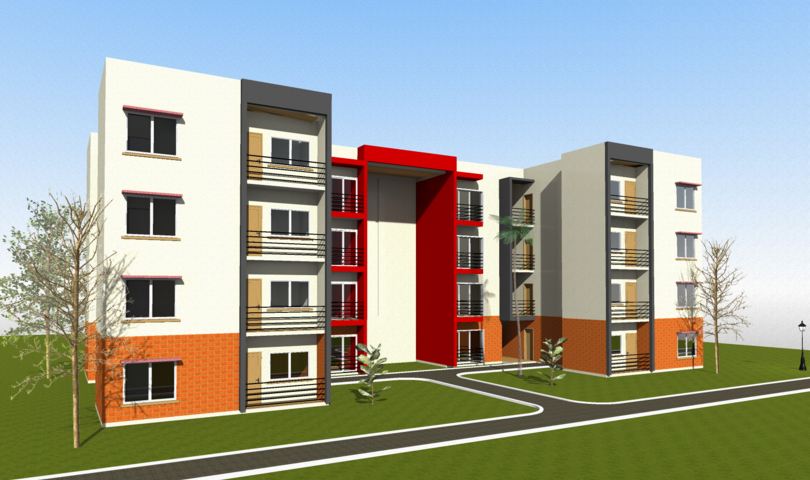
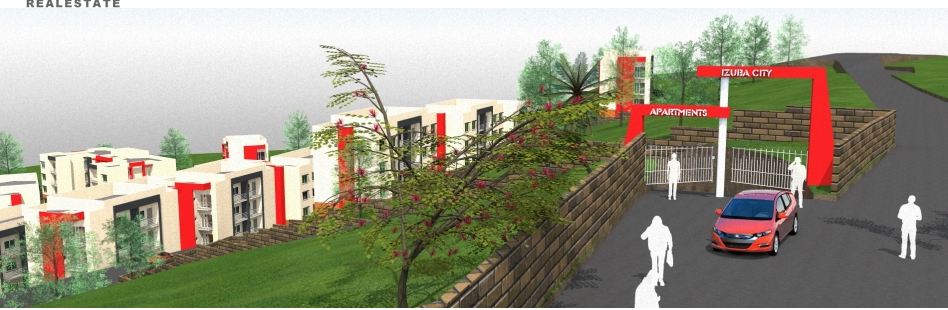
The new design, is finally adopted for the Joint Venture project. The previous design by a4architect.com costed kes 1 billion/rwF 7 Billion. This new design costs kes 1.5 billion/rwF 11.3 bilion.
Qs Job Mwangi of Africost is arguably one of the most efficient Quantity Surveyors in East Africa, having a portfolio that includes high rise structures in Nairobi and Westlands CBD, Daystar and KEMU Universities in Nairobi. This means the margin of error in his kes 1 billion estimate is relatively low due to his vast experience in cost control.
http://www.africostkenya.com/portfolio-page/
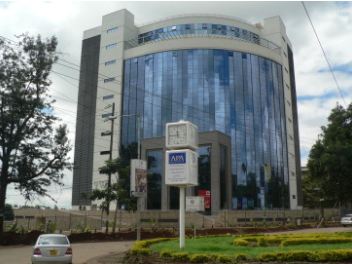
His 9 West project in Westlands is arguably the most stylish building in Kenya.
http://www.newtimes.co.rw/section/article/2016-02-23/197318/
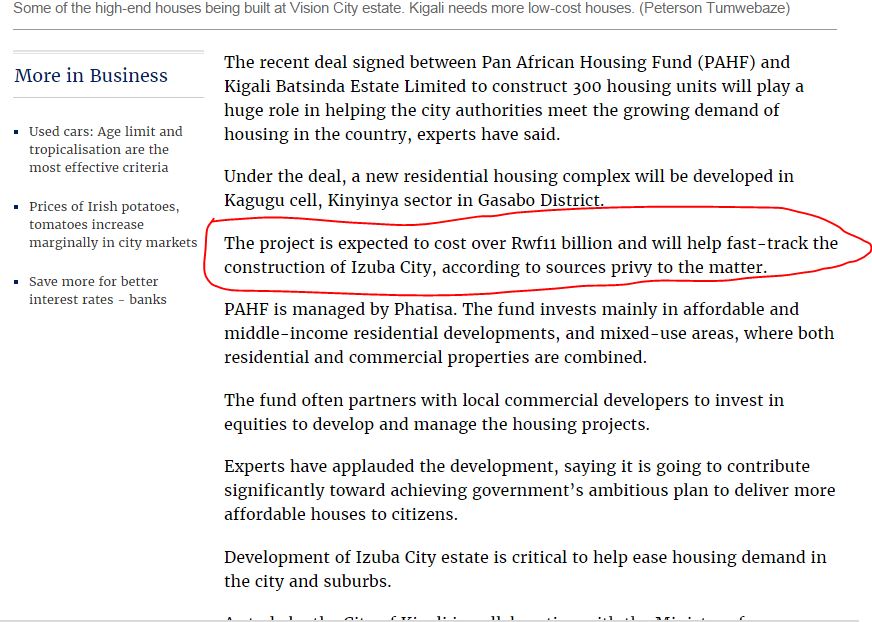
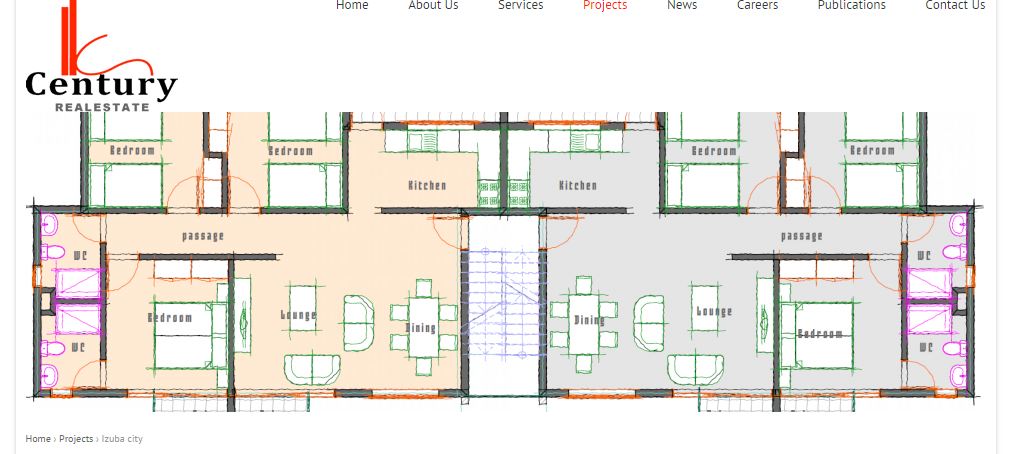
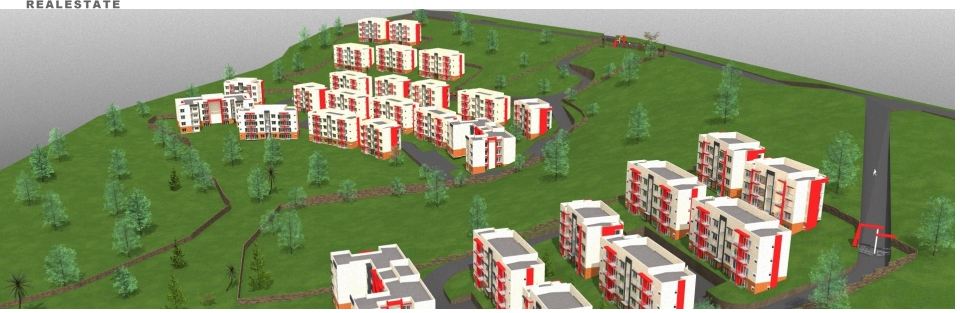
The previous design had 360 units at a cost of kes 1 billion/rwf 7 billion while the new design has fewer units, 300 units at a higher cost of kes 1.5 billion/rwF 11.3 Billion.
Response in Newspaper Comments.
Potential buyer feedback is crucial in gauging the success of a project.
The new design with higher costs has elicited response from the Kigali public as below in the discussion comments.
http://www.newtimes.co.rw/section/article/2016-02-23/197318/
Projected Profits comparison.
The higher construction costs and fewer units compared to the previous design with lower costs and more units will mean an adjustment to the sales price of the individual units in the long run.
Proffessor Hellen Muga.
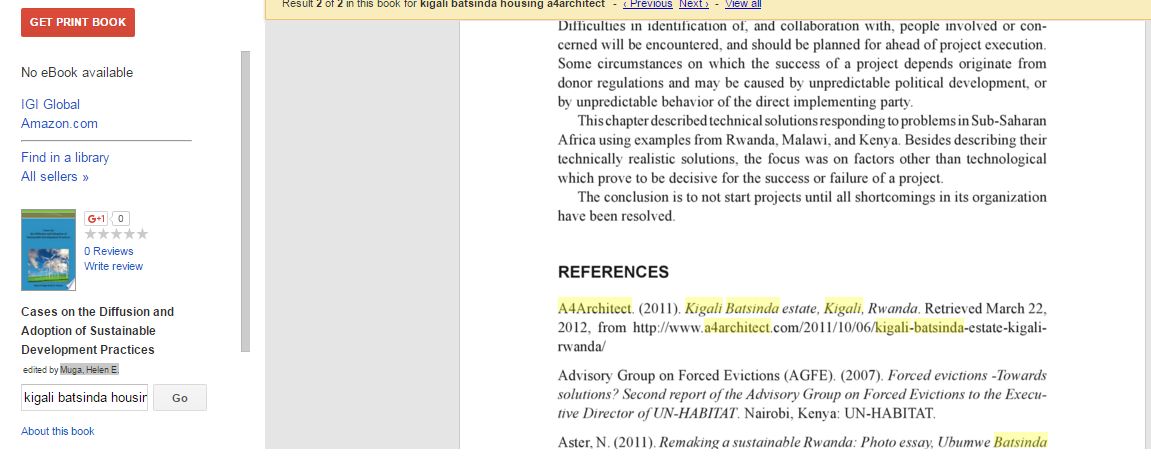
March 2012 book about Kigali Batsinda Estate design by a4architect.com.
Cases on the Diffusion and Adoption of Sustainable Development Practices
Helen E. Muga
Helen Muga, Ph.D.: Helen Muga is an Assistant Professor in civil engineering at the University of Mount Union, Alliance, Ohio. She worked as a postdoctoral researcher in the Civil & Environmental Engineering department at the University of South Florida, Tampa, Florida. She received a Ph.D. in Environmental Engineering from Michigan Technological University, Michigan, USA, a Masters degree in Environmental Engineering from Michigan Technological University, Michigan, USA, a Masters degree in Chemical Engineering from Curtin University of Technology, Australia, and a Bachelors degree in Chemistry from the University of Papua New Guinea. Her research interests include water and wastewater engineering, sustainability, life cycle engineering, green engineering, diffusion and adoption of green technology, and international development work.
About her book.
Description
Organizations and businesses are applying sustainable development concepts in their management strategies in order to improve and rethink products, processes, services, and policies which will have significant potential to reduce carbon dioxide emissions, excess consumption, and improve the quality of lives.
Cases on the Diffusion and Adoption of Sustainable Development Practices is a collection of case studies on the concepts and theories of successful sustainable practices. It also identifies key mechanisms and strategies that have allowed the successful diffusion of these practices into communities, regions and nations around the world. This reference source is essential for professionals, researchers, educators and leaders in pursuit of innovative solutions in sustainable development.
Its inspiring to see great minds such as Professor Muga quoting a4architect.com’s works in her booka about sustainable architecture. The aim of publishing is to increase the pool of knowledge so that others can tap into it and make the world a better place to live in.
Conclusion.
Joint Venture financing is a lengthy and time consuming affair. Alot of intellect goes into formulating and shaping the units, designing the units to be affordable and be able to mortgage purchasers into the housing units to give better returns to the investors.
Architectural design that is cost engineered to be efficient and attractive to potential house buyers in terms of affordability and functionality is key to eventual success of a Joint Venture construction project. Studies into successful and unsuccessful projects will give us an insight into how to shape the future of joint venture projects .
Architect Francis Gichui Kamau.
info@a4architect.com