Author: A4KENYA

  • KEPPLER 22 B-Astronomers discover 50 billion planets in Milky Way galaxy?

    Astronomers discover 50 billion planets in Milky Way galaxy?


    http://www.amazines.com/Science_and_Technology/article_detail.cfm/2538484?articleid=2538484

    Science & Technology
    Out of the total 50 billion planets, around 500 million are assumed to be placed in a key zone near their specific stars, which can also prove to be favorable for the sustenance of life.

    Revelation was made by the American Association This disclosure was made by the researchers at the annual meeting of the American Association, for the Advancement of Science.

    The scientists revealed that the estimate was made after examining a small portion of the sky, with the help of Kepler.

    On the basis of that, the researchers inferred about the number of planets which could be present in the galaxy.

    In an announcement made by NASA in the beginning of this month, it informed about the discovery of 1,235 planet candidates by the researchers, out of which 68 planets were found to be similar to the size of the Earth.

    These 68 planets are assumed to revolve around more than 156,000 stars.

    Kepler mission aims to discover earth-like planets in Milky Way galaxy The main purpose of the Kepler mission is to ascertain other Earth-like planets, located in the Milky Way galaxy.

    However, the main focus would be on those planets which are capable of harboring life.

    These planets are assumed to be most probably situated in a zone called ‘Goldilocks’ zone by the scientists, which is neither too hot nor too cold and thus suitable for the sustenance of life.

    The Kepler space telescope which was launched in 2009 is magnificently modified to identify the Earth-sized planets, revolving around distant stars.

    A total of 590- million-dollars will be spent in this telescope program, which will take around three and a half years to complete the explorations.

    This program will emphasize on the huge band of the Milky Way galaxy, which encompasses about 4.5 million stars.

    In a prelaunch press briefing, the scientists revealed that the most innovative cameras used in space till now, have focused on 100,000 to 150,000 stars with orbiting planets.

    For more information check out NASA

    Related Articles – solar system pictures, NASA,

  • My Dream Hut

    My Dream Hut
    By [http://ezinearticles.com/?expert=Lamaro_Schoenleber]Lamaro Schoenleber

    I used to be a closet hut-lover, but I recently came out and confessed my love for huts outright. I am not the only one. Huts are making a come-back in many parts of Africa as a stylish yet affordable shelter option.

    I have secretly admired huts ever since I was old enough to form an independent opinion. I just could not say it out loud for fear of being termed backward. Indeed, everyone in Africa wants a large stone house with a corrugated iron-sheet roof or a tiled roof. It is the best way to prove that one has made it financially.

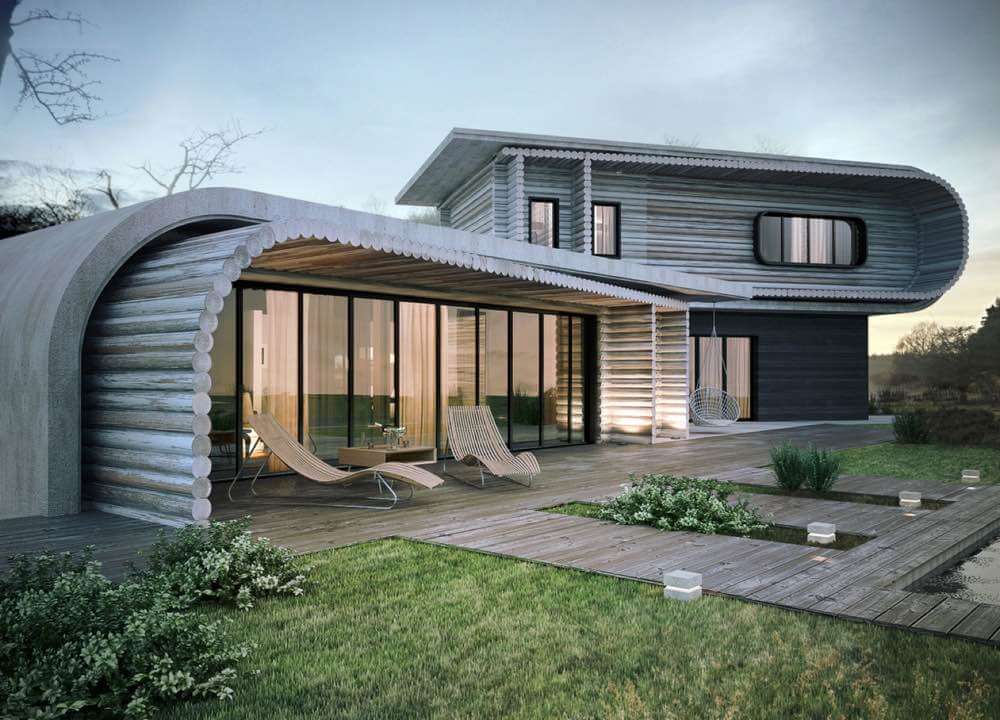
    My dream hut would be larger than they were in the past, with a higher roof. For a single person without children, one large structure could be sufficient. Indoor partitions could be an option to divide living areas, or a modern living design where living areas flow into each other could be applied.

    Another option would be to combine two huts, which would face each other, with a wide corridor in-between. This could be a very effective design for the hospitality industry. Each hut would function as a guest room, with a middle wide corridor converted into a shared bathroom area. Many lodges and guest houses for tourists already use some form of a hut concept for guest residences. An even more sophisticated idea would be a combination of four huts in the shape of a clover leaf, all under one roof or under a series of roofs. This would provide enough space for cooking, sleeping and daytime activities.

    This concept can further be refined to produce an amalgam of circular half-huts intersecting into each other with different level intersecting roofs.

    A simple but very effective design I have seen used with great effect is a pentagonal or hexagonal hut. Unlike the blue print hut, this variation has corners. It is very effective when used as a classroom, with a window in each of the five or six sides. The result is an airy building with lots of light streaming in. The learners can sit in a horse-shoe all facing the teacher, unlike the usual row formation. This is a much more learner-friendly and interactive information exchange setting. Moreover, having a hut all to oneself, separate from the others, (instead of being part of a long block of classrooms) makes the class feel very special.

    The only drawback to the above-mentioned designs is the creation of corners. The whole point of having a hut is a corner-free philosophy. Think of all the negative things you know about corners. We talk of being in a corner (which means being trapped) or being cornered (which is a very bad situation indeed!) Someone who cuts corners is unscrupulous and unworthy of trust.

    Living in a hut instead of in a house is all about a free-flowing, smooth approach to life, without getting stuck in unpleasant and unprogressive places (like corners). Indeed, it removes the option of having to cut corners.

    The real challenge in building a hut is finding low-maintenance materials that do not compromise the eco-friendly virtue of a hut. After all, the whole point of choosing a hut over a house is to benefit from the natural wellness quality of clay and other earth materials.

    Clay is an approved building material, but may have to be processed to ensure increased durability. An architectural team in Switzerland is experimenting with grinding the clay so that all the particles achieve the same texture, and mixing varieties of clay in order to reinforce it and to derive new natural colours. The wet clay is then applied in subsequent layers over a skeletal support, and watered repeatedly to increase its strength. Clay increases in strength as it dries. A concept using reinforced sun-dried clay bricks could be another option.

    Choosing the right roofing materials is the next challenge. The traditional grass thatch requires frequent renewal, and may harbour forms of life. I have nothing against a living roof, but my pet phobias do. The alternative is to treat the grass with a deterrent that eradicates the afore-mentioned life, but that goes directly against the eco-friendly philosophy of living in a hut. One solution would be to keep the living roof, but have protection under the roof to keep the eco-systems thriving in the roof out of the living space within. Some people use plastic sheeting for this, or a thin metal sheeting. A layer of tiles beneath the grass roof may appeal more to the eco-builder. One can also experiment with different varieties of grass, straw or rushes, which may be less hospitable to other forms of life.

    Come to think of it, a roof of tiles – preferably red – on a clay hut is also very chic. Such a roof could also host solar panels, such that the home is energy self-sufficient. It must be admitted of course, that it is quite a variation on the theme. Huts can be wired for electricity, fitted with plumbing or installed with other conveniences for modern living without undue obstacles. Having said the above, I must add that a hut can still be a very practical shelter alternative even if one must sacrifice on eco-friendliness in the interests of pragmatism.

    My favourite fantasy is to have a large, wide hut (finished inside and out in white river clay) with a high well-trimmed roof. The roof would be of a flattened rather than very peaked design, and would be the pale gold colour of natural dried grass or straw. Or I might settle instead for a series of huts, arranged in steps like a Japanese garden. Add to that a green lawn all around, a couple of mango and avocado trees and an adult swing, from where I can watch the sun set as I sip something refreshing out of a calabash.

    My name is Lamaro Schoenleber. I am female, African, and live in Germany with my husband. I hold a doctorate in Clinical Psychology and remain active as a therapist and researcher, though currently battling a life-changing and debilitating chronic illness. I am attached to Mbarara university of Science and Technology as a lecturer and researcher into clinical and educational Psychology.

    I love to write, especially about real life situations mostly related to Psychology, Literature and Language.

    I am also very keen to attract attention and possible aid to my two pet universities (Mbarara University of Science and Technology and Gulu University) both in Uganda. They are two small state universities which are doing amazing work, and need all the help they can get. Please stay tuned for an upcoming website with more information, and blogs on my favourite topics.

    I used to be merely knowledgeable, but due to my own experiences with chronic (and maybe eventually terminal) illness, migration, forced migration due to war, therapy and teaching experiences, I have discovered a depth of experience that adds real life confirmation to knowledge. This has proved to be persuasive to a lot of people, including my patients. In my opinion, knowledge is most persuasive when it gets personal, and this is what I try to do in my writing.

    Article Source: [http://EzineArticles.com/?My-Dream-Hut&id=1717466] My Dream Hut
  • Looking for South African Architectural Design

    Looking for South African Architectural Design

    Author: Intoweb

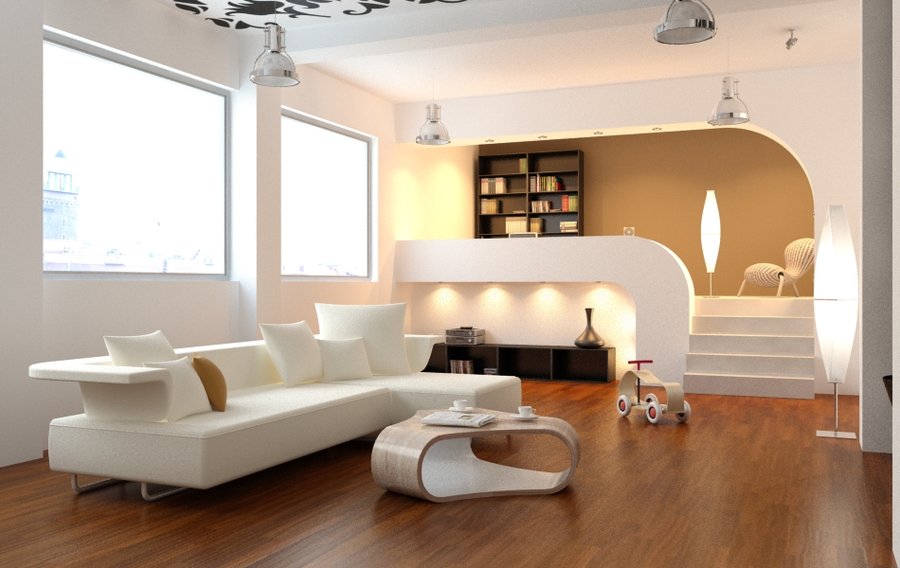
    Architecture design is an ongoing process where architects attempt to stay ahead of the market in creating new and innovative buildings for developers. As with many things, however, even architecture design is sometimes forced to bow to fashions and fads. The problem arises, however, when these fads start dominating common sense and forcing architects to work counter to what they know to be good architectural design.

    In South Africa this is very obvious in the so-called ‘Boere Toskaans’ movement of the past few years. In the cities of Pretoria and Johannesburg, architects have been asked by home owners and developers to design buildings in the Tuscan architectural style. Terracota-coloured homes have been springing up all over both cities as more developers follow this fad. But architects are calling for more local architectural designs that employ local materials and that are suited to local conditions.

    Academics are concerned that the ‘Boere Toskaans’ architectural movement may have a detrimental effect on the cultural identity of South Africa. Research has indicated movements like these in architectural design are part of a search for cultural identity that is very common in post-colonial countries. The argument, however, is that South Africa has more than enough local history, culture and resources that borrowing from European culture is not necessary.

    While inspired by colonialism, the Cape Dutch, Georgian and Transvaal regionalism were adapted to the local climate and local materials. Originally European in origin, these styles have become nearly synonymous with South African architectural design. Many modern architects are now looking to South Africa’s roots to find inspiration for new architectural designs. Many architects have suggested exciting developments in new architectural design using traditional South African style with local materials.

    The problem that many architects face, however, is selling this local architectural design to the people. The emerging black middle class are quick to follow the fashions of the international arena to position themselves as citizens of the world. But this position comes at the cost of their and South Africa’s cultural identity. People follow fashions and the current fashion of Tuscan architectural design has taken the South African market by storm.

    The challenge is to find a South African identity in architectural design. South Africa has enough cultural history to create its own unique architectural style. It is time to leave the European ideals behind and to focus on a styles and architecture that can be called proudly South African.

    Article Source: http://www.articlesbase.com/interior-design-articles/looking-for-south-african-architectural-design-4464291.html

    About the Author

    Intoweb
    Archiway Architects

  • African Curios- African Souvenirs

    African Curios- African Souvenirs

    Author: Wilson Maina

    There are many local African artists from various countries ranging from Congo, Kenya, Ivory Cost, Zimbabwe, Tanzania and Swaziland who do craft work. Products found at Maasai Gift Shop are normally sourced from these artists.

    Most visitors to Africa and especially to Kenya go home with souvenirs from the Maasai community – from the smallest jewelary to the tallest wooden giraffe. The Maasai are renowned for their fine craftsmanship and souvenirs. All these products are available in most shop and markets in almost all major towns.

    Remember that while it’s easy enough to store these items on an overland truck, at some point you will have to fit all your souvenirs into your backpack – and be able to carry it! Souvenir specialties include:

    Kenya – In Kenya you will find the following products:

    • Masai beads
    • Maasai blankets
    • Batiks
    • Wooden giraffes (Nairobi city market)
    • kikois and Kangas – both male and female version of the sarong (Nairobi shops)
    • Baskets
    • Necklaces
    • Beaded Animals
    • Beaded Bangles
    • Beaded Huts
    • Bowls
    • Bracelets
    • Chokers
    • Key Rings
    • Telephone Wire Animals and Telephone Wire Bowls
    • African Crafts
    • African Masks
    • Copper Bangles
    • Door Stopper
    • Hair Accessories
    • Kitchen Utensils
    • Letter Openers
    • Napkin Rings
    • Wooden Animals

    All these products have been acquired from small communities and villages where the making and selling of their traditional crafts has provided the craftsmen with sustainable income. This has also enabled these communities to pass on their traditional heritage, culture and tradition to other generations so that they are not lost as Africa undergoes Westernization.

    An online shop was established mainly to provide a market place for local artists and craftsmen in Africa to sell their products to the outside world thus providing themselves with sustainable income and for their families.

    Article Source: http://www.articlesbase.com/gifts-articles/african-curios-african-souvenirs-1011119.html

    About the Author

    Wilson owns Maasai Curio Shop, one of Kenyas’s largest online souvenirs and curios stores. Our mission is to provide stunning and classic crafts that are unique! We stock a range of eye catching pieces from wooden carvings, maasai blankets, beaded bangles and belts,napkin rings, bracelets, necklaces and other products from the African Culture – our extensive range has something for everyone! Visit my website at http://www.maasaigiftshop.com

  • Why invest in a Bali hut or an African Gazebos?

    Why invest in a Bali hut or an African Gazebos?

    Author: Willem Swanepoel

    Bali Huts

    Bali huts protects you 100% from the ultraviolet rays of the sun. It is up to 10°C cooler in summer and warmer in winter, quick to erect over your hot tub, spa, jacuzzi or swimming pool and low in maintenance costs.

    • 100% UV Protection.

    • Natural eco-friendly roof.

    • Low maintenance and no mildew.

    • Up to 10°C cooler in summer and warmer in winter.

    • The natural internal look is very decorative.

    • 100% waterproof with correct installation.

    • Thatch strips will cover any size roof constructed at the correct angle.

    • Available in different sizes and shapes.

    • Quick to erect and install (detailed DIY instructions).

    • Create privacy over your hot tub, spa, jacuzzi, or by a swimming pool.

    • Build in a barbecue and avoid the need to cancel because of the rain.

    African Gazebos

    With thatch Cape Reed tiles this thatched gazebo provides you a uniquely themed shade structure which yields a tropical or island style and charm. African Gazebos are a delightful place to retreat from the pressures of life. They make a popular addition to your deck, poolside, garden, or backyard setting. Imagine enjoying your favourite book, viewing your garden, entertaining your friends, or just relaxing while being sheltered from the sun, wind, or rain.

    • 100% UV Protection.

    • From a shader to 95% waterproof.

    • No maintenance, no shedding and no mildew.

    • Can withstand very strong winds.

    • 5-10 Degrees cooler than any other shade.

    • Thatch tiles that will cover any size roof constructed at the correct angle.

    • Only structural treated timber used.

    • Available in different sizes and shapes.

    • Quick to erect and install (detailed DIY instructions).

    Balinese Thatch

    Create your own tropical paradise – in any shape – with real Balinese thatch. This natural grass (Alang Alang). Bali style thatch is waterproof and easy to install. The Balinese thatch strips can be purchased separately for your DIY thatch projects and are an excellent way of creating your own thatched roof. Balinese thatch saves the expense and time associated with traditional thatch.

    African Thatch

    African Thatch reed tiles can be purchased separately for your DIY thatch projects and are an excellent way of creating your own thatched roof! The natural insulating properties of African thatch offer excellent thermal efficiency, keeping the temperature 5-10 degrees cooler on hot summer days while retaining maximum internal heat in winter.

    Decking – DIY Kits or installed

    The most popular of all outdoor spaces, a deck can be added onto virtually any area of your home, adding liveable outdoor space to a bedroom, den, dining room or kitchen. We supply you with all the materials, hardware and a step-by-step installation manual.

    Article Source: http://www.articlesbase.com/diy-articles/why-invest-in-a-bali-hut-or-an-african-gazebos-969866.html

    About the Author

    Contact Exotic Thatch Pty Ltd today for premium grade DIY Bali Huts or African Gazebos.

  • Garden Gazebos:How to Choose the Perfect African-style Garden Gazebo

    Garden Gazebos:How to Choose the Perfect African-style Garden Gazebo

    Author: Garden Gazebos

    Choosing an African Gazebo for your garden can be quite a complicated ordeal not only do you have to weigh budget against quality but you also need to consider shape,style and which accessories you need to choose.

    The good news is that whilst Gazebos come in a range of materials,the finest are normally constructed using quality timbers.Wooden Gazebos do tend to look more like their authentic African counterparts and when looking or that authentic African style it can only be truly replicated using traditional timbers.

    Wooden Garden gazebos can also blend in with their natural surroundings or form a centre piece to a contemporary landscape garden.Wooden garden gazebos also have minimal upkeep as long as they are constructed using quality materials that are treated for exterior use.

    The Oasis is our latest introduction to the Breeze House collection, it is an ideal bijou size and is perfect for that morning coffee break, tea for two in the afternoon or a glass of wine with friends in the evening.The Oasis has been built to the same exacting standards as all of our Breeze Houses and comes as standard with a metal framework roof and thatch tiles or a timber roof and Cedar shingles.It can comfortably accommodate 4 and has been designed to incorporate circular bench seats and a 76cm circular table.Our new building will create an idyllic oasis in a corner of your garden for those long, warm, happy summer evenings with friends and family.

    It can be best to decide on how you’re going to use your luxury garden gazebo prior to deciding on its exact location.If using it as a relaxation area you may wish to be further away from your property than if you are using it as a social/barbequing area.

    Traditional African Huts are always round or oval and are constructed using thatched or thatch tiles.You should look for these qualities when buying an African style garden hut or gazebo.

    The styles of Garden Gazebos or Garden Huts vary dramatically,whilst sticking to African-style authentication it can be worthwhile mixing in a few modern and contemporary twists.Such as modern furniture, heaters and spindles.

    The good news is that UK Garden Gazebo manufacturer Breeze House has made it even easier to choose your perfect African-style garden gazebo/hut.On their website you can build your dream luxury garden gazebo and see a 3D model of how it will look once constructed.

    Article Source: http://www.articlesbase.com/home-security-articles/garden-gazeboshow-to-choose-the-perfect-african-style-garden-gazebo-4427241.html

    About the Author

    If you are interested to read more details on Garden Gazebos and African Huts then please visit our website www.breezehouse.co.uk

  • Why the Africans Live in Huts

    Why the Africans Live in Huts
    By [http://ezinearticles.com/?expert=Lamaro_Schoenleber]Lamaro Schoenleber

    Whenever one sees a picture of a hut, one thinks of Africa. Indeed, huts have been the defining architectural hallmark of Africa, and throughout the continent, they have been the preferred building style.

    Huts are a form of living space. Huts are usually round, with a peaked roof. They are usually made of mud or clay, with a wooden structure to support the building, and a single wooden pole in the centre, which supports the grass-thatched roof.

    Many critics of Africa claim that Africa can boast no great cultures south of Egypt. By that, they often mean that there is no architectural evidence of greatness south of the Pyramids. Indeed, architecture or architectural remains are the accepted calling card of the so-called ‘great cultures’.

    While most of Africa can boast no such fossil evidence, there is reason to believe that the architectural choices made by the Africans thus far are neither as accidental nor as simplistic as they may seem.

    For one, most of Africa is warm to hot throughout the year, without an extended winter period. The most uncomfortable climatic period is the long rains, during which it rains a lot, mostly every day. However, in most of Africa, it showers, rather than rains. That means a quick and voluminous period of precipitation, unlike rain in Europe for example, which may be a slight but continuous precipitation. In addition, most of Africa, which lies at the equator, experiences almost equal twelve-hour periods each for night and day. This is in contrast to for example Europe, where in winter, darkness may be up eighteen hours long.

    As such, most of life in Africa is lived outside. A shelter is needed only for the night, against the cold and as shelter from wild animals. There has never been a need to invest as heavily in shelter as has been done in Europe for example. Strictly speaking, there was rarely a situation in Africa where lack of shelter would have been life-threatening. In many African cultures, nomads, hunters, warriors and messengers were often away from home for long periods without having shelter.

    Huts are often small, and made of the readily available mud or river clay, plastered over a skeleton of branches. They were completely inexpensive in both materials and labour. In many cultures, the women did the plastering, while the men did the thatching of the roof. Among the Maasai of East Africa, the woman builds the whole structure, which is referred to as a manyatta.

    Because of this relaxed philosophy to shelter, the Africans were not enslaved by the acquisition of shelter as is often the case in the modern world. In today’s globalised world, buying one’s home is a lifetime liability that forces one to live chained to a mortgage, under the Damocles sword of a foreclosure. The exploitation of this fear in the U.S.A. contributed to the current worldwide financial crisis.

    It is also worthy of note that almost all the famous architectural monuments of the great cultures were built by employing slave labour, forced and semi-forced labour. That has never been necessary in Africa south of the pyramids. In fact, shelter was so inexpensive that the nomads could walk away from their huts at a moment’s notice and walk off into the savannah – the epitome of freedom.

    It also meant that no family was ever without shelter because shelter was unaffordable, unlike in today’s world where many families become homeless if they experience a financial upset midway through their mortgage.

    In many parts of Africa, the huts were renovated and renewed once a year, after the harvest season and before the next rains. This was the period with the least work and was like a holiday. The harvest was in, and next agricultural season had not yet begun. The women renovated the walls of the huts by plastering with a new layer of mud or clay. White or ochre-coloured river clay was used as a cosmetic finish inside and outside the hut, as well as on the floor. Communities that had no access to river clay used a mixture of cow-dung and mud, or ash.

    A good African housewife took this duty as seriously as caring for her own body. A capable wife could be identified by her impeccably-kept hut(s). The regular renovation also served an important hygienic function: river clay is a very clean and wholesome material that discourages the breeding of insects and other pests. Both clay and dried cow dung are similar to ash in this respect. Cooking-fire ash from non-poisonous burnt wood is pure enough to be used as an alternative for toothpaste.

    Renovation also gave the woman a creative outlet: she could paint whatever motifs on her walls that she wished. The men re-thatched the hut(s), using grass, such as elephant grass which was mostly cut by the women. Among the Masaai, the women did the renovation work as the men were often occupied with the full-time job of protecting the tribe from lions and other dangers lurking in the savannah.

    A very satisfying effect of this yearly renewal was the psychological effect. There was an atmosphere of renewal every year; of new life, of a fresh start, of soul cleansing and a doing away with the past. Every year. This is a very healthy psychological perspective. Festivals featuring dancing and feasting also accompanied this period.

    In today’s world, acquiring a home has such a finality to it. A sense of being rooted and captured by one building for one’s lifetime.

    Because they were low-cost, huts were also very flexible. One could build a homestead of huts: one for cooking, another for sleeping, another for receiving visitors, and so on. Every time one needed a new hut, one simply built one. Adolescent boys were given a piece of land where they could build their own huts, a distance away from the rest of the family. Their privacy was assured, and their activities within their huts were nobody’s concern. A lot of adolescents today would appreciate the idea of having one’s own hut.

    Huts are very comfortable and exactly right for many parts of Africa. This is mainly because of the building materials used. Both clay and grass are good insulators, but are porous, and so allow a free flow of air. It is often very hot during the afternoons in Africa. The hut remains cool and is a welcome resting place. At night, when temperatures fall, the hut retains its daytime temperature, keeping the inhabitants warm.

    Huts are also very low-maintenance. A well-renovated hut only needs to be swept once a day with a straw broom. There was no need to wipe, polish or dust. Accidents with liquids were undramatic because the liquid was simply absorbed into the earth. The only real danger was fire, since the thatched roofs could burn very quickly, trapping the people inside.

    Recently, an architectural team in Switzerland has ‘discovered’ the virtues of clay as a building material. Clay is a strong, durable material that is easy to work with. Applied correctly, it can be used to build structures that are stable, durable and aesthetic without necessitating the use of paint and cement. Most important of all, clay is healthy. It has now been proven that clay filters out toxins from the environment. Modern building materials like cements, paint, fillers and metals release toxins that compromise human health and well-being. A building made of clay or mud is completely eco-friendly, provided the initial source was safe.

    The Africans knew that a long time ago. Huts, made of natural ‘earth’ materials, fitted in with their basic philosophy of drawing on nature for all their needs, and only in the amounts that were needed. For example, calabashes and gourds were used as containers for milk, water, local beer, porridge, honey or any other liquid. Cooking pots were made of clay, as were water pots. Cooking sticks were made of wood.

    Water stored in a clay pot has a pleasant, natural coolness, and smells of earth. Drunk out of a calabash, it has an additional woody flavour. Food cooked in a clay pot over a wood fire retains an inimitable earthy aroma, especially fresh beans or meat dishes.

    Sleeping mats or sitting mats were woven out of rushes or made of animal skin, as was clothing. Some people constructed a raised clay platform covered with animal skins or rush mats to act as a seat or a bed. Stools were made of wood or woven from rushes. Women wore jewelry made from bone, horn, wood, stone, clay, beads or woven rushes. Foodstuffs were carried or stored in woven rush baskets or clay pots.

    This philosophy of living in harmony with the bounty of nature led to zero garbage, since everything was biodegradable. Indeed, until the advent of modernity and urbanisation, Africa was a continent of natural beauty preserved in its entirety.

    Sadly, present-day Africans are jumping wholesale onto the bandwagon of expensive homes built of derived materials, which require a lifetime to pay for and a fortune to repair and maintain. The materials used in modern buildings trap heat, smells and moisture and are often derived using procedures that harm the environment. The houses lack the wellness effect of sitting in a hut built entirely out of the earth. They are in keeping with the modern day trends of inflated consumerism, self-definition through possession and a careless disregard for the planet.

    Happily, some are rediscovering the enchantment of huts. They have been re-designed in some cases to be much larger, with large windows, or combined in intersecting or interconnecting structures. A famous hotel in Nairobi, Kenya is built using this concept, with treated straw used for thatching.

    Indeed, more and more people are re-discovering why Africans lived in huts.

    My name is Lamaro Schoenleber. I am female, African, and live in Germany with my husband. I hold a doctorate in Clinical Psychology and remain active as a therapist and researcher, though currently battling a life-changing and debilitating chronic illness. I am attached to Mbarara university of Science and Technology as a lecturer and researcher into clinical and educational Psychology. I love to write, especially about real life situations mostly related to Psychology.

    I used to be merely knowledgeable, but due to my own experiences with chronic (and maybe eventually terminal) illness, migration, forced migration due to war, therapy and teaching experiences, I have discovered a depth of experience that adds real life confirmation to knowledge. This has proved to be persuasive to a lot of people, including my patients. In my opinion, knowledge is most persuasive when it gets personal, and this is what I try to do in my writing.

    Article Source: [http://EzineArticles.com/?Why-the-Africans-Live-in-Huts&id=1712857] Why the Africans Live in Huts

  • The Masaai Home

    The Masaai Home

    Author: adventure africa expedition

    The Masaai live in makeshift structures known as manyattas. The manyatta consists of several enkajis or huts surrounded by a secure wall. The shelters were made to be very temporal as they were nomadic pastoralists. The enkaji was made from readily available materials. These were the tree branches, cow dung and soil. The cow dung was for water proofing and it would be plastered all over the walls. Timber poles would be fixed into the ground and smaller branches would be interwoven around them. Then the walls would be plastered with a mix of mud, sticks, grass, cow dung and human urine, and ash.

    The women were the ones charged with the duty of making these huts and maintaining them. Any repairs were done also by the women. Able bodied women from the village would help one another in the building process. The hut is where the family cooks, eats, sleeps, socializes and stores food, fuel and other household possessions. Goats and calves also spent the night in the enkaji.

    The women would prepare meals for the entire family. This consisted of milk, meat and cow’s blood. Today, cow’s blood is rarely taken. The meals now consist of milk, meat, uji and ugali. Uji is made from a mixture of milk and maize flour. It is a liquid while ugali is a solid mixture of water and the maize flour. The girls would help their mothers in cooking, cleaning and milking the cows. They would learn the chores from a very early age.

    Article Source: http://www.articlesbase.com/travel-articles/the-masaai-home-2598906.html

    About the Author

    Dickson is the Chief Tour Guide and one of the Directors of Adventure Africa Expedition, he has traveled in many countries in Africa where he built the spirit of adventure and discovered nature hidden wonders in especially tailored walking trails like in Kisoro in Rwanda and Bwindi in Uganda both for Gorilla tracking. For more information on his work please visit http://advenafrica.com/index.htm

  • The Kenyan Masai Home and House

    The Kenyan Masai Home and House

    Author: angela

    The Kenyan Masai house was a very temporary make shift structure due to being nomads. It was made from locally available materials such as cow dung, tree branches, poles and grass. It was known as the ‘enkaji’. The hut which was very small was a home not only for the family but to calves and goats. The enkaji is the place the family cooks, eats, sleeps, socializes and stores food, fuel and other household possessions. The hut would be made using timber poles that were fixed into the ground and smaller branches were interwoven around them. The walls were plastered with a mix of mud, sticks, grass, cow dung and human urine, and ash.

    The women were the ones who would make the huts. The women in the community would help each other in making the huts. Meals for the entire family were made in the enkaji. This would consist of ugali and milk or meat. Ugali is a solid mixture of maize meal and boiling water. The enkajis were many in a compound and a security wall would surround them forming a ‘manyatta’. This security wall was made by the men.

    Boys of the age of thirteen to twenty five once they were circumcised would live in a manyatta a distance away from the main homestead. Their manyatta was build by the mothers but it did not have a security fence around it. This was so as to emphasize on their role as the security force of the society. After eight months, they were allowed to get back to the main homestead.

    Article Source: http://www.articlesbase.com/destinations-articles/the-kenyan-masai-home-and-house-2777634.html

    About the Author

    Owen Kenya Safaris is an operating company based in Nairobi Kenya. Handling Safaris to all Tourist destinations in Kenya and Tanzania and Uganda. We are specialized in Airport transfer, car rental, camping Safaris, luxury lodge Safaris, mountain climbing hotels and lodge bookings, International and domestic air Tickets. For more information on tour packages in East Africa and Africa in general contact http://owenkenyasafaris.com/

  • Historic Cape Town Architecture

    Historic Cape Town Architecture

    Author: Alter Sage

    Cape Town’s old buildings tell a story of the city’s diverse cultural roots and the influences that have helped to make it one of the world’s most cosmopolitan destinations. They also reveal the superb design talents of three leading architects who, in the 18th and 19th centuries, came together in the Cape to transform the landscape of the inner city.

    Today, the influences of these world-class draughtsmen, as well the architectural styles throughout the centuries, are strongly felt throughout the city centre and further afield. Dutch, French, Victorian, German Baroque and French neo-classicism are some of the most enduring styles still found throughout Cape Town, and many old buildings have been carefully maintained and restored to preserve the intricate designs.

    Take a stroll through the heart of Cape Town, or travel into the scenic Cape Winelands, to discover the ornate architecture of the 18th and 19th centuries, and the influence of the Dutch, French and British settlers to the Cape.

    The architects who shaped the Cape

    Towards the end of the 18th century, three of the world’s top architects of the time were brought together in the Cape. Their designs not only became the definitive architecture of the Cape, but are mostly still in existence today, more than 200 years later.

    Anton Anreith, a German-born sculptor and woodcarver, was sent to the Cape as a solider in the Company’s service in 1777. A few years later, Parisian architect Louis Michel Thibault arrived in the land, serving as an officer in the French garrison. Anreith is widely credited with introducing the German Rococo style to the Cape, while Thibault, an architect in the neo-classic style of the French, was highly regarded as a leading draughtsman in South Africa. In 1790, German architect Hermann Schutte arrived at the Cape, and together, the three young and highly talented men set about designing and constructing the rich architecture of this prosperous era.

    Anreith’s Lutheran Church and Kat Balcony

    Anreith, initially employed as a carpenter, quickly gained favour as a talented designer, and in 1786 became the master sculptor of the Dutch East India Company (VOC). He also earned the commission to reconstruct the facade of the Lutheran Church, located in Strand Street, and many believe him to be responsible for sculpting the famous Kat balcony at the Castle of Good Hope. It was here that declarations were made, official visitors were welcomed, and judicial sentences were read. Today, it leads to the renowned William Fehr collection housed in the Castle.

    Thibault’s public buildings and iconic Groot Constantia

    Thibault, too, enjoyed an illustrious career in the Cape, and his name is associated with many of the city’s most famous landmarks. As the VOC’s chief military engineer, he was responsible for crafting the majority of the city’s public buildings, including the Good Hope Masonic Lodge, the present-day Slave Lodge facade, and the iconic gables at Groot Constantia. He also designed the homestead and wine cellar of this famous Cape Dutch wine estate, as well as the several other buildings, manors and facades in and around the Cape.

    Schutte’s Groote Kerk and Green Point Lighthouse

    Schutte joined the VOC as a stonemason, but was discharged after losing an eye and a hand in a blasting accident on Robben Island. This led to a lucrative career as a private building contractor, in which he was awarded many commissions by Thibault. Schutte designed South Africa’s oldest church, Groote Kerk, located in Adderley Street, and is also widely credited with crafting the Green Point Lighthouse, the first lighthouse erected on South African shores, and still a major attraction today.

    Other historical Cape Town architecture

    Many other heritage buildings in and around the Cape reveal the diverse influences of the past 300 years – in particular, the classic Cape Dutch and Victorian styles which remain a feature of modern architecture. The Cape Winelands region of the province still reflects a powerful Dutch and French Huguenot influence, both in its architecture and in its broader cultural experience. In fact, the Cape’s distinctive architecture is rooted in this lush wine-farming part of the land.

    Explore Cape Town’s heritage buildings, and discover the story of the city as told by its magnificent architecture and design.

    Article Source: http://www.articlesbase.com/history-articles/historic-cape-town-architecture-2195850.html

    About the Author

    The Taj is a 5-star hotel in Cape Town, housed in two heritage buildings of the city centre. These beautiful old buildings, pristinely restored, are the ideal location for one of Cape Town’s most luxurious hotels. Explore the opulent suites at Taj Cape Town now.