Month: October 2015

  • Coffee House designs in Nairobi

    IMG_20150905_113957


    Java Coffee House off Koinange street, Nairobi. Colour scheme is earth colours, which have a naturally calming effect, making visitors more relaxed hence more sales to the owners.

    The lighting is also not direct, hence giving the interior space a glowing ambiance which enhances comfortably.

    Furniture and walls have mahogany hardwood frames.

    The overall design uses symmetry, which goes to simplify the space to the eye, also contributing to higher levels of comfort-ability.


    IMG_20150905_114001 IMG_20150905_114006 IMG_20150905_114013


    IMG_20150910_174748


    Java coffee house at Upper Hill, Nairobi.

    This restaurant is a perfect example of interior design for coffee houses. The large frame-less external windows bring the beautifully landscaped gardens into the interior. The 600mm by 600mm square granito floor tiles, in a shade of brown, bring out a majestic indoor aura.

    Rustic Mahogany hardwood framing on window borders and counter edges help define the spaces and create interesting interior view.

    Use of earth colours and shades of it through out, from the floor, walls, roof, furniture, removes any chances of colour clashing, making it easy for the eye. Humans define what is attractive by how easy the image is to be interpreted by the brain, hence use of earth colours that have shades matching and related to each other becomes useful here. The same principle is what humans use to define beautiful/handsome facial feature, people with easy, well balanced facial features that are symmetric are seen to be more beautiful since the image is easily interpreted by the human brain compared to faces that are slightly off symmetry.

    The deliberate attempt to create balanced symmetry in this coffee house, seen in the window arrangement, counter partition arrangement and furniture layout makes the restaurant interior very aesthetically appealing.


    IMG_20150910_174753 IMG_20150910_174756 IMG_20150910_174800 IMG_20150910_174804 IMG_20150910_174809 IMG_20150910_174818 IMG_20150910_174824

  • Form-work and Scaffolding in Kenya.


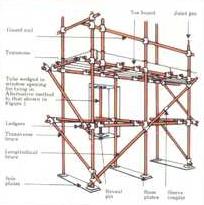
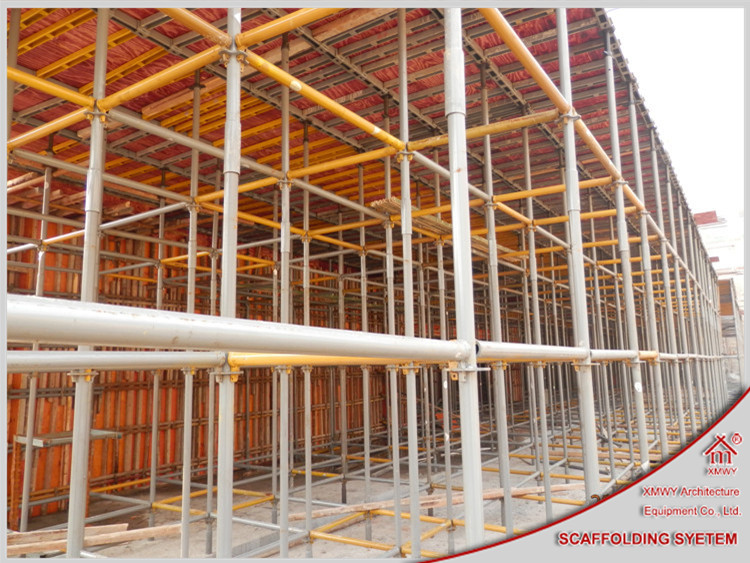
    Scaffolding is the structure that workers use for support as they work on high rise buildings.


    Some scaffolding types are made of aluminium, especially for light works where movable scaffolding is required, eg painting on ceilings.


    For heavy builders works, steel scaffolding is used.


    Hire or Buy.

    For shorter span works, its advisable to hire the scaffolds. For longer term works, over 6 months long, its advisable to buy the scaffold. Specialized scaffolding suppliers have the expertise to erect the scaffolds and assist in moving and dismantling them.

    Small time construction works in Kenya use blue gum poles scaffolding of which its becoming unsustainable environmentally, plus increased timber costs, hence the need to move to steel. Same situation is happening in the roofing structure industry whereby steel roof structures are now more feasible than timber roof structures.


    Formwork.

    Formwork for concreting is now also coming in form of steel panels, supported by steel scaffold.

    The Kenyan construction industry landscape is unfolding towards modernized formwork and scaffolding methods that are cost friendly and last longer than the traditional wooden types.

    Architect Francis Gichuhi Kamau.

    info@a4architect.com

  • Types of Lifts for high rise buildings in Kenya.


    Kenya has now started embracing high rise buildings, with floors aver 5 storeys. Such require that the developer install lifts to allow for easy access to the higher floors.

    Lifts travel at an average speed of between 1 to 5 m.s.

    A simple lift costs around kes 5million to supply and install anywhere around Kenya. This cost is feasible since it allows for the developer to make use of the storeys above 5 floor levels. This enables good returns on investment since the developer can now tap income form the floors above, which, without lifts, would not be habitable.


    Passenger lifts come in various designs such as panoramic, whereby there is a glass wall where occupants can check out the outside as the lift travels up and down.


    Hospital lifts are larger so as to accommodate patients in beds and stretchers.

    Service Lifts.

    Service lifts are also different depending on their usage, which is customized at the point of architectural design.

    In Hotels, there are dumbwaiter lifts, usually used to carry light load from one floor level to the other.

    Car lifts.

    With the increase in the number of vehicles, car lifts are coming in handy since they enable cars to be closely parked, saving on space. The circulation space for driveways in buildings that have parking within them can go as high as 30% of total floor area. With car lifts, this space is greatly reduced and thus can go into providing more car parking hence more income to the developer.


    Automatic car lifts.

    These automatically stack the cars vertically and horizontally within the confined space, usually made of pre engineered steel structure.


    Stair lifts.

    These enable people in wheelchairs to travel up and down stairways.

    Architect Francis Gichuhi kamau, B.Arch. U.o.N.  M.A.A.K[A]

  • Documents needed to enable smooth sale of Property in Kenya

    legal docs when selling a house

    Real Estate property can be in form of vacant land or built-up property.

    Vacant land.

    Vacant land ownership is documented in terms of title deeds. These can be leasehold or freehold. Leasehold titles have the 99 year lease from the Government of which a specific amount of money is to be paid to the Government. Freehold titles do not have the requirement for payment. Most farmlands in Kenya are freeholds. Most urban plots in Kenya are leaseholds.

    A typical vacant land sale starts when the buyer agrees with the seller on the amount then a written agreement for the sale is drafted by a conveyancing lawyer and signed by the 2 parties. Usually, an initial 10% of sale value is to be paid out to the seller after signing of the agreement. With this amount, the seller can then work out the transfer documents with the conveyancing lawyer, get consent to sell from the District Commissioner’s office in readiness for the final transfer to the new owner. Once these are in place, the buyer can then finish off the 90% remainder of the money payment and then with the consent for sale plus the signed transfer documents, work with a conveyancing lawyer to liaise with Ministry of Lands at the Lands Registry to change ownership records into their name.

    The same happens to built up property that has a house/building in it.

    For several owners, they can come together and register a Limited Liability company which in turn will own the land. The shares in the limited liability company will then be owned by the individuals.

    Apartments.

    Apartments and office blocks usually have sectional titles under the Sectional Properties Act. In preparation of a sectional title, the building is constructed, then the original title is recalled by the Ministry of Lands and a new file is opened in which several sectional titles based on the architectural drawings are produced, clearly naming the floor, room number and room size as indicated in the architectural drawing. The sectional titles can then be transferred to new owners through sale agreements.

    In sectional ownership, the land is owned by a Limited Liability Company which every owner in the apartment is also a shareholder. The management of the company then decides the amounts that each owner will contribute towards maintenance of the building’s public areas e.g lawns, parking, sewer, security etc. The sectional property law describes measures to be taken to resolve issues arising within the apartment.

    Architect Francis Gichuhi Kamau.

    info@a4architect.com


  • Joint Venture financing for Construction and Real Estate Projects in Kenya.

    Joint Venture financing options are becoming more and more common in Kenya as time goes by. These are useful where the land owner can not raise the money to construct either through personal savings or through bank loans.
    Most banks require that the owner put in at least between 10 to 30% of the value of the construction , plus the monthly interest repayment ability, for them to give a loan of the balance of 70 to 90% of the construction cost. For large construction projects costing millions of shillings, this is usually a tall order for land owners.
    Solution.
    Joint Venture financiers now come in with the needed 10 to 30% of the cost of construction then they form a joint company with the land owner known as a special purpose vehicle. They agree on the ratio of profit sharing as laid down in the company shares in the SPV.
    The land title now is owned by the SPV. This land title is then charged to a bank for a loan on financing the remaining 70 to 90% of the cost.
    Sales.
    After construction, most joint venture financiers opt towards sales of the units since real estate for sale gives a much shorter return compared to rental real estate. The Joint Venture financiers then take their share of the profits after all costs towards construction are subtracted. In most cases, the land owner gets the value of their land back, plus the profit.
    Funding requests.
    A4architect.com works with land owners to identify potential Joint Venture partners. A4architect.com provides initial architectural design and feasibility studies and the business plan . These documents are then used by the land owners to discuss with potential Joint Venture financiers. Once financiers show more interest, a4architect.com goes further to come up with the rest of the architectural drawings and construction project management as the construction proceeds.
    A4architect.com runs different permutations and combinations for the financial models using excel spreadsheets to come up with the most profitable combination of units .
    Types of units.
    The type of units designed will depend on the cost of land, closeness to main road, closeness to a large urban center and the target market , whether low, middle or high class. All these issues are considered in the initial design and feasibility stage done by a4architect.com so that when the land owner presents the documents to potential Joint Venture financier, it takes a shorter time for the financier to make their decision.
    Architect Francis Gichuhi Kamau.
    info@a4architect.com
  • Modern Prefabricated Chicken House designs.

    Modern Steel panel prefabricated houses for housing chicken are designed with several parameters in mind.

    1. weather control. The Steel prefabricated panels are well insulated with the polysterene sandwich infill, regulating the interior temperature from the external weather.
    2. Easy to clean. The walls and floor should be easy to clean, with a cement plastered floor working best for this purpose.
    3. Security from predators. The houses should be well secured from predators such as cats and dogs. The walls and roofs should be well jointed to serve this purpose.
    4. Aesthetic appeal. The exterior of the chicken house should look neat enough so as not to be a sore sight to the neighbors. This prevents unnecessary complaints by neighbors regarding unsightly structures that breach the area building codes.
    5. Automated feeding and watering apparatus. Watering apparatus comprises of auto doser, filter, meter, main pipe, pressure controller, water level monitor, reinforced pipe, drinking nipple and water cup. Feeding apparatus comprises of feed box, driving motor,feed pipe, auger, sensor and feed pan.

    6.Adequate natural light, ventilation and space.Approximately 1.5ft2 of floor surface per bird is adequate for indoor chicken coops.


    Architect Francis Gichuhi Kamau.

    info@a4architect.com

  • Appreciation rate of Built Up Property vs Vacant Land in Kenya.

    Real estate property comprises of vacant land or built up area within land. Both of these appreciate at different rates. Its important to know these rates to assist in which area between vacant land vs built up land to zero in on your real estate investment.

    Vacant land appreciation rate is different from built up area appreciation rate.


    Upper Hill area comparison.

    Lets check the appreciation rate for Vacant land in Upper Hill area of Nairobi for the last 5 years.

    1 acre in upper hill area costed kes 200 million 5 years ago. It now costs kes 600million for the same. This is a 40% per annum increase in appreciation rate.


    Built up area rate.

    For built up area in Upperhill, floor space was selling at kes 130,000 per m2 around 5 years ago.

    https://www.a4architect.com/2011/02/commercial-property-in-upper-hill-nairobi/


    Current sale price per square meter in Upper Hill for office space is around kes 200,000.

    http://www.property24.co.ke/commercial-property-for-sale-in-upper-hill-103241943


    This represents an appreciation rate of 10% appreciation for built up office space.

    This is closer to the rate of appreciation of building materials in Kenya.

    https://www.a4architect.com/2015/10/how-to-reduce-cost-of-construction-in-kenya-using-prefab-building/


    More profitable.

    The rate of appreciation of vacant land, at 40% annually is much higher than the rate of appreciation of built up area, at 10%.

    Therefore, someone holding vacant land will have a higher income from capital gain compared to someone owning built up area.

    The best solution to gain from both of these scenarios is to buy land,then build steel prefabricated housing structures which can be able to bring in monthly rent. The land can then be sold out at a later day or mortgaged to a bank so as to derive the capital gains out of it, assuming that a bank can lend up to 80% of the land value, which  over time will have appreciated handsomely.

    The structure on it, if made out of steel prefabricated panels,which available at www.a4architect.com , can then be easily relocated to another site without loosing its value.

    Separating built up area from vacant land this way will enable one to reap the benefits of wise real estate investment in Kenya.


    Architect Francis Gichuhi Kamau, B.Arch. U.o.N. M.A.A.K[A]

  • Office Partitions using Prefabricated Wall systems in Kenya.

    Office partitions using prefabricated wall panels have several advantages.

    Sound insulation.

    Office partitions where sound insulation is of importance such as doctor consultation rooms, lawyer consultation rooms, operation theaters, lecture theaters for universities and colleges, steel sandwich insulated panels come in handy.


    Cost savings.

    Steel sandwich prefab panels are cost effective compared to other types of internal partition panels such as MDF Boards, glass and Gypsum wall partitions.

    For much higher quality of interior space, steel panel prefab walls give very good returns in terms of cost savings.

    Fire safety.

    Steel sandwich panel partitions have an advantage of fire safety. They take long for fire to spread from one room to the other . They also are not easy to ignite, compared to other types of partitions such as block boards and MDF boards.

    Construction time saving.

    Steel panel prefab systems are easy to install , hence saving on time and labour costs.

    Ease of dismantling and reuse.

    Steel internal wall panel partitions are easily dismantled and reused on other sites . This ensures overall reduction in operating costs of the end users over time.

    Ease of redesign of interior office space.

    Steel sandwich prefab panels are easy to redesign and rearrange a when the office space needs change. Rearranging panels to increase or reduce space is a matter of a few hours when dealing with steel sandwich prefab panels.

    Availability.

    To purchase steel sandwich prefab panels, email info@a4architect.com.

    Arch. Francis Gichuhi Kamau.

  • Prefabricated Houses for Backyard Office use.

    Steel prefab houses come in handy for use as backyard offices.

    They have advantage in terms of ease of getting County Planning department approvals since they are categorized as semi permanent structures, hence easy to obtain planning permissions to construct.

    In terms of lease agreement with  the landlord for rented premises, they also would not in any way antagonize such leases since their ability to be easily dismantled when the lease is over guarantees their non interference with the landlord[s property as per lease agreement.


    Properties that sit on large compounds, eg in Runda, Kileleshwa, langata and Lavington, can easily add more classy livable space in their backyards through construction of steel sandwich prefab panel houses.

    High rise Offices.

    For High rise office buildings, steel sandwich panels are used to partition the building, giving a well insulated, classy outward appearance.


    Interior partitioning.

    For interior office partitioning, particularly where sound insulation is crucial, eg hospitals, consultation rooms , lecture rooms, steel sandwich panels are very useful. The polysterene sandwich in between the 2 layers of steel ensures minimum sound is transmitted from one room to the other.

    Availability.

    Steel sandwich panel prefabricated buildings and solutions are available for sale at www.a4architect.com . Email info@a4architect.com for sales inquiries.

    Arch. Francis Gichuhi Kamau.


  • How to Reduce cost of construction in Kenya using Prefab Building.

    The cost of construction in Kenya has steadily been on the rise due to various reasons as below.

    Cost of Labour.

    With the high cost of living, cost of labour has gone up . 10 yeas ago, a skilled labourer Fundi got paid kes 400 per day while an unskilled labourer mtu wa mkono got paid kes 200 per day. Now skilled labourer fundis get paid a minimum of kes 1000 per day and skilled labourer fundis dealing with carpentry works ask for a minimum of kes 1,500 per day. Unskilled labourers watu wa mkono now get paid kes 500 per day. This represents around 27% annual increase in labour costs.

    Kenya’s inflation rate is reported at around 10% per annum but the situation on the ground in terms of construction labour costs is much higher at 27%.

    Most earnings have not increased in the same rate, hence Kenyans having to dig deeper to construct as time goes by.

    Prefabrication helps to resolve this since prefabricated houses are easy to bolt and screw together, hence reducing labour costs.


    Cost of Sand,Ballast and Stone.

    Cost of sand has increased steeply over the years after Counties that are the main sources of sand, namely Machakos and Kajiado counties, raised fees and levies to sand harvesting. National Environment Management Agency has also come in to reign on sand harvesting which causes serious damage to the environment, especially river banks. This has resulted in less sand available hence higher costs.

    A ton of sand costed kes 1000 5 years ago. It now costs kes 2000. This represents an average of 20% per annum increase. Same applies to ballast.

    A 200mm thick quarry stone costed kes 40 per block delivered around Nairobi 2 years ago. It now costs kes 60 for the same. This represents 25% increase per year.

    With the above calculations, its safe to bet that the price of construction materials and labour will increase by 25 to 30% every year.

    With the capping on the maximum tonnage that a lorry can carry from the Juja stone quarries along Thika superhighways, lorries are carrying less tonnage, passing the cost on to consumers, hence making the cost of stone go high.

    Also, availability of land for stone quarries is also fast decreasing as people use the land to build their own homes, hence making stone scarce and more expensive.

    Steel prefabricated housing.

    Using steel panels to construct is thus a very good alternative to the usual stone construction since steel prefabricated panel houses come at a much lower cost than stone housing and offer the same comfort.


    Steel prefab panels are available in kenya at www.a4architect.com. For sales inquiries, email info@a4architect.com.

    Francis Gichuhi kamau. B.Arch. U.o.N. M.A.A.K[A]