Month: October 2015

  • Why Crowdfunding Real Estate Is Better Than REIT

    Recommend Article Article Comments Print Article


    Making a property investment is a major commitment for most and can run into hundreds of thousands of dollars worth of commitment if not more. In response to that a few years back some clever finance folks came up with what is known as a Real Estate Investment Trust or REIT.

    A REIT is conceptually very similar to a mutual fund. You are busy and don’t necessarily have the expertise or knowledge to make good investment decisions. And the amount of money you have is not sufficient to get the best possible deals. So you hand over your money to a fund manager who pools monies from a number of small investors just like you and then invests in a bunch of properties.

    The idea behind investing in a bunch of properties is that you get diversification and get access to the growth and cash flow of a number of premium properties, which you would have never been able to get access to yourself. And most REITs are also trade-able. Just like Equities or Bonds you can sell the units you hold to some other investor who is willing to buy giving you ample liquidity.

    So you have an expert property manager, diversification and liquidity. This thing is the best thing since sliced bread, correct?

    Wrong.

    While conceptually REITs make a lot of sense their performance leaves a lot to be desired. Let’s take a look at the benchmark REIT index in Australia.

    In the last ten years investors have lost 3.5%. While yes there has been the GFC of 2008 in the interim, equities suffered a similar drop and have since recovered spectacularly.

    So the theory has to be property market suffered a terrible crash in 2008 and has been limping since ever since and the expert property manager is not at fault.

    Wrong again.

    Australian property did not suffer a major crash in 2008 and have since performed well. If the so-called expert fund managers were worth the ungodly amount of fees they charge they should have at least mirrored the markets performance. Yet they have saddled their portfolios with white elephants. And remember whether your investment gains or looses they will still charge their fees. They always win!

    People should be in control of their investment decisions. Most folks have a good amount of local knowledge. They know which property development is going to be a dud and which is going to be a winner. An innate knowledge of a myriad of local factors,which the fund managers sitting in their air-conditioned high-rise offices will never know or will care to know. And unlike equities, property is not volatile. You do not need to sit starting at a monitor worrying whether your asset prices are going up or down. A manager has limited role to play in making your selection.

    A crowdfunding real estate platform allows you to pick and choose the specific and multiple properties you want to invest in and still invest only in small amounts. In this way, you don’t have to pay a fund manager unnecessary fees and be saddled with white elephants.

    A crowdfunding real estate platform removes the middle men and empowers investors by giving them choice and saving management fees. This is why investing in opportunities listed on crowdfunding real estate platform is fundamentally superior to a REIT.

    Article Source: http://EzineArticles.com/expert/Moresh_Kokane/2147830

  • Who Let The REIT Out?

    Recommend Article Article Comments Print Article


    What’s happening to capital in America today is beginning to resemble the bible’s Exodus. Corporations are fleeing in droves, incorporating in other industrialized nations to avoid evil Pharaoh, Uncle Sam. Called, tax-inversions, companies who have operations and a significant portion of their earnings generated abroad, side-step the double taxation that would otherwise take place by re-incorporating in a country with a lower corporate tax rate. With the U.S. corporate tax rate currently at 35% (the highest of all the industrialized nations) and with “tax-credits” unable to offset taxes levied by host countries, it is hard to cast patriotic shame on a business that completes this maneuver. The situation is worrisome for Congress. The US treasury stands to lose billions in possible corporate tax revenue. Look for Congress to pass a bill this year to curb the flood of tax-inversions.

    Tax-inversions have taken the lion’s share of media coverage. Fewer people (who work in D.C.) are aware of the tax saving move other corporations are taking to avoid Uncle Sam’s whip: REIT conversions. Real Estate Investment Trusts are not new. Since the 60’s, Congress and the IRS have been relatively easy on REIT entity formation. Indeed, nowadays non-traditional assets, such as timber, data centers, prisons, billboards, and others, are qualifying for REIT status.

    Even with the recent spike in REIT conversions, the treasury’s loss of tax revenue will only be a blip compared to other tax avoidance ploys like inversions. REITs were a middle-class spurred creation, allowing more investors access and participation in real estate deals. Despite revenue loss, our government gains by not having to subsidize urban improvement projects.

    Why would a corporation (C-corp) want to restructure into a REIT or spin-off part of itself (its real estate assets, traditional or otherwise) into a REIT entity? There are many benefits. By electing REIT status, companies can essentially hand off an eventual tax burden, in the form of appreciation of its RE assets, to the newly structured and independent REIT. For tax purposes, the transaction from parent to offshoot is either a sale or a transfer. If it is not something known as a “deemed sale election,” a transfer in other words, the REIT becomes responsible for the net built-in gain in the converted property. If the parent company declares the transaction a deemed sale, they pay the tax man for any appreciation (there could be a loss in value of the subject properties as well, i.e., depreciation) from the original cost basis. For most people, trying to understand the tax code and the regulations that come with REIT election is as painful as learning Latin at the dentist’s office. But if one is a glutton for punishment, consider starting out with the Thomson Reuters’ Legal Solutions Real Estate Investment Trusts Handbook, 2013-14 edition.

    Incentives to Spin-Off Assets into a REIT: Valuation

    So far, companies can shield themselves from the taxes in capital gains from their RE assets by passing these off to the newly formed REIT entity. From an equities standpoint, the parent company, if publicly traded, stands to benefit with investors bidding up their common shares from the news release. Companies can unlock intrinsic value (instantly increasing their market cap) with a REIT announcement, and keep it for the short term if they can follow through with the spin-off. The REIT entity in turn commands an enterprise valuation of its own once the IRS gives its blessing. It can be indeed attractive for a management team to consider a stock that fetches a higher price in the open market with both the operating and REIT entity combined. People are familiar with the tax benefit REITs enjoy. REITs can deduct 100% of their profits (by issuing a dividend to shareholders) on their specific tax returns. They can keep up to 10%.

    Surely, electing REIT status is financial alchemy at its best. But it is not for every C-Corp. There are REIT “tests” that must be passed yearly. For example, can the ensuing REIT entity prove it has at least 100 different shareholders? Can it show that no more than 5 individuals own more than 50% of the value of the common shares? Will the REIT generate at-least 75% of its gross income from real estate related activity (collecting rents or interest from mortgage notes, e.g.)? There are other operational, organizational, and compliance limitations that have to be resolved by a board of directors. In general, REIT structure is not an appropriate choice for a closely held family business.

    How Can a C-Corp Become a REIT?

    To qualify for REIT status a company first has to make a REIT election with the IRS. They must file an income tax return using Form 1120-REIT at the end of the REIT’s first year (or part-year), on or after March 15th. The corporation must not necessarily meet the 100 Shareholder or 5/50 Test if it seeks to qualify that same year, but it will upon the start of its second taxable year. Also be prepared to send plenty of letters to shareholders of record, telling them details of share ownership. C-corporation management teams do right by their shareholders when they consult with law, accounting, and investment banking firms that specialize in REITs.

    Want to know more about REITs and investing in commercial property? Visit http://www.commoncoremoney.blogspot.com. Subscribe and I’ll send you my eBook: Common Core Money: Financial Literacy for Educators & Other Professionals.

    Article Source: http://EzineArticles.com/expert/Carlos_O_Gomez/2069450

  • Real Estate Tips For Beginners

    Recommend Article Article Comments Print Article

    Have you always wanted to invest in real estate but don’t know where to start? Here are some of the different areas of the industry that you can invest in:

    Areas That You Can Invest In

    Residential: these are properties such as townhouses, apartment buildings and vacation houses. Here a person or a family will pay you in order to live in your property. The length of time that an individual lives in your house depends on your rental or lease agreement.

    Commercial: commercial real estate consists mainly of office buildings. When you construct office buildings you can rent them to companies and small business owners. Again the length of time that the business owners use your property depends on your agreement.

    Industrial: this one consists of car washes, storage units and any other special type of real estate where customers use your facility on a temporary basis.

    Retail: it consists of trip malls, shopping malls and any other retail storefronts. When you construct a mall, you can rent it to a person interested in running it or you can run it yourself.

    Mixed-use: this is where you combine any of the above categories into one project. For example, you can construct a storied building with offices, malls and residential areas.

    Real estate investment trusts (REITs): this is where you invest in real estate trusts. When the mortgages generate profits, you get a share of it.

    Tips on How to Be Successful In The Industry

    For you to be successful in the real estate business you need to do a number of things:

    Involve an attorney: regardless of the area of the industry that you are interested in always involve an attorney. A good attorney will help you in finding the right construction company. The attorney will also help you in writing professional rental contracts.

    Neighborhood: the area where you invest in greatly determines the amount of money that you will make from your investment. To be on the safe side always go for a neighborhood that is growing or has the potential of growing.

    Run the numbers: many investors assume that when they construct a building they will have a tenant, which is usually wrong. Before you invest in a building you should run the numbers and find out if you will be able to pay the mortgage if the property sits empty. If you find that you can’t be able to repay the mortgage in the event that the property doesn’t have a tenant for a month or two, chances are that you are stretching yourself too thin.

    We are the experts when in comes to Real Estate in Jaipur. We are the best Builders in Jaipur and we stand for quality construction and honoring commitments to the highest of ethics and standards in real estate and property development. Visit the given links to know more about us.

    Article Source: http://EzineArticles.com/expert/Chinu_Garg/2106293

  • Glass Wall facades for Highrise buildings in Kenya

    In the recent 10 or so years, high rise buildings around Nairobi have started embracing glass as an external walling element.
    Apart from the clean, sleek aesthetics, glass also has several other advantages.

    Double glass.
    Buildings such as National Bank building along Harambee avenue have a double glaze facade, with 2 layers of glass around 300mm apart.
    This helps to reduce air conditioning whereby natural air is let to flow in without causing life effect on papers internally.

    Double glazed glass facades also insulate the interior of the buildings well since the air trapped in between the 2 layers of glass serves as an insulator from external vagaries of weather.

    Such designs are more common in European countries.

    Cleaning.

    High rise buildings external facades should be designed such that its easier and friendlier to clean the windows from inside and outside . The standard framing for high rise building glass is aluminium, which is light weight but strong enough to support the glass. Care should be taken at installing to ensure that the glass and its frame are rigid enough so as not to fall and injure pedestrians on the lower floor levels.


    Wind load.

    Highrise buildings have to be designed to withstand huge wind loads so the glass has to be thick enough to support the wind loading. A minimum of 5mm thick to the average of 10mm thick glass is used.

    Lamination.

    The glass is laminated with a thin layer of resin so as to provide strength and support in case of fracture, holding the glass pieces to prevent them from injuring occupants and pedestrians.

    In some cases, toughened glass is used. Toughened glass crumbles into granular particles in case of fracture, similar to car windscreens on impact. The toughening encloses alot of energy inside the glass such that when broken, the energy is released in form of small particle like granules.


    Modern laminated glass.

    The new type of glass used for high rise structures is made up of 2 lalyers, around 5mm thick each, with one layer coloured, while the inner layer is transparent. In between, there is a thin layer of material which has insulation, anti UV Properties embedded within it.

    There are Kenyan laminated glass manufacturers who can embed images and even clothes in between the 2 layers to create the desired pattern.

    Embedding with leaves and grass, for example, is a method used to create bonding with nature on laminated glass walling used for bathrooms in game lodges.

    Insulation.

    In some cases, where high insulation from the sun is required, in between the 2 laminated pieces of glass, a thin layer of Argon gas is set up to act as insulator.


    BIPV facades.

    Building intergrated PhotoVoltaic Facades are external glass walls of high rise buildings that have solar panels incorporated in them. These generate solar electric power to be used within the building.

    In between the 2 layers of glass for lamination, photovoltic cells can be incorporated inside the layers to generate electricity.


    Architect Francis Gichuhi Kamau.

    info@a4architect.com

  • Design for TV show Stage Backdrops , Display points and Church pulpits.

    The stage backdrop design plays an important role in aiding to keep the viewers glued to viewing the stage performance. These are mostly seen in churches ,TV Shows and play theaters.

    Backdrops should be easily to construct, within budget and using locally available materials.
    The backdrop design can be in 2D or in 3D. 3D display backdrops are better in that they make it more interesting for the viewer, without interacting or stealing the show from the presenter.

    TV Stations.

    A simple panoramic image printed on canvas, with real life window grills 300mm away from the canvas, creates a realistic imagery of a setting with large panoramic views. The steel window grill casts a small shaddow on to the screen, giving it the appearance of a real vista.

    Churches.

    A backdrop design that is low cost yet visually captivating is most appropriate here. This can easily be changed after every week so as not to create a boring monotony to the attendants.
    Use of plastic bottle bottoms, paper plates, coloured perspex and strroform is appropriate since these are low cost, easy to obtain, light weight and give bold visuals at the stage.Drapery is also a good form of backdrops, with colourfull matrials such as maasai shukas, women’s lessos etc.

    PVC.

    Using PVC pipes and accesories, its easy to create lightweight framing for backdrop support.


    For sturdier backdrop designs where heavy material will be hung and supported, steel plumbing tubes sourced from local hardware shops work best for these.

    Lighter materials such as water bottles can be simply supported by the PVC framing.

    Themes.

    The backdrop design should be worked out to go with the theme.If its in a church for example, and the topic of discussion is Easter festivities or Christmas, a theme depicting this is most appropriate. Once the period is over, a new theme can then be designed.


    LED Lights.

    LED lights consume less electricity and also have a glowing effect, suitable for backdrop displays. These lights can be incorporated into the backdrop design, shileded using transluscent materials suchas perspex so as to come out in a soft glow.


    Architect Francis Gichuhi Kamau.
    info@a4architect.com

  • Naivasha Hospital Maternity Design

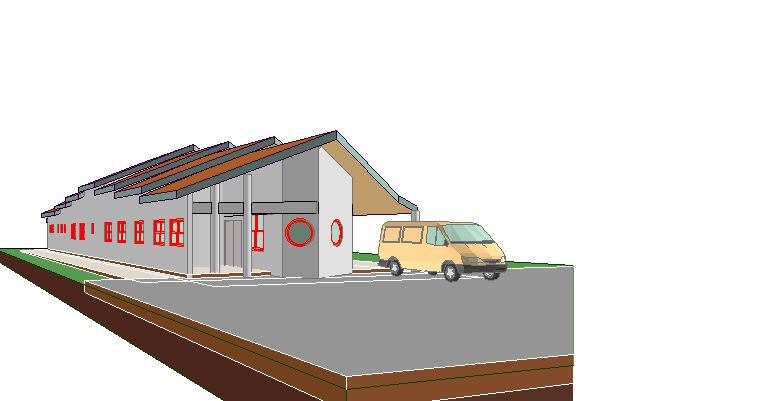
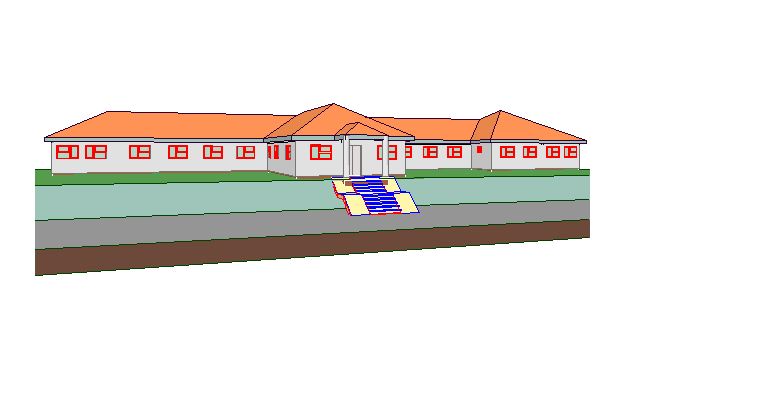
    Naivasha Hospital maternity wing design has been designed to accommodate 50 beds. The interior design offers for smooth operations between consultation room, operating room, sluice room and maternity wards. The outward design is characterized by a cascading roof that gives a picture of balance and serenity.

    naivashahosp


    naivashahospmaternity

  • Hospital Designs. Nakuru Love and Hope Hospital


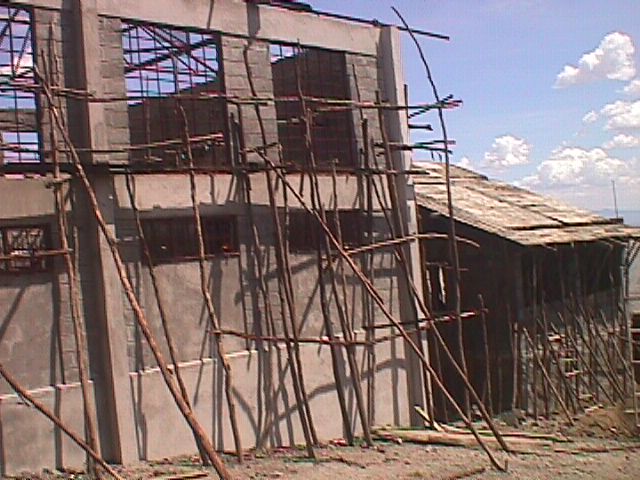
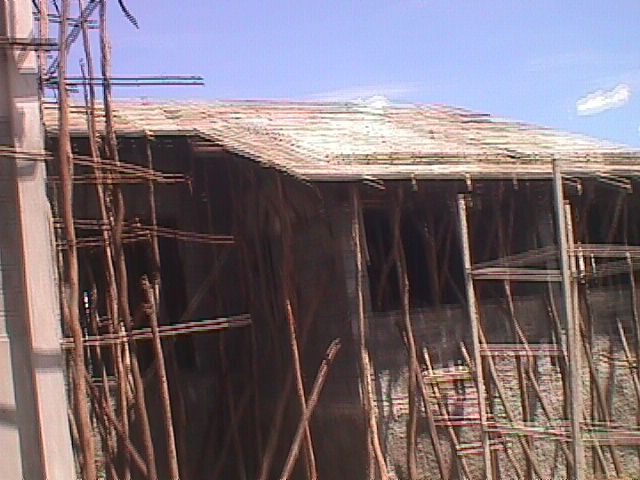
    Hospital located in Nakuru County, Section 58 area. Unique features include a concrete roof, serene views towards Lake Nakuru, well-sculptured landscape and flowless internal circulation design.


    MVC-001F


    MVC-002F MVC-003F MVC-004F MVC-005F MVC-006F MVC-007F MVC-008F

  • Excavations and Basement Tanking and Lining for Buildings in Kenya.

    Excavations and Basement Tanking for Buildings in Kenya.

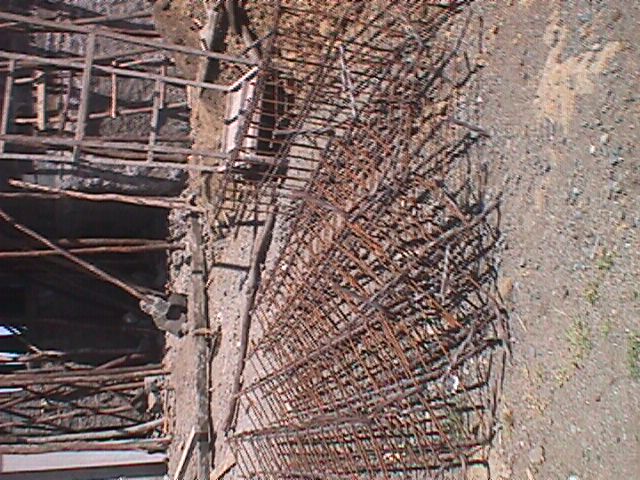
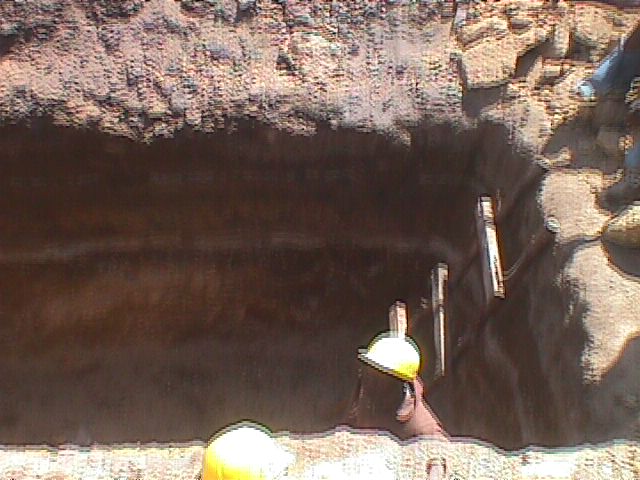
    Construction projects in Kenya have now advanced to a point where its feasible to make use of underground basements plus several high rise stories so as to increase the built up plinth area. As land becomes a scarce resource , Kenyan buildings are increasingly faced with the need to excavate and increase building plinth area downwards as well as upwards.

    In most cases, excavated spaces are converted into basement car parks, which can go to several storey levels downwards. The NSSF Building near Jeevanjee that houses Nakumatt supermarket has the deepest basement in Kenya, several floors below ground floor level.

    Excavation is done using excavators which load the soil into dump trucks for onward dumping into approved dumping sites around Nairobi.


    Basement Tanking.

    Basement tanking refers to methods of water proofing the basement walls and floors from underground water. Nairobi and its surroundings sits on an area with very low water table so basement tanking is critical.

    Water can damage the walls and floors, making the interiors unhealthy for human habitation due to mold and fungi. If in excess, it can also damage the structural integrity of the building.

    The building that colapsed in Mlolongo a few years ago was on swamply ground.

    https://www.a4architect.com/2012/06/why-the-mlolongo-building-collapsed/

    The building that collapsed off Jogoo road last year was also on swamply ground.


    https://www.a4architect.com/2014/12/reason-kaloleni-jogoo-rd-building-colapse-december-2014/


    Jogoo House, in Nairobi CBD, also has basement walls and floors that are in an area that is full of swampy water.


    Basement lining.

    Waterproof membrane layers are fixed in between the walls to prevent the water from leaking into the building interior.


    A water pump is then installed to pump out the seeped water.


    Basement tanking.

    Waterproof coating is stuck onto the wall and floor surface. Some coatings are full vapour such as epoxy and polyurethne, while some allow for breathing, which are mainly cement based. Tanking is good for areas without serious underground water amount and pressure. Most of Langata, CBD, jogoo road, Runda areas require more of lining rather than tanking since they have high underground water volumes.

    Architect Francis Gichuhi Kamau.

  • 3 bedroomed House for sale in Ketengela

    3 bedroomed house for sale in Kitengela. Kes 5.5million.

    front

    inside

    side

    Enkasiti.
    email info@a4architect.com