Category: A4architect

a4architect posts

  • Land for Sale, Kitengela, opposite Yukos.

    1/8th acre plot for sale at Kitengela, opposite Yukos. Se Map below.
    Price guide kes 7m.
    Call 0721410684 or email info@a4architect.com

    [googlemaps https://maps.google.com/maps?f=q&source=s_q&hl=en&geocode=&q=yukos+oil+kenya+limited,+Nairobi+-+Namanga,+Athi+River,+Kajiado,+Kenya&aq=0&oq=yukos&sll=-1.491816,36.956871&sspn=0.00607,0.010568&t=h&ie=UTF8&hq=yukos+oil+kenya+limited,+Nairobi+-+Namanga,+Athi+River,&hnear=Kajiado,+Kajiado+Province,+Kenya&ll=-1.508847,36.955904&spn=0.733097,0.360897&output=embed&w=425&h=350]

  • Self Healing Wall Plaster.

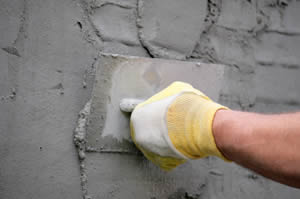
    Wall plasters are commonly made of a mortar mix of cement and sand, in a ratio of 1 to 3 or 1 to 4 This cement plaster is usually quite rigid and water proof. This does not allow moisture trapped within the wall to escape, leading to moulds on the walls later on.
    Cement plaster.

    Also, due to the rigidity, cement plasters are prone to cracks when the wall support shifts during settling. The advantage of cement plaster is the ability to set and harden within a very short time.

    Solution.

    Lime.

    Lime plasters have been used for hundreds of years.Cement is a relatively new product, less than 100 years old.
    Lime plaster is mixed in the same 1 to 3 and 1 to 4 ratio as cement. The advantage of lime plaster is the special effect of self healing, whereby cracks on the wall fill up with the calcium carbonate emanating form the rest of the lime plaster. Lime also allows the wall to breath, letting out any trapped moisture in the middle.

    Cement plus Lime.

    Cement can also be mixed with lime and sand to add to the cement and lime advantages into plaster. A ratio of 1 to 2 to 9 for cement, lime and sand.
    There is a church built in the 1940s in the United Kingdom with the same mix and is still standing to date.
    http://ihbc.org.uk/context_archive/53/Limemortar_dir/Limemortar_2.htm

    The initial layer that supports to the existing wall can be made abit stronger to help in bonding. The subsequent layers that stick on to the initial later can have a weaker mix.

    Lime addition helps to improve the workability of the plaster, making it easier to spread with a trowel.

    Francis Gichuhi Kamau, Architect.
    info@a4architect.com
    0721410684

  • Land 1 acre for sale at Syokimau.

    Land 1 acre for sale at Syokimau.
    Located 3.1 km from Mombasa road.
    Price guide kes 20m. call 0721410684 or email info@a4architect.com for more info.

    [googlemaps https://maps.google.com/maps?f=d&source=s_d&saddr=Syokimau+-+Katani+Rd&daddr=Katani+Road&hl=en&geocode=FVP16v8d1XozAg%3BFb446_8dds8zAg&sll=-1.362284,36.95348&sspn=0.012142,0.021136&t=h&mra=dme&mrsp=1&sz=16&ie=UTF8&ll=-1.362284,36.95348&spn=0.012142,0.021136&output=embed&w=425&h=350]

  • Earthbag house in Kenya. Construction costs.

    Earthbag building currently being constructed at Kiserian, Nairobi.
    Cost breakdown.

    Foundation. 142 bags=kes 3,000.
    Super structure walling.70m2 =kes 21,000
    Roofing.kes 22,800.

    Floor=kes 30,000
    Doors. 2 No. @ kes 5000=kes 10,000
    Windows. 2 No. @ kes 2,500=kes 5,000

    Wall plaster. =kes 28,000.

    Paint=kes 28,000.

    Plumbing and electrical works=kes 20,000

    TOTAL=KES 167,800.

  • Earthbag house construction in Kenya. Cost of walling.

    Earthbag houses have walls made from polypropylene bags filled in with soil.
    Cost of wall.

    Cost of 1 bag of dimensions 850mm by 450mm by 100mm is kes 20. 12 bags make 1 m2. Cost of bags per m2 =12 x 20 =kes 240.

    Cost of soil.
    Assuming the soil is available on site for free, the costs will be only labour costs.
    With Manual labour of kes 500 per day, a man can dig up 3m x 3m x 0.5m =4.5m3 volume per day.
    One sack contains a volume of 0.7 x 0.45x 0.1=0.0315 m3 of soil.

    One man can fill in 142 bags per day. At a cost of kes 500 daily, this works out to kes 3.50 per bag. For 1 m2 or 12 bags, this works out to kes 42 per m2.

    Cost of earthbag walling per m2 is kes 240 plus kes 42=kes 282. Add miscellaneous to total kes 300 per m2.

    This is the lowest cost possible for walling compared to stabilised cement blocks at kes 500 and stone at kes 1000 per m2.

    A 30m2 bedsitter room, with 64m2 wall surface, will cost kes 19,200 for walling.

    Advantages.
    The thick walls are strong enough to carry heavy loads hence another storey can be added on top. Buildings such as Fort Jesus, standing till today after construction 500 years ago, have similar thick sized walls which support several storeys.

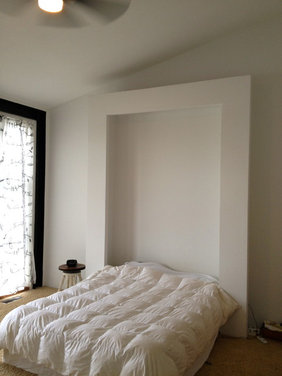
    Its also easier to create indent patterns which can be infilled with glass blocks or glass plus LED lights to create interesting wall facades.
  • The Dubai Mall & The Dubai Fountain

    https://www.youtube.com/watch?v=VtMRiKMbQ2U