Category: A4architect

a4architect posts

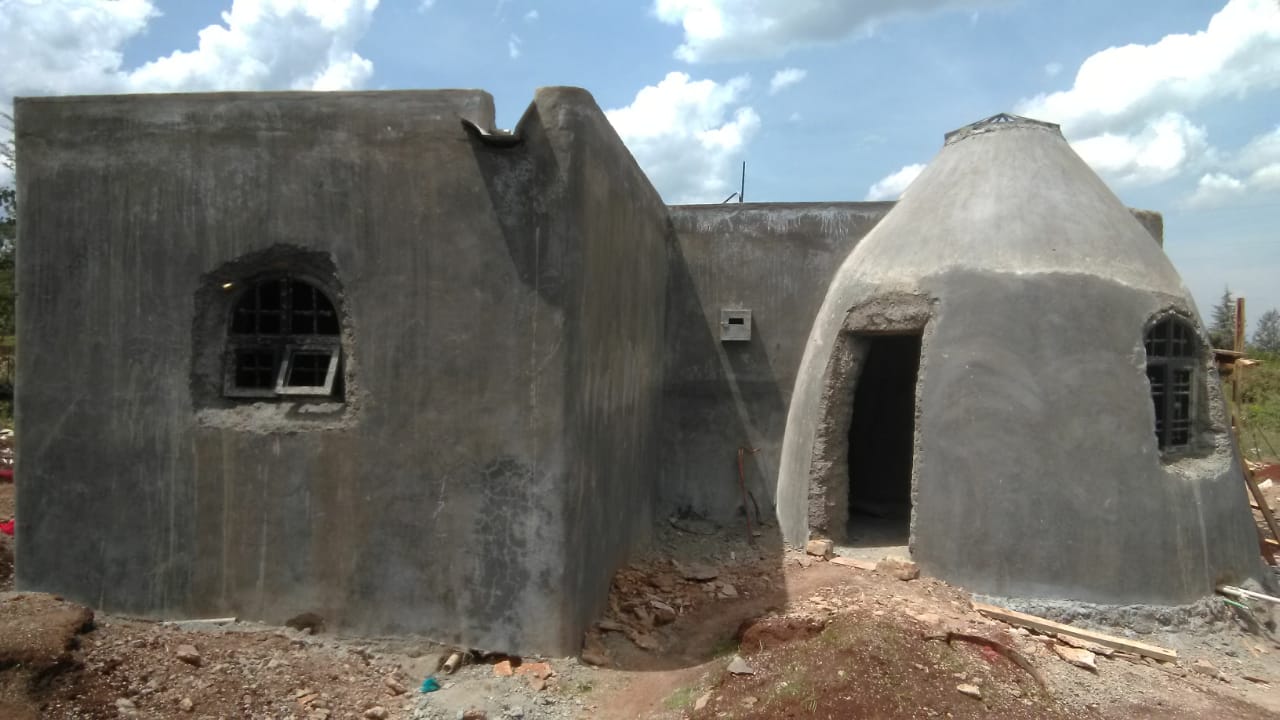
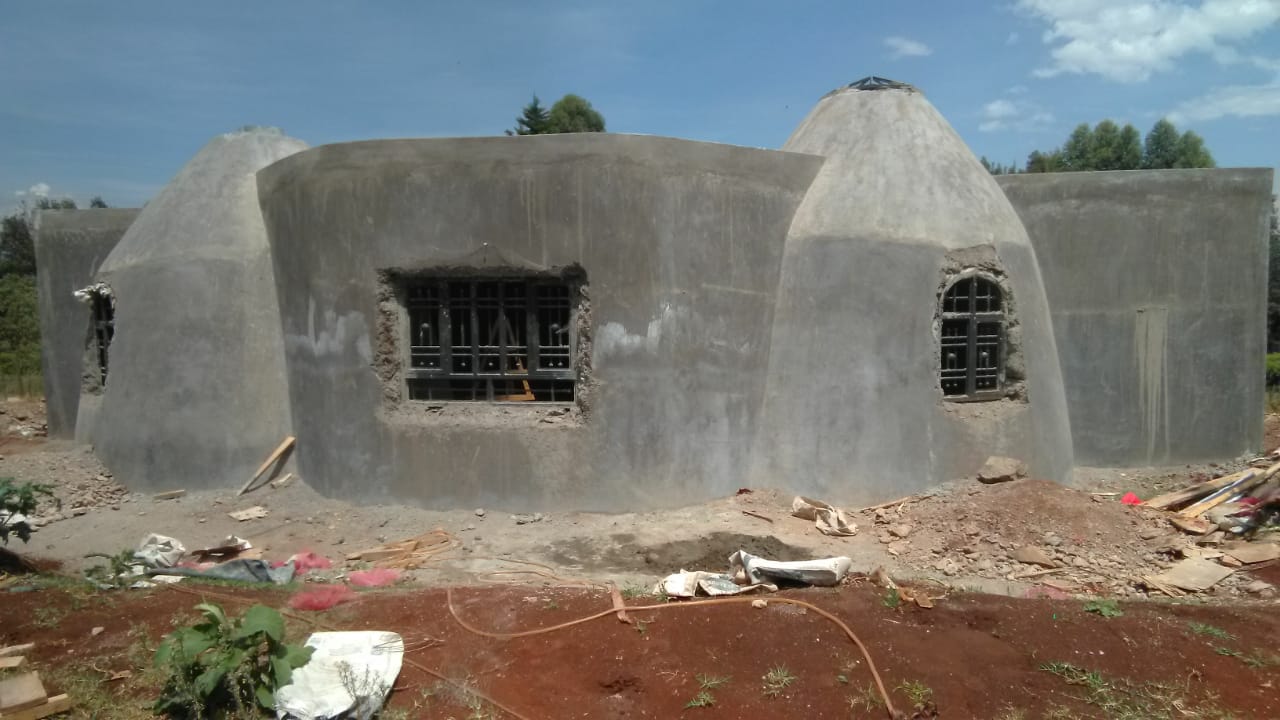
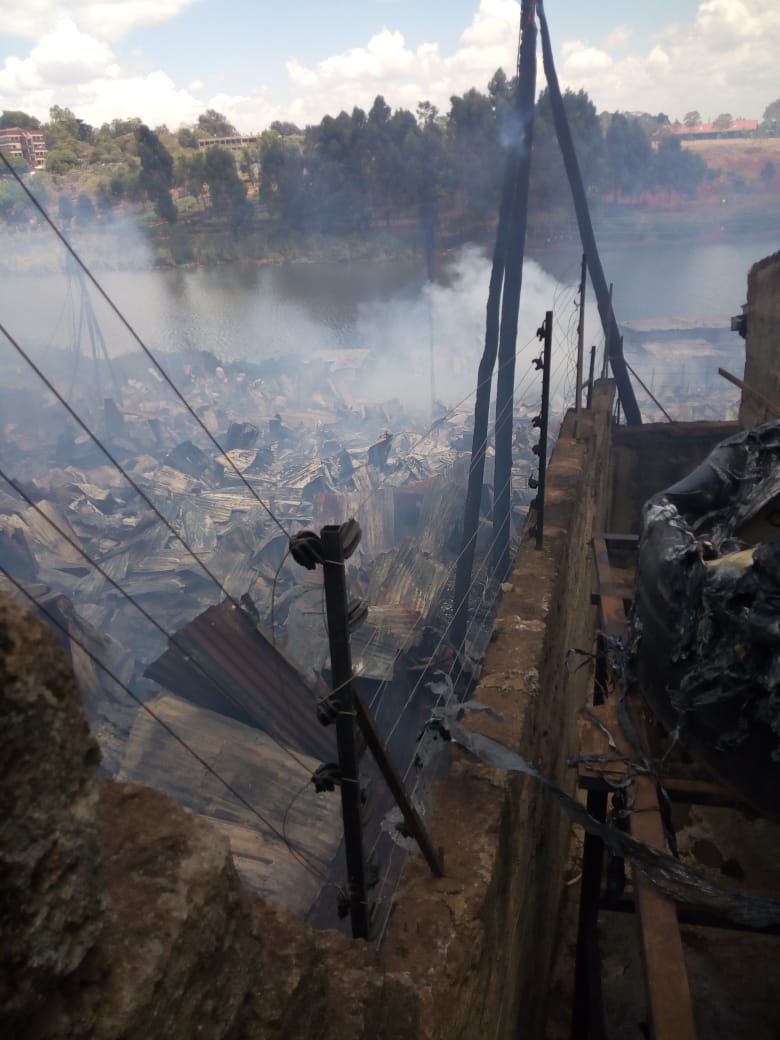
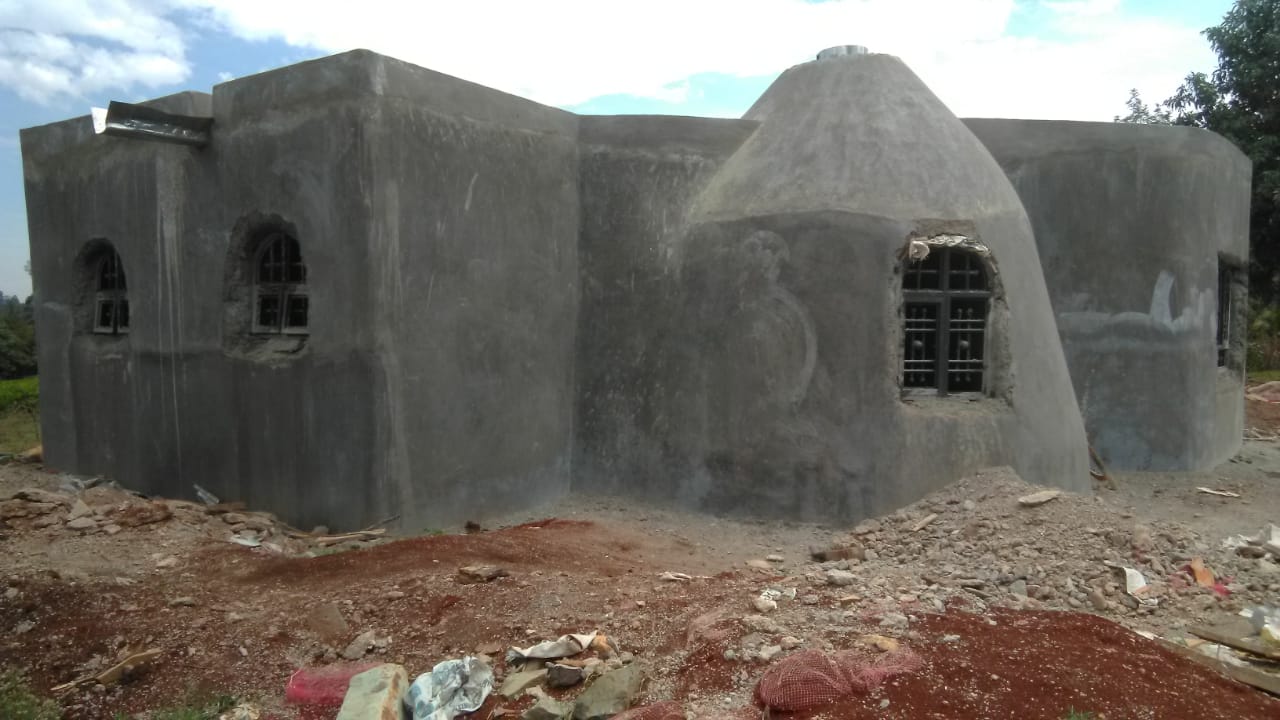
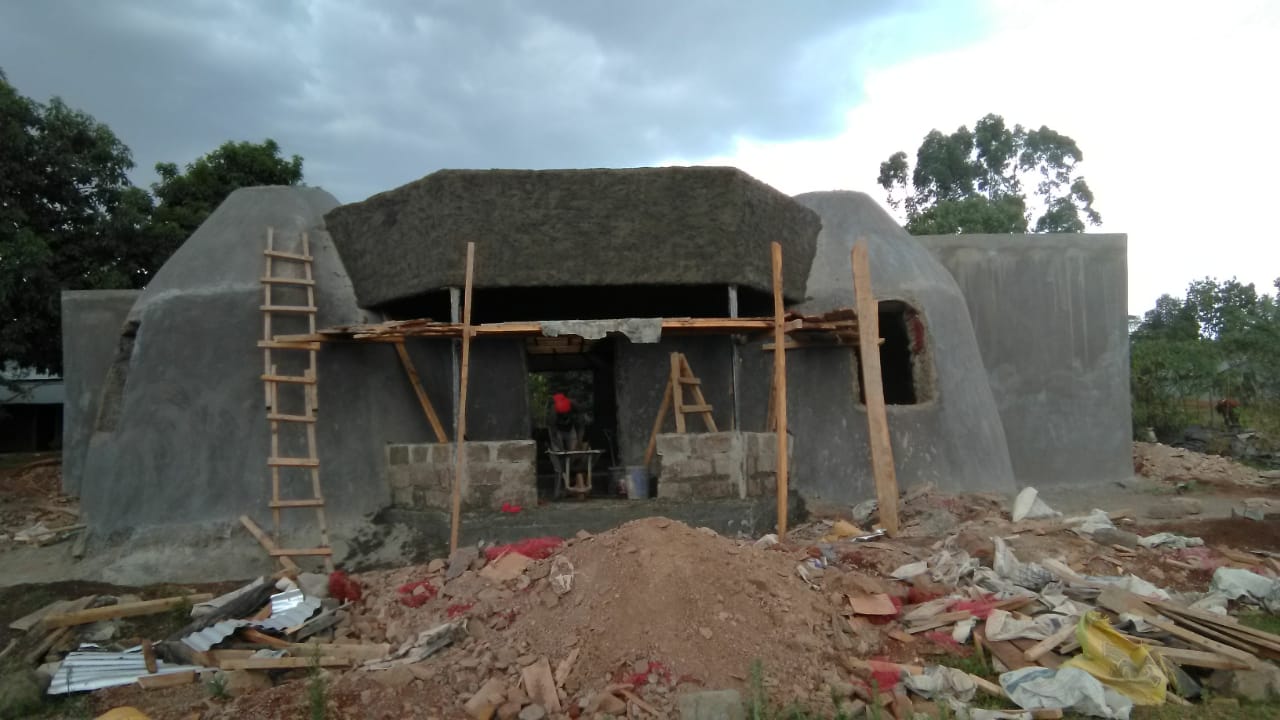
  • Earthbag House. Windows and plaster

    <strong>house and the features it comes with.</strong>

    The earthbag house is made up of soil stacked up in onion net type bags and walls plastered with cement. There is a dome shape which requires no roof and the vertical walls which have the normal type of roof with iron sheet roofs on timber trusses.

    <strong>How long has it taken to construct? </strong>

    Construction of a 3 bedroomed house ideally usually takes 12 weeks.

    <strong>What makes this a viable method of construction(eg the cost aspect)?</strong>

    The earthbag houses have a unique look and also save on costs since most of the building material is soil and the dome shapes usually require no roofs.

    <strong>Is this the first of a kind architecture? </strong>

    In Kenya, this is amongst the first earthbag houses. There are also a couple small ones built in the Maasai Mara .

    <strong>Where is it borrowed from?</strong>

    Earthbag housing is common in South America, Brazil, Equador etc. Also, In USA, California, this method is also growing in familiarity, spearheaded by Architect Khalili of the Cal Eath Institute  https://www.calearth.org/

    &nbsp;

    Architect Francis Gichuhi Kamau

    0721410684

  • Protected: Earthbag House. Windows and external finishes

    This content is password-protected. To view it, please enter the password below.

  • Earthquake effect on Buildings in Kenya.

    Earthquake effect on Buildings.

    Earthquake strength is measured according to the Richter scale, from 1 to 10.

    Scale 1 to 5 usually dont cause any damage to buildings except for a few wall plaster chip offs, a few window glasses cracked. Its mostly felt in the upper floors of a building.

    Scale 5 earthquake will cause significant damage and will unsettle and rattle furniture withing the building.

    Scale 6 earthquake is especially fatal where it comes to buildings constructed several storeys high in a densely populated area with low enforcement of building standards by County/Local Authority planning departments eg Kayole, Mathare North areas of Nairobi.

    Last year, August 2018, a magnitude 6.9 earthquake hit Lombok, Indonesia and caused a fatality of over 400. This was after another magnitude 6.4 earthquake in the same area a week before.

    https://edition.cnn.com/2018/08/13/asia/lombok-earthquake-intl/index.html

    Aftershock earthquakes usually follow the 1st one within a couple of days and in some instances like in the 2004 Indian Ocean Tsunami earthquake, 2 years.

    1928 Magnitude 6.9 earthquake, Subukia, Kenya.

    The 1928 Magnitude 6.9 earthquake in Subukia nearly 100 years ago is the largest to have affected Kenya in recent times. It was followed by a Magnitude 6.0 earthquake 4 days later in the same area.

    Luckily, there were few high rise buildings in the region hence minimal injuries if any. A similar quake if it were to happen in the current times will cause a major catastrophe in Nakuru and Naivasha towns, where building construction for high rise apartments is not as regulated by local authorities to ensure quality standards are followed.

    Magnitude 7 and above earthquakes usually cause ammagedon-like fatalities especially in towns where the County /Local Governments have been lax to ensure quality of buildings standards are followed.

    The 2010 Haiti Magnitude 7.0 earthquake had a fatality of over 300,000 people.

    https://www.britannica.com/event/Haiti-earthquake-of-2010

    The initial earthquake was Magnitude 7.0 then it was followed by 2 aftershocks of 5.9 and 5.5 a few days later.


    The Sumatra, Indonesia 2004 magnitude 9.1 earthquake Tsunami had a fatality of over 200,000 people.

    Architect Francis Gichuhi Kamau.

    0721410684

    info@a4architect.com


  • Environmental Impact Assessments on Petrol Stations

    Volatile organic compounds (VOCs) belong to a very heteroge-neous group of chemicals characterized by their relatively highvapor pressures. Exposure to these compounds can bring abouta variety of adverse health effects, including asthma, headaches,mucosal symptoms (Steinemann, 2008) and, in some cases(e.g. benzene), an increased risk of cancer (Ott et al., 1978; Lyngeet al., 1997). In Europe, the only legally regulated VOC as regardsairquality is benzene (Directives 2000/69/EC and 2008/50/EC). The  indirect effects of VOCs on health are related to their role as precursors of ozone and other photochemical pollutants.In urban areas, the main source of VOCs is usually traffic. Additional sources are petrol stations and small-scale industries(paint,adhesives,etc.) which use organic compounds as solvents.PetrolstationsasemissionsourcesofVOCshavebeenthesubjectof considerable study, a particular interest being those related to thedesign and evaluation of control systems in an attempt to diminishemissions (Uren,1997; Ohlrogge et al., 2000),

    Isabel et al., (2010) conducted a study on assessing the impact of petrol stations on their immediate surroundings in Spain. Their study found that when a petrol station is surrounded by roads with intense traffic, the emissions from the petrol station are not as important as those coming from vehicle combustion. If the petrol station emissions are mixing with relatively clean air the typical n-hexane/benzene ratio from these stations changes more slowly.

    The research study showed that a “minimum” distance of 50 metres should be maintained between petrol stations and housing, and 100 metres for “especially vulnerable” facilities such as hospitals, health centres, schools and old people’s homes. “Ideally, the 100 metre distance should be respected in plans for building new houses.

    The researchers proposed carrying out their study at new construction areas in which it is planned to build these kinds of facilities. However, they suggest that petrol stations are not the only source of emission of these pollutants. They recommend that other sources of emission (traffic and industries near population hubs) should be controlled or reduced.

    References

    Morales., I., Terrés, M., Miñarro, D. M., Ferradas, G. E., Caracena, B.E & Rico B. J. (2010). Assessing the Impact of Petrol Stations on their Immediate Surroundings. Journal of Environmental Management, 2010; 91 (12): 2754 DOI: 10.1016/j.jenvman.2010.08.009

    Lynge, E., Andersen, A., Nilsson, R., Barlow, L., Pukkala, E., Nordlinder, R., Boffetta, P.,Grandjean, P., Heikkila, P., Horte, L.G., Jakobsson, R., Lundberg, I., Moen, B.,Partanen, T., Riise, T., (1997). Risk of cancer and exposure to gasoline vapors. American Journal of Epidemiolog.145, 449-458.

    EC Directive, (2000). Council Directive 2000/69/EC relating to limit values of benceneand carbon monoxide in ambient air. Of ficial Journal of European Comunities L 313, 12.

    EC Directive, (2008). Council Directive 2008/50/EC on ambient air quality anda cleaner air for Europe. Official Journal of European Comunities. L 152, 144.

    Teinemann, A.C., (2008). Fragranced consumer products and undisclosed ingredi-ents. Environmental Impact Assessment Review 29, 32-38.

    Ott, M.G., Townsend, J.C., Fishbeck, W.A., Langner, R.A., (1978). Mortality amongworkers occupationally exposed to benzene. Archives of Environmental Health33, 3-10.

    Uren,S., (1997). A pilotstudy toassess benzene concentrations in the vicinityof petrolstations.Croydon.AvailableontheInternet.UKDepartmentofEnvironment,UK.http://www.environmental-center.com/articles/article122/doebenv3.doc.

    Ohlrogge, K., Wind, J., Hassel, D., (2000). New technology for emission reduction atpetrol stations. In:Czech Associationof IUAPPA(InternationalUnionof AirPollution Prevention and Environmental Associations) (Ed.), ConferenceProceedings of the 12th Regional Central European Conference IUAPPA and 4thInternational Conference on Environmental Impact Assessment, pp. 418-425.
     

  • Fire Prevention in Buildings

    Prevention of fires in buildings can be dome using a variety of methods.

    Building Materials.

    During Architectural design, the architect can deliberately specify building materials that are fire proof. Oil based paints in walls can be flammable and can cause a lot of damage during fires. Same to pvc floor , wall and ceiling finishes.

    In the World Trade centre September 11 2001 terrorist attacks, the building came down after fire burnt down the steel support columns and melted them. If they were done using concrete, perhaps they could have withstood the fire for longer.

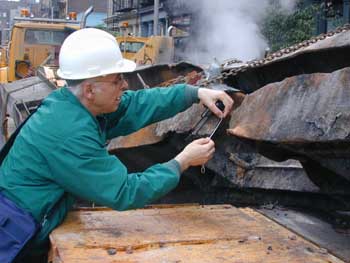
    Dr. Abolhassan Astaneh-Asl examines steel from the World Trade Center. [Source: University of California, Berkeley]

    Doors.

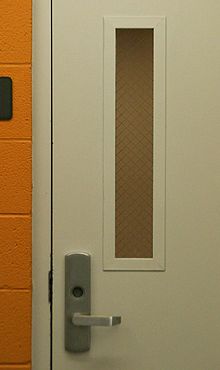
    Doors can also be specified by the architect to be fire proof and offer a specific time in case of fire before it burns out and lets fire spread to the next room. The doors are usually fire rated in 30/60/90 and 120 minutes , time taken before door is incapable of preventing fire spread. These have got a steel plate inside to aid in fire resistivity.

    Windows.

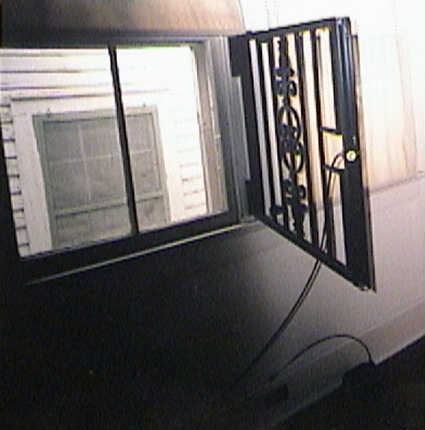
    Also, windows can be designed to have an openable grill from the inside where occupants can safely escape in case of fire.

    Windows , doors and vents should also be architecturally well placed to allow for cross ventilation so that in case of fire, the smoke will flow out of the building easily.

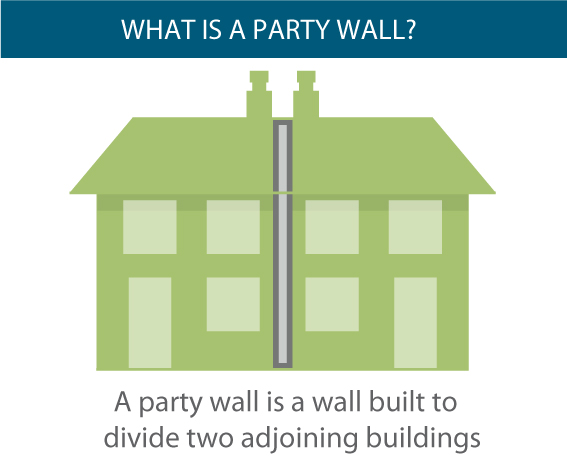
    Party Walls.

    These are walls that separate one house from another in row housing types.

    These help to contain the fire into the one specific affected unit to prevent spreading. The wall ideally should jut up past the roof cover to ensure fore doesnt spread from the roof.

    Boundary wall.

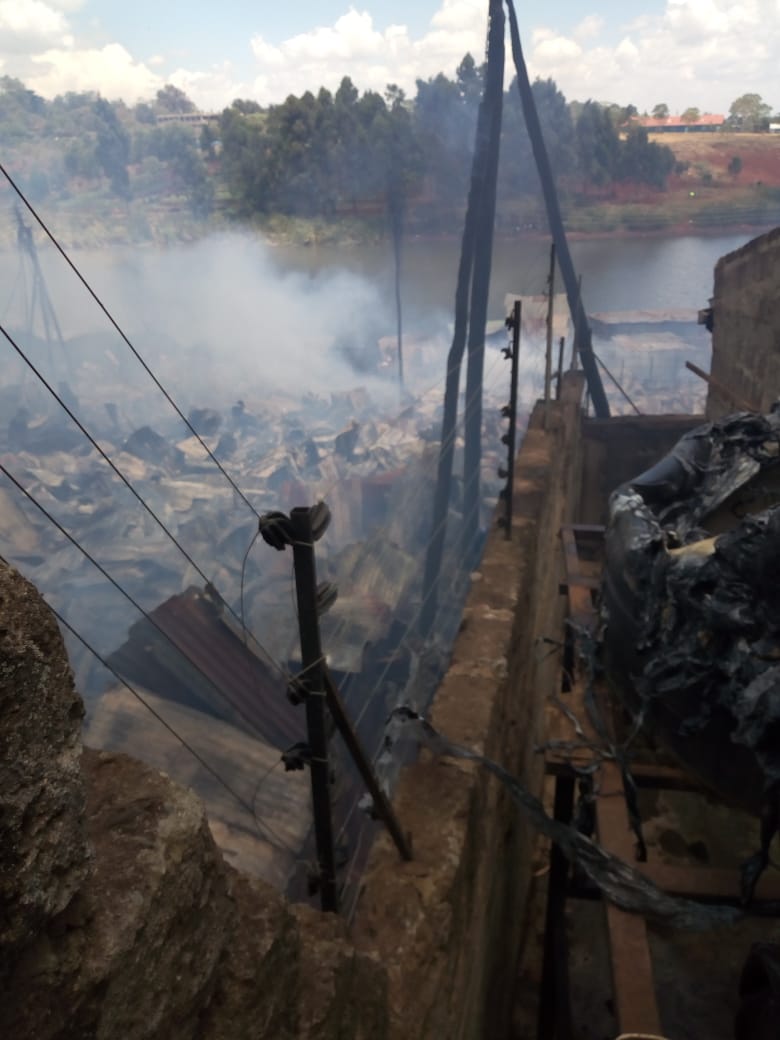
    For buildings constructed close to each other, a high boundary wall is also very instrumental in preventing the spread of fire to neighbouring buildings. The recent March 2019 fire at Mountain view estate area of Waiyaki way was contained thanks to high masonry boundary walls that ensured the fire did not spread to neighbouring buildings.


    See how the Nairobi County Government fire department used excavators and bulldozers to create an empty space between the burning buildings and the non affected ones at the recent fire at Mountain view estate area.


    Fire Escape stairs.

    For highrise buildings, the architectural design should contain fire escape stairs located at the furthest end away from the main stair cases. If the building has a basement, fire escape stairs should terminate into the ground floor area and another stair that is not aligned with the fire escape stair installed from the basement upwards. This is to prevent people from missing the ground floor exit in case of fire when they are coming down the stair in a rush.

    Fire Extinguishers.

    These can be the portable types fixed on walls and also sprinkler systems constructed through the building Mechanical engineering works. The building water tank storages should always have reserve water to be used in case of fire. This is usually designed by the Mechanical engineers of Building services during the architectural design phase of the house.


    Architect Francis Gichuhi Kamau.

    0721410684

    info@a4architect.com


  • How to reduce cost of acquisition of your Home by 30% in Kenya.

    How to reduce cost of acquisition of your Home by 30% in Kenya.

    Home acquisition in Kenya can be reduced by approximately 30% by carefully selecting the location where a developer wants to build their home.

    Land value of a house.

    The land component of the average house in Kenya is around 30 to 40%. A 5 million bungalow in Kitengela, for example, sits on a kes 2m land, meaning the cost of land is 40% of the total house project.

    Using the a4architect.com sectional land acquisition method, this makes it possible for a developer to be able to purchase land that can fit in the 3 bedroomed house which is well planned to fit into a portion of the 1/8th acre.

    75% Cost of land reduction.

    In the Kes 2m Kitengela land example above, the house can now fit in a portion of the land, which reduces the cost of acquisition of the land by 3/4, to kes 500,000. This makes the cost of the land approximately 10% of the housing project value, enabling a reduction of 30% of total house value.

    Other Advantages.

    Other advantages of using the a4architect.com method of reducing house acquisition costs is that with the architectural drawings, its easier for the developer to construct their house in 3 phases, with phase 1 being a 1 bedroomed unit, phase 2 adding 2 more bedrooms to the house to make it a 3 bedroomed unit and phase 3 finally making the house into a 5 bedroomed unit.

    Also, the a4architect.com method also makes it easier to convert the 3 or 5 bedroomed house unit into 2 bedsitter units per floor, making it a total of 6 bedsitter units . The flexibility of this design can enable a house owner change from 5 bedroomed unit to bedsitter much easily depending on their space needs and their need to earn income form the units.

    Feel free to contact a4architect.com for more details on how to achieve this.

    See lands available for sale in sectional title here below

    https://www.a4architect.com/2019/02/ngong-kibiku-sectional-land-for-sale-kes-900k/

    https://www.a4architect.com/2019/02/matasia-town-sectional-land-for-sale-kes-900000/


    https://www.a4architect.com/2019/02/kiserian-town-sectional-land-available-for-sale-sectional-title-kes-600000/

    These lands for sale above will save buyers up to 75% of average land acquisition costs in the specific areas.


    Architect Francis Gichuhi kamau.

    info@a4architect.com

    0721410684

  • Home ownership made easy in Kenya. Buy sectional property anywhere near your workplace.

    Home ownership made easy in Kenya. Buy sectional property anywhere near your workplace.

    Home ownership is now made much easier through the a4architect.com sectional property ownership system whereby a land buyer can now choose well priced land in Kenya and own it through the sectional title method.

    Less Government spending on new roads.

    With the current situation in Kenya where large scale corruption within Government is happening, this means that in future, there will be less Government spending on infrastructure such as new roads, meaning the plots already in accessible areas will get even higher demand and their value will rise.

    Lands located in the middle of nowhere.

    Lands for example further away from the City where various land sellers have been advertising, will take many years before Government manages to consolidate funds to build roads there, hence these lands will be unlivable in, making the land owners not be able to use their lands to build their homes in accessible locations to their work places.


    Solution.

    Solution to this is for land owners to buy plots located in already developed areas where there are good roads, piped water, electricity and social amenities such as schools, malls, churches etc.

    This land is already pricey due to the high rate of land price appreciation in Kenya. A4architect.com helps buyers to obtain this pricey land by dividing a 1/8th acre into 4 parts, slashing the high price by 4, hence now affordable. If land costed kes 2m for a 1/8th, it will now cost kes 500,000 to get a fraction of this land that is enough to build your 5 bedroomed maisonette using architectural designs from a4architect.com.

    Such available lands are as below

    https://www.a4architect.com/2019/02/ngong-kibiku-sectional-land-for-sale-kes-900k/


    https://www.a4architect.com/2019/02/matasia-town-sectional-land-for-sale-kes-900000/


    https://www.a4architect.com/2019/02/kiserian-town-sectional-land-available-for-sale-sectional-title-kes-600000/


    This makes the home ownership dream much easier. Its now possible to build your 5 bedroomed maisonette in close proximity to your work place in a location that has good infrastructure without having to literally rob the bank.

    5 Bedroomed House Phased construction.

    The space provided can be able to house a 5 bedroomed unit which can be constructed in 3 phase, phase 1 having a 1 bedroomed unit, then phase 2 with a further 2 bedrooms addition to make it a 3 bedroomed unit and finally phase 3 with a further 2 bedroom addition to make it a 5 bedroomed unit.


    Feel free to contact a4architect.com for more information.

    Architect Francis Gichuhi Kamau.

    info@a4architect.com

    0721410684

  • How to get 100% Financing for your 1/8th Plot in Kenya.

    How to get 100% Financing for your 1/8th Plot in Kenya.

    The Joint Venture method of financing for real estate is a smart way to finance construction of  your 1/8th acre land or any other larger piece of land that you may wish to construct.

    Usual Joint Venture Method.

    The usual joint venture method as operated by banks is arranged where the financiers take 80% of the project value to compensate themselves for construction and finance costs and the land owner remains with 20% of the property of which he can rent this for income.

    5 bedroomed maisonette in phased construction.

    Using the same model, a4architect.com works with land owners to come up with architectural designs that enable the land owner to partition their 1/8th or larger acre plots into a 5 bedroomed unit that can be constructed in 3 phase, phase 1 housing a 1 bedroomed unit, phase 2 housing a 3 bedroomed unit and phase 3 adding a further 2 bedrooms to make it a 5 bedroomed unit.

    Sectional title ownership.

    The plot owner can then work with a4architect.com to come up with sectional titles for the plot then they can sell the portions to finance construction of the 5 bedroomed unit. The land owner can construct in phases as the sales revenue from the sale of the sectional lands trickles in, hence removing the need for bank loans which can be risky in case of default.

    Risk Free financing.

    This way, the 1/8th acre plot owner gets to own real estate which he can benefit from rental income for the life of the property, all these without any bank loans and risks associated with default such as auction.

    Contact us.

    https://www.a4architect.com/contact-us/

    Land owners, feel free to get in touch with a4architect.com for more details on this. This financing option is possible in all areas in Kenya as long as the land is situated in a good neighborhood which can attract potential sectional property buyers.


    Architect Francis Gichuhi Kamau.

    0721410684

  • Ngong, Kibiku, sectional land for sale. Kes 900k.

    Ngong Kibiku Sectional land for sale. Located behind Kibiku Primary School along Botswana Road. Approximately 800 meters from the ongoing tarmacing of Ngong Kibiku road.

    The sectional land sale price includes architectural drawings for a 5 bedroomed house that can be constructed in phases, with phase 1 having a 1 bedroomed unit, phase 2 adding 2 more bedroos to make it a 3 bedroomed unit and phase 3 adding  a further 2 bedrooms to make it 5 bedroomed.

    Buyer can construct in phases as their income and space needs grow.

    The tarmacking of the Ngong-Kibiku-Kimuka-Maai Mahiu road will open up the area and make it convenient to access and increase number of social amenities, meaning the land value here will rise greatly.

    Price guide. Kes 900,000 per sectional plot .


    See map here

    https://goo.gl/maps/7sZMBqKcovP2


    [googlemaps https://www.google.com/maps/embed?pb=!1m18!1m12!1m3!1d1525.217069469804!2d36.63399184094501!3d-1.3526449997698353!2m3!1f0!2f0!3f0!3m2!1i1024!2i768!4f13.1!3m3!1m2!1s0x0%3A0x0!2zMcKwMjEnMDkuNSJTIDM2wrAzOCcwNi4yIkU!5e1!3m2!1sen!2ske!4v1551077876376&w=600&h=450]

    Plot ownership is through sectional title.

    Email info@a4architect.com for more details.