Category: A4architect

a4architect posts

  • Steel Buildings – The Modern Construction Design

    Steel Buildings – The Modern Construction Design
    By Adriana N.

    The popularity of steel buildings has increased over the years. This type of construction has always been popular for commercial and heavy use buildings, but now it is often found in homes, apartments and retail outlets. The benefits of steel construction include design, construction and durability factors. Here are some specific ways in which steel will provide a better choice for your next construction project.

    Buildings constructed of steel are more cost effective in two ways. The initial cost of the steel is comparable to traditional framed buildings. Other building materials such as concrete, brick or stone can be even more expensive than steel.

    Another way that you save money with buildings of steel is in their durability. With steel framing, you never need to replace studs due to termite damage. Steel doesn’t get dry rot and doesn’t warp or twist in the way that timber can. Steel framing is not subject to splitting and cracks that can affect buildings framed in the traditional way.

    Buildings of steel usually don’t use conventional erection methods. The framework of the building is bolted or welded in place and a skin is placed over the framework. The insulation and interior finishing proceeds in much the same manner as would be done with traditional construction methods.

    Because many steel buildings are pre-engineered, they arrive at the building site as a complete package. Experienced builders can put up an engineered building quickly. Typically, the structure is designed to be in compliance with local building codes, so there is less downtime while waiting for building inspectors to arrive and inspect completed portions of the building.

    Steel structures are more versatile than traditional buildings. They are often designed as units that can be adjusted as needs change. You can expand the size of the building even after the structure is in place. Just add additional framework and more panels to cover the increased wall space. The basic structure may be added to, shrunk and redesigned into a different floor plan if needed. A steel structure could be moved to a different location if necessary.

    Structurally, steel is stronger than timber. This makes it possible to create buildings that are larger or taller without additional structural support. Steel construction is better able to withstand the forces of nature. Steel will stand up to hurricane force winds, to heavy snowfall and to earthquakes in many instances. It can stand through conditions that would cause a wooden framed building to collapse.

    Every time steel is used in a building, a tree is saved. Whether the structure is original construction or is a remodeling project, you can be sure that an engineered steel structure is easier on the environment. Timber is a diminishing resource in the world, but steel is renewable.

    Steel buildings are attractive, with clean, modern designs that blend with existing structures in the neighborhood. If you choose steel for farm or industrial buildings, they can spruce up the surroundings with attractive colors that blend into the surroundings. Harmonious blends of window designs, roof colors and wall panels make this style of building appropriate for almost every application.

    When constructing buildings, the choice of materials is very important. Durability, quality, and other factors come into play. If you are looking for steel buildings Ontario or Carports Canada, then look no further.

    Article Source: http://EzineArticles.com/?expert=Adriana_N.
  • What Are Shop Drawings?

    What Are Shop Drawings?
    By Brian M. Curran

    I started back in the AEC industry in the late nineties, and it probably wasn’t long after that when I first heard the phrase “shop drawings”. I’m sure the phrase conjured up pictures in my imagine as I thought about the meaning of that phrase, and now many years later I’ll answer the same question that put my imagination in gear back then, namely “What are shop drawings?”

    Since I have years of experience in the AEC Industry, through which hands-on I have learned a thing or two about shop drawings, for this article I think the best way to answer the question at hand is to: Do a short web query on the topic, then to quickly parse through a few of the results, and finally to offer up a consolidating statement by tying together my experience and web query results.

    With having just mentioned my web search method to collecting some definitions, I actually didn’t start on the web, if that makes sense! Rather I first started on my bookshelf and found that The Means Illustrated Construction Dictionary Third Edition Unabridged defined shop drawings as, “Drawings created by a contractor, subcontractor, vendor, manufacturer, or other entity that illustrate construction, materials, dimensions, installation, and other pertinent information for the incorporation of an element or item into the construction.”

    Then I moved onto the web as I said I would, and dug up two more definitions. The first of my web definitions was from the online AIA Document Commentary, A201-2007 General Conditions of the Contract for Construction which stated in section 3.12.1, “Shop Drawings are drawings, diagrams, schedules and other data specially prepared for the Work by the Contractor or a Subcontractor, Sub-subcontractor, manufacturer, supplier or distributor to illustrate some portion of the Work.”

    Lastly, my web query results turned up Wikipedia’s site. They externally cited R Pietroforte (1997)(PDF), Construction Management & Economics, Taylor & Francis Retrieved 2007-02-23, which gave a definition of, “A shop drawing is a drawing or set of drawings produced by the contractor, supplier, manufacturer, subcontractor, or fabricator.”

    With these three definitions I have a mini sample set of definitions, so that I can check for consistency amongst them, and compare them to my life’s experience within the AEC Industry. Considering just that I think the definitions are fairly consistent, and do pretty good job of explaining what shop drawings are without needing any extra explanation. Regardless though, let me further clarify what the definitions are saying through a hypothetical example.

    Lets say that there is a man who wants a 20 story building constructed, and so he hires an Architecture / Engineering firm to put together the construction documents for doing so. Well, the construction documents, which will be taken in hand by a Contractor who will actually construct the building, some times don’t have all the information that the Contractor will need in order for him to complete the construction of the building. This is where shop drawings come in. They act as the bridge that fills in the gap between the contract documents and the Contractor.

    This example admittedly doesn’t cover all the varying scenarios in which shop drawings are used, but I do hope it can be extrapolated upon in order to better understand a different shop drawing situation.

    About the author: From New York City Brian M. Curran runs a CAD drafting service that provides outsourced AutoCAD drafting services to AEC industry companies, homeowners and others with CAD drafting needs throughout the entire United States. His CAD services include, but are not limited to: Building Surveys / As-built drawings of: building systems, building elevations, roof plans, floor plans, and reflected ceiling plans. Also, hand sketches converted into AutoCAD format, Paper-to-CAD conversions, structural drawings, steel detailing, rebar placing drawings and construction logistics drawings. For more information on Brian M. Curran’s Computer Drafting Business, please visit: http://www.draftingservices.com

    Article Source: http://EzineArticles.com/?expert=Brian_M._Curran

  • DIAMOND HOUSE PLANS– As the Dust Settles.

    Phased Design House Plans for Haitians as they rebuild their country.

    From DIAMOND HOUSE FLAT ROOF

    INTRODUCTION
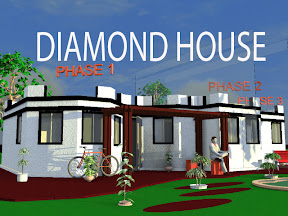
    The Diamond house plan is inspired by the Botswana Diamonds and was designed by www.a4architect.com to offer the most efficient housing solutions to the people of Haiti after the 2010 earthquake.
    The Diamond House is made of materials readily available in every hardware shop in Kenya. The efficiency is attained through unique architectural design and construction technology.

    [youtube https://www.youtube.com/watch?v=E0Mj13V7fTk?rel=0&w=420&h=315]

    The walls are made of the usual masonry quarry stone or interlocking stabilized soil blocks,roofs made of the usual iron sheets, doors from the usual wood door Kenyan manufacturers and window frames from the usual aluminum/Louvre systems.

    From HAITI HOUSE FLAT ROOF

    *The Diamond House Plan was conceived by www.a4architect.com to provide the most efficient ‘GREEN ARCHITECTURE’ designs as a housing solution to the People of Haiti after the devastating 2010 Earthquake. It was a philanthropic gesture to the People of Haiti to help reconstruct their country after the earthquake.

    Phased residential house construction.

    From HAITI HOUSE PLAN

    This is whereby the architect designs the house in such a manner that the house occupants can continue adding more rooms in future as their needs increase.
    The house starts with 1 bedroom which can easily be added to become 2 bedroomed ,3 bedroomed and 4 bedroomed.

    https://picasaweb.google.com/s/c/bin/slideshow.swf

    See the house below designed by www.a4architect.com for more information.

    From HAITI HOUSE PLAN

    As the family size grows, the house also grows concurrently.
    This architectural design aids greatly in planning for the future.
    The beauty about this design is the fact that one can start with the low price 1 bedroomed house. After a period of time as the space need increases, the 2 bedroomed unit is added then the 3 and 4 bedrooms consecutively.

    DIAMOND HOUSE PITCHED ROOF VERSIONhttps://picasaweb.google.com/s/c/bin/slideshow.swf

    The use of Structural Insulated Panel technology assists in that with these panels, its very easy to add extra rooms to the building. SIP houses are light weight so there will be no settlement cracks as witnessed in the normal masonry house types whenever new additions are extended from the main house.
    With the normal masonry stone houses, people are forced to buy larger houses-3 bedroomed houses-yet maybe they only require to use just 1 or 2 bedrooms.
    This way, they are forced to buy and pay for space that they are not using.
    In this design, the occupant pays for the exact space that they require in that if the occupant only requires just 1 bedroom for the time being, that’s the only space they pay for.

    DIAMOND HOUSE FLAT ROOF VERSIONhttps://picasaweb.google.com/s/c/bin/slideshow.swf

    In the era of the 21st Century, its important that consumers make decisions that avoid unnecessary waste of money and resources .

    PAYMENTS
    To obtain the Diamond House Plans, click here for a cost breakdown.

    [youtube https://www.youtube.com/watch?v=IDbb2ivWmh0?rel=0&w=425&h=349]

    Frank Gichuhi.
    Architect.
    www.a4architect.com
    +254721410684

    From HAITI HOUSE FRONT TYPE
  • HOW TO DESIGN AN ECO CITY

    HOW TO DESIGN AN ECO CITY

    An Eco City helps to encourage future urban redevelopment plans to consider sustainability. Sustaniability will be best achieved using the Mottainai campaign.

    Mottainai campaign

    Mottainai is an ancient Buddhist term from Japan that means to have respect for the resources around you, to not waste resources, and to use them with a sense of gratitude. The concept is closely associated with the conservation practices that people most commonly recognize as the three R’s – reduce, reuse, recycle – with a fourth R for respect.

    In Kenya, the Mottainai campaign was initiated by Professor Wangari Maathai to eliminate waste plastic from littering the natural environment.
    The proposed Eco City will include the following key features in its aim to reduce the Carbon footprint in line with the Mottainai campaign.

    • Well designed squares, gardens and open spaces which will be landscaped. Existing trees will be preserved where possible. These gardens will act as socializing spaces where people can take a well deserved rest as they socialize with each other. Nooks will be designed within the landscape for additional tree planting.
    A target of 20% of the surface to be green should be envisioned.
    Developers should be encouraged to include balconies with planters in each floor level to increase the ‘green’ vertically. Mechanisms to ensure this is vertical landscaping is achieved should be well laid out to potential developers.

    • Use of renewable energy resources should be encouraged. Use of Solar powered curtain walling on the façade of tall buildings will bcouraged. Companies that manufacture solar curtain walling such as SHARP-SOLAR will be approached and given priority in allocation prominent space at the entrance to advertise their products.
    Kenyans pay 4 times the European average for electricity (19 US cents/kwh) – in Europe it is 4 or 5 US cents).
    South Africa[2008], Nigeria[2008], Tanzania[2009] , Kenya[2009] and Ethiopia[2010] recently experienced power rationing so this will ensure electricity is available incase of power rationing.

    Use of Bio-Gas from the sewage generated should also be encouraged. Companies that deal with Bio-Gas generation such as KENYA PUXIN RENEWABLE ENERGY CO.LTD should be approached and requested to invest in generation of Bio-Gas from the sewage. This will reduce the burden on Nairobi City Council sewage systems.

    Recycling of surface run-off should also be encouraged. Side drains will be designed to flow in a controlled manner to enable harvesting.
    Surface runoff will be directed to a deep dam that will serve as a water reservoir and as a recreational feature whereby people can enjoy boat-riding and other features such as a pool-bar[similar to Uhuru Park Inn]. The dam should be well positioned near the shopping mall so as to increase the water-front recreational land value. This will reduce the burden on the Nairobi City Council storm water drainage system.

    Companies dealing with supply of water should also be requested to invest in rain-water harvesting for re-sale to Nairobi. Currently the water supply for Nairobi City is inadequate hence a ready market for water. This water will be very useful in maintaining the vast landscapes within the scheme.

    • Reduction of energy used in Air-Conditioning and Lighting: This is achieved by careful plot subdivision whereby all plots have an open front and back to enable cross-ventilation of air and ingress of Natural Light. The green landscaped areas will also help in increasing air quality.

    • Reduction of Car emissions: Some roads within the scheme should be pedestrian only so as to reduce vehicular traffic. Housing units within the scheme will also reduce car emissions since people can now live within the CBD and be able to walk to work.
    A comprehensive green transport network, i.e. non-motorized and public transport, should be envisioned in the Eco-city.

    Francis Gichuhi B.Arch [U.o.N ] M.A.A.K[A]
    www.a4architect.com