Category: A4architect

a4architect posts

  • NECESSITY IS THE MOTHER OF INVENTION: AFRICA:THE SLEEPING GIANT IN THE BUILDING CONSTRUCTION WORLD

    NECESSITY IS THE MOTHER OF INVENTION:
    AFRICA:THE SLEEPING GIANT IN THE BUILDING CONSTRUCTION WORLD

    As they say, necessity is the mother of invention.

    Now that Globalisation is here with us, Africans will need to up their game in construction methodology to meet the current demand.
    Issues such as population explosion,urbanisation, limited supply of materials, cost of labour e.t.c should be addressed.
    During the early times, labour was not a major hindrance since peolple could use slaves to build structures such as Fort Jesus. Currently, in the process of designing structures, the cost of labour has to be incorporated so as to enable the project to be viable.

    STANDARDISATION
    Africans should embrace new methods fo construction used elsewhere in the world. The Building Code in Kenya should be open to enable other standards such as American standards which are highly developed when it comes to the use of Pre-Engineered Steel buildings. Its also high time someone came up with the African Standard no matter how far-fetched this may sound. Once research is done on African construction methods such as Adobe,timber structures, a standard can originate which will assist the rest of the world in making thir choices.

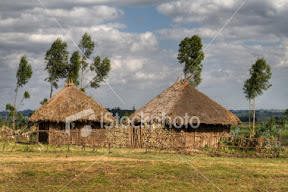
    ADOBE WALLING
    From Drop Box

    Home grown solutions to construction that have been used here in Kenya for centuries can be revived to ease shortage of housing.
    Adobe has been used in Kenya for centuries .Research should be done to commercialise the use of Adobe in contruction. Currently, the Indian and Chinese are exporting cement-fibre boards for use as wall panels. If the Adobe technology is researched further, am sure someone enterprising enough will soon come up with a version similar to the cement-fibre boards and ease the cost of construction .
    World-leading International multinationals in cement such as La Farge also started from the first step so its never too late.

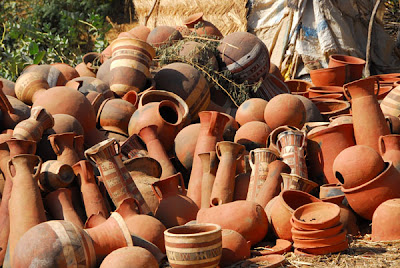
    CERAMICS
    From Drop Box

    China and India are making good business exporting ceramic tiles to Kenya. Ceramic tiles are basically constructed from clay soil which we have in plenty here in Kenya.
    Our ancestors have been making clay pots for several centuries now using Clay. Production of ceramic tiles is similar to the traditional method of baking clay pots. Therefore, if an enterprising Kenyan can come up with a method of commercial production of ceramics, we will not need to import this “Asian Soil” to Kenya.
    THATCH ROOF

    From Drop Box

    The most expensive roofing product in the market is the stone-coated steel tile-thatch roof-profile. This is sold in Kenya by companies such as Soth African Harvey Roofing Products, Australian Decra Space and Style, and Dura Roofing Tiles.
    Ths roofing tile imitates thatch roof which we have been using for centuries here in Kenya. This is because thatch roof has the best aesthetic look and insulation. This is also another avenue that Africans can work on to improve on the supply of construction materials.

    TEXTURED PAINT
    The most expensve paint in the market at the moment is the Rough textured paint such as ‘Crown Ruff n Tuff’ . Again this paint is expensive because it tries to capture the good looks of Adobe mud wall and also the superior insulation qualities of the Adobe mud walls .
    The Adobe mud walls have been in use in Africa for Centuries. If we can work on improving this and manufacturing it for the Global market, then we will save alot of foreign exchange and create employment.
    Some factories in South Africa are manufacturing plastic imitations of thatch which is exported to the rst of the world. If we can put in some reserch, we can surely come up with a solution that is beter than the existing imitations.

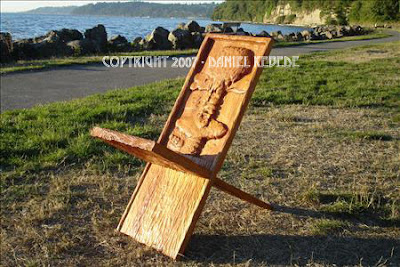
    HARDWOOD DOORS & FURNITURE
    From Drop Box

    The most expensive doors in the market at the moment are hand-curved hardwood doors . In Kenya, we have the magnificent Swahili doors. Again, it these are manufactured for export to the global market, then this will result in creation of jobs and revenues here in Africa.
    In Kenya, we have very creative stick and wooden furniture that is traditional. This can be manufactured commercially for export. A good example is the Bamboo furniture sold at Ramboo, Mombasa Road,manufactured in South Africa and exported to Kenya.

    FLOOR TILES

    From Drop Box

    Imported slate-stone counter tops and floor tiles are very expensve. In Kenya we have Mazeras stone floor finishes which if well cut and polished, can be a major export for the Country.
    Therefore, its important to note that Africa has the potential to supply the world with unique construction material. All we need to do is to think outside the box and supply the world with unique construction products at a low cost.
    This is a sleeping giant waiting to be awoken in this sector. Lets hope that the new constitution will awaken this giant.

    Architect Frank Gichuhi

    www.a4architect.com

  • FORT JESUS, MOMBASA,KENYA: A CONSTRUCTION METHODOLOGY ANALYSIS

    FORT JESUS, MOMBASA,KENYA: A CONSTRUCTION METHODOLOGY ANALYSIS

    The Fort was built in the year 1593 A.D by the Portuguesse.

    From fort jesus

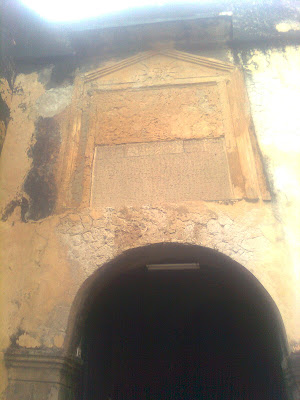
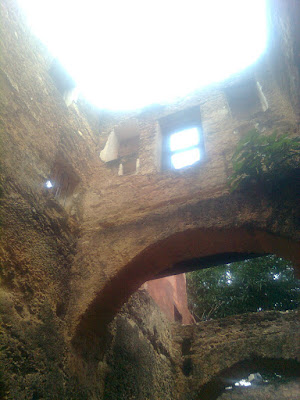
    At the main entrance, you will notice the use of arcs at the wall openings[doors]. These were used to give structural support to the walls above.

    From fort jesus

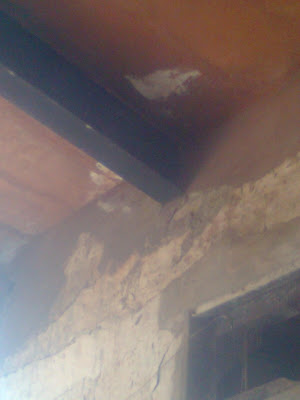
    Suspended floors were supported using steel I-Section beams.

    From fort jesus

    The doors were made of hardwood and curved to a particular pattern. The doors were also decorated using iron.
    The walls were made of coral stone . For structural stability, the walls were 600mm thick on the top and over 1 m thick on the bottom.This resulted to a tappering shape which aided in increased stabilty. The 600mm thick walls are also very stable due to the sheer thickness.
    This thickness could enable them to open up small arched windows on the side facing the Indian Ocean where the cannons were fitted. The thickness also provided the required safety form invaders.
    The average tradidional African wall was 1/8 times smaller since the Africans did not face similar security threats as faced by the Poertuguese. The wall was for privacy and insulation purposes only of which it fullfilled its purpose.

    The fort was captured by the Omani Arabs in 1698.
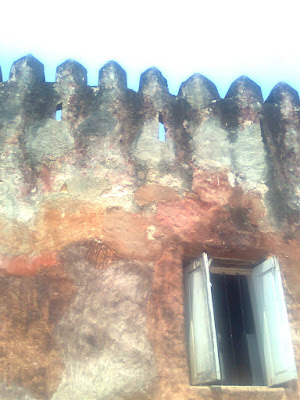
    This resulted in Islamic architecture elements addition such as pigeon holes at the top of the walls, and the house in the picture.

    From fort jesus

    ARAB ARCHITECTURE
    The Omani Arabs came in with new construction methods.
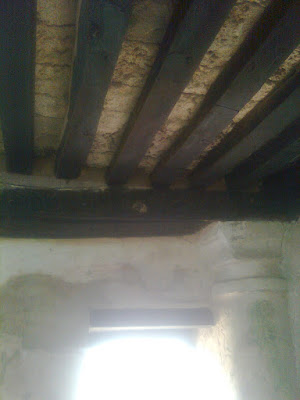
    Their walls were much narrower and their suspended floors were supported using hardwood sections .These were spaced 300mm apart and coral stones placed on top.This was then plastered using clay to form the flat suspended floor surface.

    From fort jesus

    For the door openings, hardwood planks were placed above.
    The Portuguese had mastered the art of using the masonry arcs to form structural support as shown below.

    From fort jesus

    LESSONS THAT CAN BE LEARNT.
    Currently, to build a concrete suspended floor, we use concrete reinforced with steel bars. The Kenyan Bulding Code is to the British Standards. Once the conrete is poured into the formwork support, it hardens and the steel bars hold it together.
    The Arabs used hardwood planks for the support and placed the stones on top with clay plaster in between.

    A similarity with traditional indigenous African way of construction can be seen in the clay infill. The traditional Africans made their walls using Adobe clay infill similar to the one that the Arabs used for the suspended floor.
    Since traditional Africans did not require to build vertically upwards[there was alot of land to build laterally], they did not develop this technology further.
    Also, the traditional Africans did not have sophisticated enemies such as the Portuguese and Arabs hence they did not need to develop forts and other high-rise structures. Apart from the occasional raids by other tribes using bows, arrows and spears, there were no other enemies who would have nessesitated the change of construction methods to more secure structures.

    Frank Gichuhi
    Architect.
    www.a4architect.com

  • PREFABRICATED HOUSES AND REDUCTION OF BUILDING CONSTRUCTION COST REDUCTION IN KENYA

    PREFABRICATED HOUSES IN KENYA AND REDUCTION OF BUILDING CONSTRUCTION COST REDUCTION

    [youtube http://www.youtube.com/watch?v=T11zCMvZsWg?rel=0&w=480&h=360]

    Click below for Free Youtube Movie Downloaders
    Firefox.
    Internet Explorer
    Opera

    * why is the use of pre-fab panels rising in kenya?

    This is because with the onset of the internet and other faster methods of transmitting informtion, Kenyans can easily access information on new technologies faster.
    This way, Kenyans who are budget-sensitive and need a faster method of construction can have their needs met.

    Construction methods such as DIAMOND HOUSE technology that can reduce costs by 32% come in handy in solving housing issues in Kenya.

    * what are the common ingridients to make these panels available locally?

    There are several types of Panels:

    1.
    Steel Structural Insulated Panels [SIP]. These arew imported from China.
    See more detailed info on this here
    http://www.a4architect.com/2010/02/04/structural-insulated-panel-houses-save-50-of-construction-costs/

    2.
    Wooden Panels: These are manufactured by this company in Kenya
    http://www.ehgkenya.com/

    3.
    Cement fibre panels Structural Insulated Panels. These are made from a cloth-like board coated with cement plaster. This company manufactures them in Kenya

    http://afrohomes.biz/projects_news.php

    4.
    Reinforced concrete Panel. These were being manufactured by Ecohomes kenya
    http://www.nation.co.ke/magazines/money/-/435440/485160/-/view/printVersion/-/yeqi43z/-/index.html

    * could this be the soution to houising problems in kenya?

    COST
    This is definitely a solution to the housing crisis. I have tried for several years to introduce Prefabricated Housing solutions to Kenya mainly through Steel SIP Panels.

    The major problem is that the Steel SIP Panels are cheap to buy in China.
    A 60m2 2 bedroomed house costs kes 600,000 to buy in China. Add 150,000 freight to Mombasa. From Mombasa is where the costs rise up tremendously.
    There is import duty of 10% plus 16 % VAT plus 25% KEBS plus the transport from Mombasa to Nairobi by rail or road is expensive[KES 80,000 APPROX].

    By the time the house reaches Nairobi, it costs approx. KES 1 million. A similar stone house will cost KES 1.1 Million using the average Nairobi rates of construction.

    The savings is too minimal to deserve all this hustle hence people choose the traditional methods of construction.

    For the locally manufactured panels[Wood and Cement board] the ingredients[wood and cement are already expensive here in Kenya].

    This makes the total cost to be similar or slightly higher than using stones to build. The last time i inquired prices for the wooden and cement board prices [last year] the price was slightly higher than constructing using the normal traditional stone methods.

    Solution:

    The government can zero-rate import duty and VAT and revive the Railway line.

    PERCEIVED SECURITY

    Another drawback i have encountered in my attempts to introduce these is the fact that the security situation in the country is very bad. Potential customers fel psychologically unsafe in a house made of panels.
    People want to live in stone houses with steel doors and windows.

    As long as the security situation remains the same, people will shun panelized housing unless its situated in a gated community.

    You can imagine building a panelized house in a suburb such as Kitengela. If things in Kenya penetrate steel windows, you can imagine how they can have a field day in panelized housing.

    In Western countries where the security from violent robbery/break-ins is guaranteed, panelized housing s very common.

    * on average,by what percentage does the use of these material lower the cost of construction?

    Panelized housing can be compared to a low-to-middle class house. These are the kinds of houses found in Ruai, Juja e.t.c with no-frills-attached type of construction. These houses cost an average of KES 18000 per square meter to construct i.e an average 90m2 3 bedroomed house will cost KES 18000 X 90m2 floor area= KES 1.6 million.

    The average panelized housing of such quality will cost approx. KES 1.4 Million using imported steel SIP panels and slightly higher[approx. 1.7 million} using wood or cement fibre board panels.

    If transport [railway] is sorted out and VAT and import duty exempted, then we can look at a 50% reduction on the cost of construction using Steel SIP Panels.

    For cement board panels, the main manufacturers of cement in Kenya-Bamburi, East African Portland and Athi River mining have one factor on common-La Farge -a French multinational as part of the shareholders.

    The current global FOB price per ton of cement is around USD 70 [KES5600] per ton [Source: http://www.alibaba.com/showroom/cement-price-ton.html] .

    A 50 kg bag will cost KES 280 in China. Add freight and import duty e.t.c .This will bring the cost to approximately KES 560 to get to Nairobi if the Government lowers import duty and revamps the railway system.

    Currently, the average cement price per 50kg bag in Nairobi is KES 750.

    Therefore, if the Government reduces import duty on cement and improves on the railway transport system, we can see cement prices dropping to international ranges of KES 500 per 50kg bag.

    Once this is possible, the cement fibre board panelized housing prices should drop by the same margin of 30% from KES 1.7 Million to KES 1.1 Million for a 90m2 floor area sized 3 bed-roomed house..

    * are there any quality issues rising from the use panels?

    Steel SIP Panel manufacturers usually give an average of 10 years guarantee depending on the thickness of the steel panel and the location. Steel panels near the salty seas will rust faster hence lower longevity.

    A stone house has a lifespan of 50 years if well-constructed and maintained and planning regulations remain the same.As the population increases, Local Authority planning regulations take effect and on average, after 50 years, there will be a need to re-plan the area again and re-build as appropriate hence the 50 year average.

    Such is seen in areas such as Lavington and Hurlingham whereby the old colonial stone houses have been demolished to pave way for high-rise structures.

    Structurally, the prefabricated buildings are designed to withstand the climatic conditions of their locations. In areas where the weather is severe such as the Southern part of U.S.A where there are hurricanes, the structural design is more reinforced to withstand this as specified and certified by the Local Authority during application for approval to construct.

    * comparing to other countries, do you forsee a time when use of panels would surpass the use of the conventional stones and cement etc

    Once issues such as transport[railway] ,Statutory fees[import Duty, VAT] and security are addressed, definitely the Prefabricated houses will be cheaper and safer to live in than the traditional stone houses.

    Frank Gichuhi B.Arch. U.o.N M.A.A.K[A] Registered Architect.

  • INVESTING IN REAL ESTATE.

    INVESTING IN REAL ESTATE.
    Real Estate is one of the best ways to invest your hard-earned funds since land is a limited resource and as long as the world’s population keeps rising, land will continue to appreciate in value.

    A few years ago[2003-2005] an acre of land in Karen was sellng at KES 3.5 million. Currently [2010] the same land goes goes for KES 18 to 20 million.
    An acre in Runda was selling at KES 4.5 Million in 2003. Currently the same acre now sells at around KES 20 million.

    Real Estate investment is also flexible in that it accomodates every size of budget.
    The ammount of money that you can raise will play a big role in determining the scope of investment.
    You can start on a very small scale and continue up the ladder.
    For small scale investors, ideas such as buying a small piece of land far away from the main city and holding it for a while which can be anything from several months to a few years can assist in this.

    PROFIT THROUGH SPECULATION

    One of the quickest ways to gain profit in Real Estate is through speculation.
    Land away from major towns is usually lower priced. For example, Land in areas such as Kamulu, Nakuru outskirts , Lamu can cost at approxmately KES 300,000 per acre.
    This land will definately cost far much more as time goes by and development catches up.
    Once you carry out intensive research on low-value land and get inside information on new developments, this is the right time to buy whle the price is still low.

    For example, there are future plans to develop Lamu as a port. Peolple who buy now while the land value is low will reap great benefits yearsa later.
    There are also plans to develop the commuter train between Athi River and Nairobi. This will also lead to a high increase in land price in the surrounding areas such as Kitengela once the project is complete.
    The by-pass along Ruai ,Juja and Ruiru will also lead to an increase in the current land prices there.
    Within Nairobi CBD, Muthurwa area will develop greatly once the South East Commercial Park is fully developed.
    Along Mombasa road, plans are underway to develop the ICT city at Malili ranch.
    All these create great opportunities for buying and later on offloading to the market once the developments are complete.

    PROFIT THROUGH SCHEME DEVELOPING

    Another method of making profit in Real Estate development is in buying a piece of Land , subdividing it into smaller plots then developing infrastructure such as electricity, roads and water.
    Once infrastructure is developed, the plots are then offloaded into the market at a profit.
    Areas such as Syokimau, Kiambu, Ongata Rongai are ripe for this kind of developing.
    Areas such as Kahawa Sukari were developed through this kind of Method. Development control is then enforced through setting up of a community company to approve new developments to a specifi standard .This prevents shoddy buildings that reduce the land vsalue from being developed.

    PROFIT THROUGH CONSTRUCTION.

    In areas where large peces of land are not available such as South C, Langata, South East Commercial park[Muthurwa], Westlands e.tc, a good way of making profit is through construction of buildings. Since land is not available abundantly laterally, the buildings are stacked high onto each other for several storeys as can be approved by the Local Authority.
    Use of creative architectural designs will assist in unlocking the full value of the investment through designs that fully and optimumly utilise the land and are also attractive to potential buyers hence creating competition.
    The buildings are either sold as individual units or rented out.

    CONCLUSION

    Its common knowledge that the three rules to fruitful investment in real estate are
    1.Location
    2.Location
    3.Location
    You therefore need to put alot of resources in finding the best location that has a value that has not been fully tapped.
    The inside knowledge that in future there are plans to develop infrastructure such as a by pass, university, hosital, city extenson e.t.c become very critical in determining your investment.
    For example,the early white settlers had prior knowledge that the Imperial British East Africa company will make Nairobi the captal city and zone areas such as Hurlingham and Westlands as high class commercial centres.By then an acre of land there was very low. Currently, many years later, an acre of land in Westlands can retail at KES 180 million so the initial investors who took the gamble are laughing all the way to the bank.
    Its your time now to also get down to seek such lands. Good luck.

    Frank Gichuhi

    www.a4architect.com
  • Considerations When Buying Land for Your Next Home

    By: charles gueli

    Considerations for finding and buying land for a new home are mind boggling.  That’s why 80% of the people wanting to build a new home, buy from a developer or builder.  But if you have adventure in your heart, let’s do it.


    First, think about proximity to the elements of your life that you need to reach (job, family, etc.).  If you’re ending up in an urban area, the land will be more expensive and have more zoning restrictions than a piece in a rural area.


    Then look into the local zoning to be sure you can build a house without needing to get a variance.  You realtor should have that information.  Once you have your architect in place, he/she will be able to get the other town requirements, which will be reflected on the drawings.  But there are a few other things you might want to check out on your own.


    The local building department should be able to tell you about any intended development that might have an impact on your desired lot.  Any nearby residential developments in the planning stages; shopping centers; enlarging roads for added traffic?  I would ask the realtor these questions as well, but you’re more likely to get accurate information at the building department.


    Next, how much land do you want?  Wooded lot or open? Flat or sloping?  Do you want a view?  Maybe watch the sunsets?  Think about the position of the house on the land. 


    Then check out the location of the closest utility pole. Bringing electricity and telephone lines long distances can become very expensive.


    Always WALK the lot – at least around the perimeter.  It’s the only way to make sure you don’t have wetlands, excessive grades, or other natural impediments to your intended construction.  These issues will diminish the value of the property.  Don’t overpay.  Comparison shop, like you would for a pair of shoes.


    Are the people in the local town friendly?  Ask about any history about the area.  Find out what the local taxes are like.  Go around with realtors and see what’s available.  Buy a local newspaper and check comparable prices.  I almost forgot – the internet will probably have some good information you can use.  You might also get some information about what your house will be worth once it’s built.


    Next, what’s nearby?  Parks, streams, a lake, an ocean, shopping, a library, transportation, a hospital, museums, – anything that might have an impact on your decision to buy.  Transportation usually has a positive impact on the value of any land within walking distance. 


    If you’re not in a hurry, see the property during various seasons.  It could look very different.  These issues will help you organize your thoughts and prioritize your choices BEFORE buying land.


    About the Author

    Charles Gueli invites you to ask questions and take advantage of the resources on www.continuous-home-improvement-help.com , where guidance, information and support are always available.

    (ArticlesBase SC #1066645)

    Article Source: http://www.articlesbase.com/Considerations When Buying Land for Your Next Home

  • The 8 Golden Rules for Buying a Building Lot. How you can avoid common mistake many people make buying land

    By: Kelly Peterson

    The 8 Golden Rules for Buying a Building Lot.  How you can avoid common mistake many people make buying land.

    We often have come across someone who has recently purchased their lot and then ask us standard questions like “Where do you think I should build?”  “What about my utilities?”  “How big a house or footprint can I have?” and quite a few others that should be asked or considered prior to purchasing a lot.

    Here are our 8 golden rules for buying land:

    1. Is it in city limits or in an unincorporated part of the county?  Often times when you are looking at property within city limits, the utilities including sewer are already in place, whereas outside of city limits, often times there is no cable, no power, no sewer, no water, and no driveway.  Each one of these items needs to be addressed.
    2. You need to know if the land “percs” for an onsite septic system, what type of septic system will need to be installed, and how much it will cost.  If you are planning on building a 4-bedroom home and the property can only install a 2-bedroom septic system, the property is not worth much.  You need to know this before closing on your purchase.  Within days of making an offer, or prior to making an offer, you should ask the current homeowner if he has any documentation of a perc test and septic design and when that design expires.  Often times you will need to hire someone to conduct a test and make your offer contingent upon this factor.
    3. Is there water available?  The biggest mistake you can do is find a great price on a property, find that it percs, but find out later that it will cost tens of thousands of dollars to drill 200 feet down to install a water well.  Although you cannot be 100% sure without an actual drilling, an experienced local drilling company can provide you information of lots nearby and their drilling depths and associated costs.  They usually have standardized bids with variables that include depth that can provide you a general price range of the associated costs.  You also have to watch out for having enough pressure to install a sprinkler system inside your house.  Many municipalities include this in the building code for rural areas where fire trucks may not have easy access.
    4. Wetlands – In King County, Washington, and probably a few others, it is required that you have a “Critical Areas Designation” completed by the county.  The county comes out and takes a look at your property and designates certain areas as wetlands and requires setbacks from this area for your building.  This is a complex topic and we suggest that you spend a few hundred dollars before purchasing your property and hiring an expert in the field that will review your potential property and provide valuable feedback.
    5. Other Utilities (Power, Phone, Cable, and Internet) – Unless you are planning to go completely wireless with cell phone, satellites, and solar you need to contact the local utility companies and find out about access to your property and the associated costs.  You’d be surprised at how much it can cost to bring power just a few hundred feet to your property or convert the lines to underground.  It’s often good to know if you have access to natural gas or if you will be using a service for propane tanks.  This may also factor into your decision.
    6. Setbacks – Every jurisdiction has their own set of rules for setbacks from property lines.  If you are buying a large parcel it may not be as important, but a smaller parcel in the city can exclude you from using the house plan you want based on the setbacks and the foundation footprint you end up with.  Often times, they also may have rules based on the ratio of impervious surface with the overall square footage of house or even the ratio of the square footage of the house with the total square footage of the lot.  Be sure to check your local zoning office to verify you can build the house you want.
    7. You see it all the time as you drive around:  Houses are not taking advantage of their view and facing the wrong way simply because of the driveway access and location of the garage.  You are selecting a lot on certain factors, but mostly location.  Did you buy the house because of its amazing view of the mountains to the East, or maybe the water views to the West?  Make sure that the house plan you select maximizes your view and you design the position of the house to take advantage of this, this would include reviewing your driveway access.  If you are in a rural area, you may have to apply for driveway access in a certain location and the county will have to approve the location.
    8. Hire a real estate with experience with the type of property you are looking for.

    We hope this helps in making your lot purchasing process and you can avoid the many pitfalls people make buying land.

    About the Author

    Kelly B. Peterson builds custom and spec homes in the greater Seattle area including Whidbey Island.

    (ArticlesBase SC #954471)

    Article Source: http://www.articlesbase.com/The 8 Golden Rules for Buying a Building Lot. How you can avoid common mistake many people make buying land

  • Guide on How to Buy Land

    By: Maria

    Some home buyers would rather buy land to build their ideal homes in. In fact, there is something about purchasing vacant parcels that appeals to people who want to construct their homes in their own pace and budget. A few acres can be so enticing and buyers envision themselves constructing the newly-built home of their dreams. There is that longing to build a home the way you exactly want it. And for those who have the money to spare, unimproved vacant lots are ideal and appealing.

    Whatever motivates you, purchasing land is surely a whole lot different from buying an already constructed home. There are a few things that need to be discussed when buying land however, such as zoning requirements, land-use, easements, access, and utilities. They are tremendously essential in any land purchase and should be given due consideration. True enough a land acquisition can be a complicated thought process. When purchasing an existing home, someone has already been involved around issues concerning what is permissible on land.

    First off, you should find the proper zone and know the plan. Once you have decided on what you want, you must spend some time t the zoning department. Check with your local zoning ordinances to determine the kind of house you want. As soon as you have recognized the particular parcels that you find interesting, zoning actually tells you whether you can have a home on that site.

    There is actually a long-range plan for land-use that you should be aware of. There will be numerous areas selected for residential uses, businesses, public use like schools and parks, and agriculture. The zoning department will disclose information and warn you whether you will have a nice neighborhood or not. You certainly do not want to buy a vacant lot close to a maximum-security prison.

    While you are presently surveying the area, assess highway congestion and inquire about planned road enhancements. If your ideal parcel is in a city with nicely built houses seated on six-lanes, chances are, those homeowners did not foresee that a road is going to be constructed there when they have bought it decades ago. So in buying land, there is no easy way on how you can predict the change of road plans.

    Next step is to figure out if the land is an unlisted acreage or in a recorded subdivision. If your vacant lot is in a subdivision, review the subdivision restrictions. Whether you are going to buy land in rural areas or in the city, these restrictions apply everywhere. You may also look into utility easements as they will not be available for construction. Subdivision restrictions can help you identify your boundaries. These restrictions cover every issue concerning the sort of pets you can have to whether you can have a humongous truck in your driveway.

    Determining the costs involved should also be considered in buying land. Financing for unimproved parcels is a huge market. If your vacant lot purchase price is not that eye-poppingly huge, you can take out home equity loans on your existing residence and bask in tax deductions.

    About the Author

    Land Real Estate in San Diego CA, Land for Sale in Cardiff By The Sea CA and Land for Sale in Carlsbad CA can offer you a whole deal of information about the real estate market. Whether you want to sell your house, buy a property or rent one, getting all the information that you need will give you a great advantage.

    (ArticlesBase SC #1526582)

    Article Source: http://www.articlesbase.com/Guide on How to Buy Land

  • Why Is There Interest in Buying Land?

    By: Russell Ward

    Many years ago I went to auto auction with my local dealer.  There was a sea of cars as far as the eye could see.  So which one do I choose?  Before I arrived, I looked at my budget, determined my family’s needs and narrowed my choice to one mini van make/model.  When I arrived I could have been overwhelmed by the shear volume of vehicles but I wasn’t as I already knew what I was looking for.  Once there, I popped open a few hoods and after some searching I finally decided on my purchase.  The process to make a purchase decision took much time and energy – but it was worth it.  After a month of gathering information I arrived at the auction ready to pull the trigger to buy.  I enjoyed that minivan for years.   I am still grinning about that car.

    When it comes to land, many people are kicking the tires.  There is an enormous amount of land can be purchased.  So it can be overwhelming where to start.  Many are at stage where they are doing their research and narrowing down where, when, and for how much they are going to purchase land.  Some will go to a land professional for help.  But many are going to do all the investigative work on their own.  So what are the key types of land investors are looking for?

    Retirement – We all have hopes and dreams.  One dream for many is to retire.  But where?  The National Association of Realtors conducted a poll and found that nearly 60% of Baby Boomers hope to move to a rural setting when they retire.  There are nearly 80 million Baby Boomers – this means that almost 48 million people dream about moving to the country.  I bet you have met some of these people or maybe this is you.

    What does that mean to those us who are land professionals?  Get ready to supply Boomers with land parcels.  What type of land parcels are they looking for?  Boomers are buying as small as a half acre to hundreds of acres.  It is time for those who represent land to get ready for this influx of activity.  Right now some are at your doorstep determining whether you are the person to work with.

    I see myself as a supplier of hopes and dreams.  Many will buy land for retirement but most will never move to the country, but at least they will fulfill a part of their dream.  Wouldn’t you agree dreams drive major purchasing decisions?

    Investment – It is an understatement that this has been a challenging year for any increase in value in your investments.  As we know the stock market is mired in much uncertainty.  Where are investors going to turn to rebuild their portfolios?  Some investors will leave the traditional investment grid and scour for low risk hard assets such as land and gold to invest in.

    Recreational Use – Some investors will simply want to enjoy their “own slice of heaven” by buying land that they can either hunt, fish, drive their ATV, etc.  They are buying not only to recreate but also for investment.

    Many internet land websites have reported from a 42% to 500% increase in visitor traffic.  What does that mean to those of us who are land professionals?  Investors are starting to do their research to determine where to invest to get the best value for their money.  But they are not ready to pull the trigger as yet because investing in land is a new idea.  Once they get comfortable, we are going to see a wave of land purchases that are going to be mind boggling.  Is your business prepared to service this demand?

    What type of land are investors searching for?  Hunting land, recreational land, retirement homesite, farmland, timberland, hobby farm, and waterfront lots just to name a few.  There is going to be an amazing convergence on not just one land type but on different types of land all at the same time.  That is why the market will be hot and grow rapidly in the coming years.

    Why invest in land?  Historically, land has proven to be a safe investment even during times of market volatility.  Now, investors are reevaluating their investment strategies and are looking for something they can touch and feel.  They also feel they are in more control of the results of their investment compared to the ups and downs of the stock market.

    There are many investigating the potential benefits of land investing and some will feel that investing in land can prove to be secure and lucrative.  Also investing in land can provide an alternative to fulfill some of their investment goals that are outside the stock market.

    How can we serve you?  We can help you to connect with an affordable parcel of land that will meet your investment needs.  Call 1-877-8VACANT (1-877-882-2268) or email us at info@vacantlandguide.com today to learn more.

    “Ninety percent of all millionaires become so through owning real estate.” – Andrew Carnegie

    Many millionaires will emerge in the next few years because of vacant land.

    About the Author

    Russell is the ONLY person in the country training real estate investors how to control or buy raw land at half-price. The time has never been better to learn the inner workings of land.

    He is a full-time raw land investor who has been extensively involved in more than 600 land transactions ranging from .25 acre to 500 acres. These real estate deals involved over $9,000,000 in total sales. Russell has produced a six-figure income in real estate, solely generated through vacant land transactions. He has two Master degrees, including a Master’s in Management with an emphasis in entrepreneurship. He resides in Jacksonville, Florida.

    Russell has used his insight and experience in vacant land transactions to write the Home Study Course, Vacant Land Guide – How to Buy Vacant Land at Wholesale Prices. His passion for training and educating investors in vacant land real estate is evident in both the content of the Guide and the personal presentations that he puts on for investors. His intent is to equip the investor so that he or she may go out and become an independent and successful vacant land investor.

    (ArticlesBase SC #1137397)

    Article Source: http://www.articlesbase.com/Why Is There Interest in Buying Land?

  • Facts about Buying Land – The Tips to Making a Remarkable Purchase

    By: Maria

    Buying land is surely as valuable as home purchase which is everybody’s dream and ultimate desire. However, those who plan to buy land need to consider more things than just simply finding the perfect dream house for him and his loved ones. Most available lands are under land ordinances set by their respective states and local authorities. Therefore, before finalizing a transaction for land purchase, it is imperative that you get to check first with the local authorities to know the entire scenario about land buying.

    What are factors to consider in buying land?

    Finding the perfect topography and the appropriate building suited for the land requires not only your gut feeling and initial instinct. You definitely need to hire professionals who are skilled and highly trained in this area of real estate. It is best that you seek advice especially when deciding if the land is truly suitable for your home plans. This is also where the importance of knowing land ordinances comes in since different states have different standards. For instance, some states require construction of building or any form of structure on lands smaller than 20 acres and the like.

    Other factors you need to consider are as follows.

    • Prone to natural hazards. Find out if the land you are planning to buy is prone to natural calamities like flood or fire. You can do this by securing a natural hazard disclosure which includes sufficient information regarding the background of the venue.
    • Accessibility of utilities. This is very important since the convenience and comfort of your daily routine depends mainly on the proper function of your house. For instance, check if you have good access for water supply. You must also ensure that you have enough supply of electricity, a reliable cable and telephone line, among others. Most residents install generators to make sure that they have backup whenever there is utility failure in the place.
    • Livestock sounds and smells. Remember that country life is far too different from urban living. If you are getting rid of air pollution caused by fuel gases of big vehicles and cars, in the country you need to expect smells from pig sties or poultry farms. Therefore, you need to be amenable by the smell of livestock wastes and brays or squawks you are bound to hear.

    What are the advantages of buying land?

    For instance, you are getting a much lower price rate given the trend of land purchase in the real estate industry. Compared to the limited space in urban households or dwelling places, having your own land means more air, space and the luxury to enjoy nature through trees and other foliage. You also have the opportunity to customize your own home according to your preferences and style. Most importantly, nothing beats the fresh air and relaxation you will find in lands located at the countryside.

    Buying land is after all a very exciting venture you can invest your time, money and effort into. Finding the perfect land means enjoying a long-term investment you can surely benefit from.

    About the Author

    To know more about buying land, you can check Phoenix Homes for Sale. Find other real estate ideas and tips by visiting Residential Real Estate in Phoenix AZ.

    (ArticlesBase SC #1234038)

    Article Source: http://www.articlesbase.com/Facts about Buying Land – The Tips to Making a Remarkable Purchase