Category: A4architect

a4architect posts

  • CONSULTANTS REQUIRED IN A BUILDINGS PROJECT.

    CONSULTANTS REQUIRED IN A BUILDINGS PROJECT.
    1. Architect.
    Provides Architectural drawings and construction technical details to be used by the rest of the consultants.
    2. Project Manager
    Management of all the consultants and coordination of the total building project including viability.
    3. Quantity Surveyor.
    Advising on Cost control and providing a Bill of Quantities.
    4. Structural Engineer
    Advising on structural viability and provision of structural engineering drawings.
    5. Electrical Engineer
    Advising on Electrical engineering issues and providing electrical engineering drawings.
    6. Civil Engineer
    Advising on civil works such as road works, sewer, and water reticulation and providing the related drawings.
    7. Land Surveyor.
    Advising on boundary and topography issues and providing topographical survey drawings.
    8. Interior Designer
    Advising on most optimum interior décor and providing interior fit out drawings.
    9. Legal representative
    Advising on legal requirements and provision of necessary legal documentation such as leases.
    10. Physical Planner
    Advising on best land use as et out by the Local Authority and provision of Change of Use documentation where necessary.
    11. Environmental Impact Assessment expert
    Advising on Environmental Impact and provision of EIA report.
    12. Land Valuer
    Advising on the viability of the development and projected market value to determine projected rental/sale income and providing valuation reports to be used by financiers.
    13. Marketing and Sales team
    Advising on current building demand and requirements and marketing/selling the building to potential investors.

    14. Property Manager
    Works with the valuers to manage and maintain the building once construction is through.

    15. Clerk of Works
    Appointed by the Architect to document and report on the daily tasks being performed by the contractor. Carries out materials test in conjunction with the Structural engineer.

    16. Accountant
    Advises on the best practices in construction budget spending .
    17. Financial Advisors/Bankers
    Provides finance to the construction at an interest or Joint Venture profit sharing basis.
    Architect Francis Gichuhi
    www.a4architect.com

  • CONSULTANTS REQUIRED IN A BUILDINGS PROJECT.

    CONSULTANTS REQUIRED IN A BUILDINGS PROJECT.
    1. Architect.
    Architectural drawings and technical details.
    2. Project Manager
    Management of all the consultants and coordination of the total building project including viability.
    3. Quantity Surveyor.
    Advising on Cost control and providing a Bill of Quantities.
    4. Structural Engineer
    Advising on structural viability and provision of structural engineering drawings.
    5. Electrical Engineer
    Advising on Electrical engineering issues and providing electrical engineering drawings.
    6. Civil Engineer
    Advising on civil works such as road works, sewer, and water reticulation and providing the related drawings.
    7. Land Surveyor.
    Advising on boundary and topography issues and providing topographical survey drawings.
    8. Interior Designer
    Advising on interior décor and providing interior fit out drawings.
    9. Legal representative
    Advising on legal requirements and provision of necessary legal documentation such as leases.
    10. Physical Planner
    Advising on best land use and provision of Change of Use documentation where necessary.
    11. Environmental Impact Assessment expert
    Advising on Environmental Impact and provision of EIA report.
    12. Land Valuer
    Advising on the viability of the development and projected market value to determine projected rental/sale income and providing valuation reports to be used by financiers.
    13. Marketing and Sales team
    Advising on current building demand and requirements and marketing/selling the building to potential investors.

    14. Property Manager
    Works with the valuers to manage and maintain the building once construction ids through.

    15. Clerk of Works
    Appointed by the Architect to document and report on the daily tasks being performed by the contractor. Carries out materials test in conjunction with the Structural engineer.

    16. Accountant
    Advises on the construction budget.
    17. Financial Advisors/Bankers
    Provides finance to the construction .
    Architect Francis Gichuhi
    www.a4architect.com

  • FORT JESUS, MOMBASA,KENYA: A CONSTRUCTION METHODOLOGY ANALYSIS

    FORT JESUS, MOMBASA,KENYA: A CONSTRUCTION METHODOLOGY ANALYSIS

    The Fort was built in the year 1593 A.D by the Portuguesse.
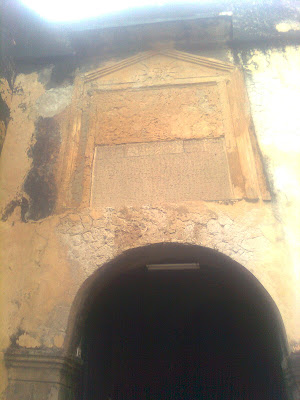
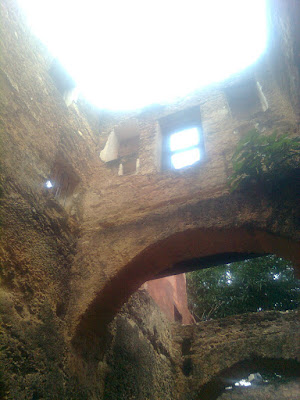
    At the main entrance, you will notice the use of arcs at the wall openings[doors]. These were used to give structural support to the walls above.
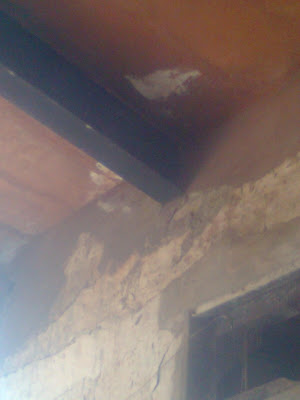
    Suspended floors were suported using steel I-Section beams.
    The doors were made of hardwood and curved to a particular pattern. The doors were also decorated using iron.
    The walls were made of coral stone . For structural stability, the walls were 600mm thick on the top and over 1 m thick on the bottom.This resulted to a tappering shape which aided in increased stabilty. The 600mm thick walls are also very stable due to the sheer thickness.
    This thickness could enable them to open up small arched windows on the side facing the Indian Ocean where the cannons were fitted. The thickness also provided the required safety form invaders.
    The average tradidional African wall was 1/8 times smaller since the Africans did not face similar security threats as faced by the Poertuguese. The wall was for privacy and insulation purposes only of which it fullfilled its purpose.

    The fort was captured by the Omani Arabs in 1698.
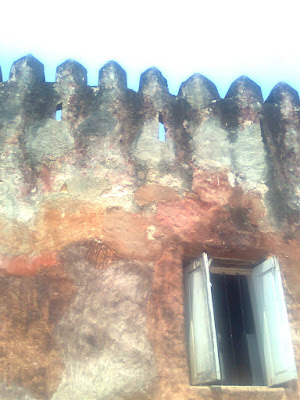
    This resulted in Islamic architecture elements addition such as pigeon holes at the top of the walls, and the house in the picture.
    ARAB ARCHITECTURE
    The Omani Arabs came in with new construction methods.
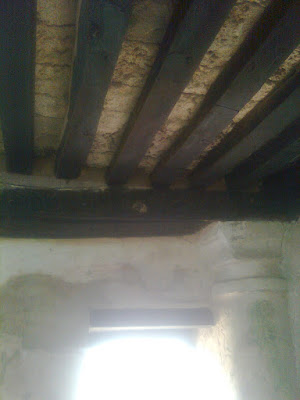
    Their walls were much narrower and their suspended floors were supported using hardwood sections .These were spaced 300mm apart and coral stones placed on top.This was then plastered using clay to form the flat suspended floor surface.
    For the door openings, hardwood planks were placed above.
    The Portuguese had mastered the art of using the masonry arcs to form structural support as shown below.

    LESSONS THAT CAN BE LEARNT.
    Currently, to build a concrete suspended floor, we use concrete reinforced with steel bars. The Kenyan Bulding Code is to the British Standards. Once the conrete is poured into the formwork support, it hardens and the steel bars hold it together.
    The Arabs used hardwood planks for the support and placed the stones on top with clay plaster in between.

    A similarity with traditional indigenous African way of construction can be seen in the clay infill. The traditional Africans made their walls using Adobe clay infill similar to the one that the Arabs used for the suspended floor.
    Since traditional Africans did not require to build vertically upwards[there was alot of land to build laterally], they did not develop this technology further.
    Also, the traditional Africans did not have sophisticated enemies such as the Portuguese and Arabs hence they did not need to develop forts and other high-rise structures. Apart from the occasional raids by other tribes using bows, arrows and spears, there were no other enemies who would have nessesitated the change of construction methods to more secure structures.

    Frank Gichuhi
    Architect.
    www.a4architect.com

  • FORT JESUS, MOMBASA,KENYA: A CONSTRUCTION METHODOLOGY ANALYSIS

    FORT JESUS, MOMBASA,KENYA: A CONSTRUCTION METHODOLOGY ANALYSIS

    The Fort was built in the year 1593 A.D by the Portuguesse.

    From fort jesus

    At the main entrance, you will notice the use of arcs at the wall openings[doors]. These were used to give structural support to the walls above.

    From fort jesus

    Suspended floors were supported using steel I-Section beams.

    From fort jesus

    The doors were made of hardwood and curved to a particular pattern. The doors were also decorated using iron.
    The walls were made of coral stone . For structural stability, the walls were 600mm thick on the top and over 1 m thick on the bottom.This resulted to a tappering shape which aided in increased stabilty. The 600mm thick walls are also very stable due to the sheer thickness.
    This thickness could enable them to open up small arched windows on the side facing the Indian Ocean where the cannons were fitted. The thickness also provided the required safety form invaders.
    The average tradidional African wall was 1/8 times smaller since the Africans did not face similar security threats as faced by the Portuguese. The wall was for privacy and insulation purposes only of which it fullfilled its purpose.

    The fort was captured by the Omani Arabs in 1698.
    This resulted in Islamic architecture elements addition such as pigeon holes at the top of the walls, and the house in the picture.

    From fort jesus

    ARAB ARCHITECTURE
    The Omani Arabs came in with new construction methods.
    Their walls were much narrower and their suspended floors were supported using hardwood sections .These were spaced 300mm apart and coral stones placed on top.This was then plastered using clay to form the flat suspended floor surface.

    From fort jesus

    For the door openings, hardwood planks were placed above.
    The Portuguese had mastered the art of using the masonry arcs to form structural support as shown below.

    From fort jesus

    LESSONS THAT CAN BE LEARNT.
    Currently, to build a concrete suspended floor, we use concrete reinforced with steel bars. The Kenyan Bulding Code is to the British Standards. Once the conrete is poured into the formwork support, it hardens and the steel bars hold it together.
    The Arabs used hardwood planks for the support and placed the stones on top with clay plaster in between.

    A similarity with traditional indigenous African way of construction can be seen in the clay infill. The traditional Africans made their walls using Adobe clay infill similar to the one that the Arabs used for the suspended floor.
    Since traditional Africans did not require to build vertically upwards[there was alot of land to build laterally], they did not develop this technology further.
    Also, the traditional Africans did not have sophisticated enemies such as the Portuguese and Arabs hence they did not need to develop forts and other high-rise structures. Apart from the occasional raids by other tribes using bows, arrows and spears, there were no other enemies who would have nessesitated the change of construction methods to more secure structures.

    Frank Gichuhi
    Architect.
    www.a4architect.com

  • DIFFERENCE BETWEEN LOW, MIDDLE AND HIGH COST FINISHES IN CONSTRUCTION-KENYA

    DIFFERENCE BETWEEN LOW, MIDDLE AND HIGH COST FINISHES IN CONSTRUCTION-KENYA

    Construction costs in Kenya can be divided into 3 categories: Low, Middle and High cost .
    The main driver of this is the finishes.
    Generally, all building constructions are broken down into
    1. Foundation-15%
    2. Walling, ring beam-20%
    3. Roofing-15%
    4. Windows and Doors-10%
    5. Finishes[plaster, tiling ,painting, ceiling Sanitary fittings[wash hand basins,wc,shower e.t.c]-15%
    6. Septic tank, wiring, wardrobes, kitchen cabinets, fence e.t.c-19%
    7. Professional consultancy fees-6%
    8. Land-varies widely depending on location

    Each specific building has a different breakdown from the other depending on the design and specification. For example, the DIAMOND HOUSE type has a very low foundation and roofing % cost due to the design which minimizes the cost of the foundation and roofing.

    [youtube http://www.youtube.com/watch?v=T11zCMvZsWg?rel=0&w=480&h=360]

    Click below for Free Youtube Movie Downloaders
    Firefox.
    Internet Explorer
    Opera

    COST DIFFERENCES
    SHAPE
    The shape of the design has a minimal influence on the cost of a house.
    MAERIALS
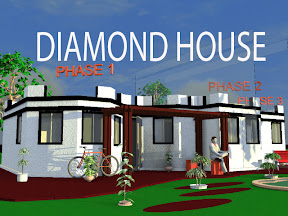
    The materials specified make the greatest change. For example, the DIAMOND HOUSE pictured below:

    From DIAMOND HOUSE FLAT ROOF

    https://picasaweb.google.com/lh/photo/IBYS_tj9bCfRylTjKPtWcw?feat=directlink
    ROOF
    If the roofing is changed from GCI Gauge 32 sheets [KES 400 per sq.m] to Stone coated steel tiles [KES 1600 per sq.m], this represents a 400 % increase in roofing. In between this, there are other middle cost roofing materials such as clay and concrete roofing tiles at KES 600 per sq.m.
    The GCI iron sheet-gauge 32 represent low cost finishes, the Clay and Concrete roofing tiles represent middle cost finished while the Stone coated steel roofing tiles represent the high cost finishes.
    FOUNDATION
    If the foundation changes form the DIAMOND HOUSE technology [KES189,000] to the usual traditional foundation method[KES269,000], this represents a 30% increase in cost.
    DOORS & WINDOWS
    A flush door costs KES 1800 in any hardware shop in Kenya. A similar type MDF door costs KES 5,000 in the same hardware. In between this, there are other types costing KES 3,000.
    The flush door represents the low cost finishes; the KES 3,000 door represents the middle cost finishes while the KES 5,000 door represents high cost finishes. The same applies to windows-for low cost windows we have louver systems, for middle cost we have aluminum sliding sections and for high cost we have hard wood frame and designer steel windows.
    FINISHES
    For paint, we have low cost paints from manufacturers such as SOLAI and Contractor paints[KES 100 per sq. m, middle cost paints from BASCO [KES 150 per sq.m]and high cost paints such as Crown Ruff and Tuff[KES 600 per sq.m].
    For floor tiles, we have low cost finishes such as colored plaster [KES 200 per sq.m],for middle class we have ceramic tiles[KES 1,000 per sq.m] and high class we have marble[KES 10,000 per sq.m].
    For wardrobes and Kitchen cabinets, the costs depend on the size and complexity of the unit design. The more complex it is, the higher the costs.
    CONSULTANCY FEES
    Architectural consultancy fees are at 6% of the total estimated cost of construction as documented in Chapter 525 of the Laws of Kenya.
    LAND
    Land cost varies according to location.
    Land in areas such as Muthaiga. Karen and Runda costs over KS 20million per care, representing the high cost areas. Land in Kitengela, Ngong, Ruiru cost around KES 3 million per are, representing the middle cost area and land in Kangundo,Isinya, Kimuka costs KES 500,00 per acre representing the low cost areas.
    CONCLUSION
    The difference in whether a house is low, middle or high cost is determined by the materials that the house owner chooses for finishes and documented by the Architect, Quantity Surveyor and Structural Engineer during design stage, approved by the local authority and later on implemented on the ground.
    Architect Francis Gichuhi kamau
    www.a4architect.com
    +254721410684

  • KENYAN HOUSING SECTOR-EFFECT OF NEW LOW COST CONSTRUCTION MATERIALS AND METHODS PREFBRICATED HOUSING

    KENYAN HOUSING SECTOR-EFFECT OF NEW LOW COST CONSTRUCTION MATERIALS AND METHODS
    PREFBRICATED HOUSING

    Prefabricated houses are buildings that are pre-made in the factory and transported to the site where they are bolted up together to form a complete house.
    Prefabricated panels are in wood, and Structural Insulated Panels.
    Structural Insulated Panels [SIP] are divided into 3 major types

    1.OSB fiber cement panels.
    Oriented Strand Boards as the name suggests are made of wood chipping strands oriented to cross each other and held together by a glue. The 1.2 m by 2.4 m boards are placed on both outer sides with polyurethane insulation sandwiched in between.
    The FOB price for a panel in China is USD 3[KES 270]. This translates to KES 135 per square meter.
    A square meter of wall will require 2 boards on each side and the insulation material, bringing the cost to around KES 300 per square meter FOB China. Add 50% in freight and port charges to Nairobi, the price comes to around KES 450 per square meter. This slightly cheaper than than the usual machine –cut stones or Stabilized soil blocks [[KES 550 per square meter]we have in Kenya hence not a viable option to import.

    2. Steel panels.
    These are made of 2 steel sheets, 1.2m by 2.4 m ,one on each side, with an inner core of polyurethane insulating material.
    SIPs are made of the outer skin material on both panel sides and an inner insulating core usually made of polyurethane.
    In the recent times, OSB boards have slowly overtaken steel SIPs as the preferred choice of housing worldwide.
    This is because steel prices are rising hence a higher cost.
    A steel SIP panel in China costs KES 900 per square meter. Ad 50% of freight and port charges to bring this to KES 1350. This is definitely way too high compared to the stone walling and stabilized soil block [KES 550 per square meter]we currently have available in Kenya.

    3. Fiber Cement Boards,
    This is usually dimensioned as 1.2 m long by 2.4m height by 6 to 15 mm thickness.
    The FOB price in China is between 9 to 15 USD[KES 800 TO 1400] per piece FOB China. This translates to approx. KES 400 per square meter.
    Add 50% for freight and port charges, bringing it to KES 600 per square meter. This is slightly more expensive than the usual stone and stabilized soil blocks [KES 550 per square meter] we have in Kenya.
    The National Housing Corporation is in the process of setting up a factory to produce Fiber Cement boards at Athi River in Kenya.
    China is the largest and the most efficient manufacturer of these boards at KES 400 per square meter.
    If the NHC production can beat this or remain at KES 400 per square meter, it will make a significant change in the construction industry since this will be KES 150 per square meter cheaper than the currently available option of machine cut or stabilized soil block walling.

    ALTERNATIVE TO PREFABRICATED HOUSING-DIAMOND HOUSE TECHNOLOGY

    [youtube http://www.youtube.com/watch?v=T11zCMvZsWg?rel=0&w=480&h=360]

    Click below for Free Youtube Movie Downloaders
    Firefox.
    Internet Explorer
    Opera

    The benchmark of low construction cost is the local materials. For walling, the local materials[stone or stabilised soil blocks] costs KES 550 per square meter. Any material that effectively brings the cost lower than this is termed as low cost.
    Prefabricated housing is limited to only the walls and roofs which constitute 30% of the total construction costs. Holstic solutions that reduce costs in all the elements of construction starting from Foundation to walling, roofing, doors&windows,and finishes offers the most effective solution to construction cost reduction.
    The DIAMOND HOUSE technology utilizes over 10 years of research in this holistic approach to cost reduction.

    Any importation of prefabricated house panels will definitely be more expensive than what we currently have at the market.
    Therefore, the solution to low cost housing in Kenya can only be achieved by utilizing local materials with creative technology. Another solution is to go the NHC way and manufacture the boards here in Kenya. Given the current high production rates in Kenya[energy,transport,labour], it remains a wait and see situation to whether NHC will be able to produce at KES 400 per square meter or less, hence replacing the current masonry stone and stabilized soil block walling which costs KES 550 per square meter to construct.

    The DIAMOND HOUSE technology utilizes a holistic approach in reduction of construction costs by targeting 3 main areas
    1. Creative use of construction technology.
    2. 2. Use of phased residential house construction
    3. Use of labour-based construction procurement method.

    These are outlined here in more detail

    http://www.a4architect.com/2011/08/29/diamond-house-by-www-a4architect-com/

    By emphasizing on all the above factors, the DIAMOND HOUSE technology effectively reduces construction cost of residential houses by a minimum of 32%.

    The DIAMOND HOUSE technology uses locally available materials e.g masonry stone walling or stabilized soil blocks for walling, GCI roofing sheets for roof and locally produced doors and windows hence the ability to be constructed everywhere even in the most remotest part of Kenya since these materials are available in any hardware.
    The cost of obtaining the DIAMOND HOUSE technology is broken down here

    http://www.a4architect.com/the-diamond-house-plan-costs-breakdown/

    Architect Francis Gichuhi Kamau
    +254721410684
    www.a4architect.com

  • THE DIAMOND HOUSE DESIGN-A PARADIGM SHIFT IN EAST AFRICAN ARCHITECTURE

    THE DIAMOND HOUSE DESIGN-A PARADIGM SHIFT IN EAST AFRICAN ARCHITECTURE

    ‘The mark of a great architectural design is its ability to influence a paradigm shift from the usual house design to a better design.’ Arch. Dr. Mburu-lecturer-JKUCAT

    [youtube http://www.youtube.com/watch?v=E0Mj13V7fTk?rel=0&w=420&h=315]

    The Diamond house design created by www.a4architect.com is inspired from the great Botswana diamonds shape .
    The Diamond house concept reduced the construction cost of a residential house by 32%. This reduction of cost is the main reason that the Diamond House will mark the beginning of a paradigm shift from the current residential house designs aw we know them to the Diamond house shape.

    From DIAMOND HOUSE FLAT ROOF

    PITCHED ROOF
    The pitched roof is the most noticeable form of residential houses in Kenya and East Africa.
    Its origin can be attributed from the colonial British architecture where it was designed to enable snow to slide down the roof during snow periods.

    [youtube http://www.youtube.com/watch?v=T11zCMvZsWg?rel=0&w=480&h=360]

    Click below for Free Youtube Movie Downloaders
    Firefox.
    Internet Explorer
    Opera

    The British colonial masters did not change the design to fit within the Kenyan / East African savannah climate that has no snow.
    This design has been repeated over and over for tens of years until it’s the ‘normal’ way to roof houses in Kenya/East Africa.
    The North African countries such as Senegal, Mali, Libya, Egypt and Ethiopia use flat roofs and to them, pitched roofs seem very odd and out of place. See pictures here
    http://www.google.com/search?q=north+african+house+designs+pictures&hl=en&client=firefox-a&rls=org.mozilla:en-US:official&biw=840&bih=465&prmd=ivns&tbm=isch&tbo=u&source=univ&sa=X&ei=isxdTpLoC4i38gOa8oCqAw&ved=0CCEQsAQ

    TRADITIONAL AFRICAN ARCHITECTURE
    Traditional African huts had pitched roofs made of thatch for the communities living around highlands such as Central province where rain is frequent. For communities living in the dry areas such as the Maasai, they utilized flat roofs in their Manyatta designs. The reason for this is because the region receives minimal rainfall hence no need to slope the roof.

    NEW ROOFING MATERIALS
    Colonialisation in Kenya/East Africa brought with it new roofing materials such as iron sheets, clay and concrete roofing tiles.
    The traditional thatch roof was replaced with better roofing materials that could necessitate for flat roof. Thatch roof requires the pitch to be steep in order for it to work efficiently. Roof materials such as iron sheet can work efficiently on slopes which are near flat.
    With these new roofing materials, Kenya/East African architecture is bound to move towards a more efficient design similar to the North African architecture.

    DIAMOND HOUSE PLAN
    The Diamond house plan has opened the way for Kenyans/East Africans to change the paradigm shift to flat roofs which are more efficient and less costly-32% savings- than the pitched roofs.
    See the Diamond House cost breakdowns here.
    Architect Francis Gichuhi Kamau
    www.a4architect.com
    +254721410684
    CURRENT CONSTRUCTION COST RATES
    http://ujenzibora.com/nahinga/?p=1203

  • DIAMOND HOUSE BY WWW.A4ARCHITECT.COM

    DIAMOND HOUSE BY WWW.A4ARCHITECT.COM

    From DIAMOND HOUSE FLAT ROOF

    The architectural firm of PRISM DESIGNS AFRICAS www.a4archtect.com has come up with a design to reduce the overall construction cost of the DIAMOND HOUSE by 32%.
    This design is achieved through the below steps:

    1.USE CREATIVE CONSTRUCTION TECHNOLOGY.

    [youtube http://www.youtube.com/watch?v=T11zCMvZsWg?rel=0&w=480&h=360]

    Click below for Free Youtube Movie Downloaders
    Firefox.
    Internet Explorer
    Opera

    [youtube http://www.youtube.com/watch?v=E0Mj13V7fTk?rel=0&w=420&h=315]

    Use of creative construction technology using locally available construction
    materials available in all hardware shops in Kenya reduces the overall construction
    cost by 32%. All materials used are locally available in any hardware
    shop e.g walling is done using machine cut or hand dressed quarry stone, roofing
    using iron sheets .
    www.a4architect.com Diamond House plan technology works in reducing
    the ammount of concrete on the foundation ,ammount of roof cover surface area and
    the ammount of timber on roof successfuly
    reducing 32% of the overall cost of construction.Construction cost is calculated by
    adding up all materials required to construct the house and adding the labour to
    put up the materials together to form the house. According to Nairobi City
    Council,the average construction cost per m2 is KES 22,000.
    The Diamond house construction is estimated at KES 15,000 per square meter,
    representing a 32% reduction in overal construction cost.

    2.CONSTRUCT YOUR HOUSE IN PHASES

    Its important to phase house construction according to your current
    space needs and financial ability.
    This way, all finances are used to construct spaces/rooms that will
    be immediately used by the house
    owner i.e the money that could have
    been used to construct a 3rd bedroom for a family of 3 is saved
    until the family requires to add the
    extra bedroom.
    You can start with the PHASE 1- 1 bedroomed[dining room can be used
    as a 2nd bedroom]. This is 45m2 in plinth area and
    is estimated at KES 676,000 without external works such as septic
    tank, electricity wiring and wardrobes
    Phase 2[2 bedroomed] is 67m2 in floor area and is estimated at
    KES 1.05 million without external works such as septic tank,
    electricity wiring and wardrobes.Phase 3 [3 Bedroomed] is 92m2
    in floor area and is estimated at KES 1.38 Million without
    external works such as septic tank, electricity wiring and wardrobes.
    The www.a4architect.com Diamond House is designed to allow for
    phased construction as the family unit increases
    in size, starting from 1 to 2 to 3 bedrooms.

    3.USE TRIED AND TESTED CONSTRUCTION
    PROCUREMENT PROCESS-
    LABOUR BASED CONTRACT.

    Most residential houses constructed in Kenya employ this method of procurement.
    A labour-based contract is where the house owner supplies a local fundi or contractor
    with all the materials needed and pays the fundi/contractor for their labour.
    Once the house owner has a list of all the materials needed and the average
    market price for each, they can make an informed decision and save alot of
    time and finances in the process. Armed with the documentation and list of all materials needed,
    the house owner can sucessfully implement the house project anywhere in Kenya and East Africa.
    www.a4architect.com Diamond House is designed to be user-friendly for labour-based contracts.
    Periodic construction supervision where necessary is availed to the house owner.

    IMPLEMENTATION
    This design is implemented trough the below process:

    1.choose a phase that suits you,
    2.contact www.a4architect.com
    obtain your Diamond House documentation and
    3.
    visit your nearest Bank branch for construction
    financing to achieve your dream home anywhere
    in Kenya.

    COSTS
    Phase 1-1 bedroomed[dining room can be used as extra bedroom] -45m2.
    Estimated Construction cost[excluding septic tank, electrical wiring,wardrobes]:KES 676,000
    Phase 2-2 bedroomed – 67m2.
    Estimated Construction cost[excluding septic tank, electrical wiring,wardrobes]:KES 1,005,000
    Phase3-3 bedroomed- 92 m2.
    Estimated Construction cost[excluding septic tank, electrical wiring,wardrobes]:KES 1,380,000

    The Architectural drawings and Bills of Quantities are available for your perusal .
    Architect Francis Gichuhi Kamau.
    Registered Architect.
    www.a4architect.com
    +254721410684
    CURRENT CONSTRUCTION COST RATES
    http://ujenzibora.com/nahinga/?p=1203

  • APPROVAL OF BUILDING PLANS IN KENYA- KAJIADO COUNTY COUNCIL

    APPROVAL OF BUILDING PLANS IN KENYA- KAJIADO COUNTY COUNCIL.

    Approval of Building Plans is a process undertaken by a Government to ensure that buildings are constructed safe for human habitation and as per the Government’s planning control.

    For example, the approval process checks whether the building is safe and structurally sound and whether the building materials proposed are also safe for human habitation.
    The process also checks if the proposed development is within the council long term plans e.g in Karen area, each house is to be within a minimum of 0.5 acre plot, in Syokimau area, each house is to be within a plot of minimum 0.125 acres, in Nairobi CBD, each building must be high density, high-rise, e.t.c.

    LOCAL GOVERNMENT

    The authority to check and approve buildings in Kenya and most Countries in the world is given to the Ministry of Local Government. The Ministry then uses the Councils to implement this.

    Approval of Building Plans in Kenya differs from Council to council depending on the size. Larger councils such as Nairobi, Mombasa and Nakuru usually have all necessary departments in house while smaller councils such as Kajiado have to outsource some services form the neighboring Government Ministries.

    KAJIADO COUNTY COUNCIL

    Kajiado county council jurisdiction covers areas such as Kitengela, Ongata Rongai, Ngong, Kerarapon, Kiserian, Matasia, Isinya and Kajiado towns.

    The process at Kaiado county council is as follows:

    1. Architect/land owner presents the drawings to Kajiado council Office assistant planner.

    2. Assistant planner checks if all documents are there i.e. copy of title, all drawings, site plans, survey plans. Mutation plans, architect’s registration certificate, e.t.c

    3. If all necessary documents are there, assistant planner asks architect/land owner to pay KES 500 to the council cashier to get the application form.

    4. At the cashier’s office, it’s a mandatory requirement that for architect/land owner to purchase the forms, he has to have a copy of search or title deed.

    5. After purchase of application form and the application is filled appropriately, all the documents are taken to the Planner for checking. If they meet the minimum requirements, the approval application fees can now be paid after the planner gives a Go-ahead. At this stage, the planner will either ask the architect/land owner to change the drawings to fit the council requirements or will give the go-ahead to commence the procedures.

    6. After the council fees are paid, the drawing now circulates to the necessary personnel to get the approval stamps. This process takes a minimum of 2 weeks to a maximum of 2 months.

    7. In large local authorities such as Nairobi, they have all the departments necessary such as structural engineering, public health and land planners. In smaller local authorities such as Kajiado, they outsource these services to the relevant Ministries situated in Kajiado. For public health, architect/land owner is sent to the Ministry of Health representative. For structural/architectural approvals, the architect/land owner is sent to the Ministry of Public works representative. For land planning, the architect/land owner is sent to the Ministry of Lands representative in Kajiado.

    8. After the drawings are stamped by all the above representatives, they are returned by the architect/land owner back to the Planner for the final approval stamp accompanied by an approval letter. The final approval stamp plus the letter is what is termed as a building plan approval and will be later used by the banks e.t.c.

    9. All the above process will take between 2 weeks to 2 months to complete depending on the intervention of the architect/land owner in each of the above offices. The architect/land owner must be available to promptly answer to each department’s queries.
    10. The council fees are in two stages- [a]the fees payable directly to the Council for services rendered by the council
    [b] fees payable directly to the Government Ministries offering other services e.g Pubic Works, Health, Land.
    11. Where necessary as deemed by the council Planner, a change of user is done by a registered physical planner as an independent consultant. He then lodges it for approval at the council together with the architectural drawings. The land owner enters into an independent agreement with a registered planner for him to offer this service.

    Feel free to inquire for any further clarification.
    Regards,

    Architect Francis Gichuhi Kamau,
    +254721410684
    www.a4architect.com
  • 10 ADVANTAGES OF USING DIAMOND HOUSE PLAN BY WWW.A4ARCHITECT.COM

    10 ADVANTAGES OF USING DIAMOND HOUSE PLAN BY WWW.A4ARCHITECT.COM

    INTRODUCTION

    From DIAMOND HOUSE FLAT ROOF

    The Diamond house plan design is inspired by the Botswana Diamonds and was designed by www.a4architect.com to offer the most efficient housing solutions to the people of Haiti after the 2010 earthquake.
    The Diamond House is made of materials readily available in every hardware shop in Kenya. The efficiency is attained through unique architectural design and construction technology.

    [youtube http://www.youtube.com/watch?v=E0Mj13V7fTk?rel=0&w=420&h=315]

    The walls are made of the usual masonry quarry stone or interlocking stabilized soil blocks,roofs made of the usual iron sheets, doors from the usual wood door Kenyan manufacturers and window frames from the usual aluminum/Louvre systems.

    From DIAMOND HOUSE FLAT ROOF

    10 ADVANTAGES

    1. It will be easier for potential home owners to be able to plan for construction funding and spending well since the Diamond House plan is standardized and uses unique construction cost reduction techniques.

    2. Potential home owners can construct in phases since the Diamond House plan is designed to be built in phase as the income of the house owner grows.

    From HAITI HOUSE FRONT TYPE

    3. Potential home owners/Financiers can be able to track and get info on construction loans since the Diamond House plan is standardized hence each previous construction loan becomes a ‘case study’ for the next hence improvement of services.

    4. Financiers will help to disseminate unique information about construction cost savings through a4architect’s Diamond House plan to its customers, thereby adding to their much needed contribution to society.

    5. Less work load on potential home owners/Financiers on interpreting and comprehending technical construction jargon since the a4architect.com’s Diamond House plan is standardized and complete with all info including quantities and prices necessary for them to make an informed decision.

    6 potential home owners will be able to obtain the lowest amount of construction loan hence the Diamond House plan resulting to the lowest amount of total mortgage repayment possible.

    From HAITI HOUSE FRONT TYPE

    7. Potential home owners/Financiers will have an easier time in making crucial decisions regarding construction loans, comprehending the house type and costs involved since the Diamond House plan is standardized hence each construction loan serves as a learning experience for the next.

    8. Potential home owners can now have easier access to all information necessary for them to obtain construction loans. Information such as house design costs and construction methods that they can use to reduce overall cost of construction can now be obtained easily in a ‘one stop shop’ method.

    9. Potential home owners/Financiers can be able to track, solve and rectify problems in disbursement and usage of the construction materials and labor since the Diamond House plan is designed to be implemented in Phases and is standardized.

    10. Almost all materials specified in the Diamond House plan are locally made hence not affected by the ever rising dollar which affects most imported materials. This use of locally made materials helps to create employment as it keeps construction costs low. The materials specified are indigenous to each region e.g coral blocks for Coast region, quarry stone for Nairobi region, stabilized soil blocks for Nyanza region.
    Potential home owners/Financiers will have contributed in creating employment in Kenya by enabling Kenyans to Buy Kenyan Build Kenya.

    CONCLUSION

    Currently, the Diamond House plan offers the best economically viable solution to housing in Kenya . According to the Nairobi City Council Planning department, the cost of construction per square meter is currently at KES 22,000. The construction methodology used in the Diamond House plan reduces this to KES 15,000 per square meter.
    According to Google search,The lowest cost of Prefabricated Housing available in Kenya is KES 23,000 per square meter.
    http://www.google.com/search?q=cost+of+prefabs+in+kenya&ie=utf-8&oe=utf-8&aq=t&rls=org.mozilla:en-US:official&client=firefox-a
    Therefore, the Diamond House plan is the best option that provides the most viable solution to housing in Kenya.

    HOW TO OBTAIN YOUR DIAMOND HOUSE PLAN

    To view costs of obtaining the Diamond House plan, click here.
    http://www.a4architect.com/2011/08/14/the-haiti-house-plan-costs-breakdown/

    Architect Francis Gichuhi Kamau
    www.a4architect.com
    +254721410684
    CURRENT CONSTRUCTION COST RATES AS PER AAK:
    http://ujenzibora.com/nahinga/?p=1203

    [youtube http://www.youtube.com/watch?v=T11zCMvZsWg?rel=0&w=480&h=360]

    Click below for Free Youtube Movie Downloaders
    Firefox.
    Internet Explorer
    Opera