Category: A4architect

a4architect posts

  • Lands Cabinet Secretary Hon. Ngilu should copy and paste all South African land laws to Kenya to reduce Housing Costs by over 100%.

    LANDS CABINET SECRETARY Hon. NGILU SHOULD COPY AND PASTE ALL SOUTH AFRICAN LAND LAWS TO KENYA TO REDUCE HOUSING COSTS by over 100%.

    In South Africa, beach front property a few km from Cape town CBD and walking distance from the beach goes for approximately kes 8m for a 3 bedroomed maisonette.

    http://westerncape.olx.co.za/3-bedroom-apartment-for-sale-in-parklands-iid-512520780
    f_512520780-1358110918

    This is an area many Kenyans can only dream of in terms of road infrastructure, security ,availability of social amenities e.g. shopping malls, schools, hospitals etc.

    In Kenya, a comparative property for kes 8m will be in Kitengela around Yukos area a few meters off the main road.

    http://langata.olx.co.ke/kitengela-townhouses-iid-512089330

    1369143991_512089330_1-Pictures-of--Kitengela-TownHouses

    In Kitengela, the security, schools, hospitals, services etc cant be compared to the ones available in the Cape town neighbourhood.

    See neighbourhood picture.
    2-Resized

    1367327910-2-bedroom-apartment-for-sale-in-parklands-cape-town-1

    Cavalier Centre

    See Kitengela Yukos neighbourhood area pictures here.

    4MOMBASA ROAD TO KITENGELA

    kitengela 98

    kitengela Acme estate_0

    KITENGELA YUKOS AREA
    In terms of comparison, the kes 8m Cape town property can ba compared to Langata property value. A comparable property in these neighbourhoods cost kes 15m to 20m.

    http://langata.olx.co.ke/langata-china-gardens-3-bedroom-maisonette-and-servant-quarters-iid-495737063

    http://www.pamgolding.co.za/kenya/langata/for-sale/4-bedroom-double-storey-townhouse/3ke1076574/details

    This is an over 100% value compared to South African value. This means Kenyans in general for the upper middle class housing, pay over 100% more for the same quality of house compared to South Africans.

    Land Bank.

    South Africa law requires all land transactions to be done involving the National Land Bank. This ensures that any Capital gains accrued form the sale of property is taxed. This has reduced the need to speculate on land since the rate of land price appreciation is very low compared to Kenya with a between 20 to 30% annual land value appreciation.

    Land price is the determinant to this property value appreciation. Actual construction cost between Kenya and South Africa does not differ much though construction cost in Kenya is higher.

    The availability of low cost land in South Africa has led to a vibrant construction industry hence savings in economies of scale unlike in Kenya.

    The Lands Cabinet secretary will go a long way if she studies the South African land laws and implements them here.
    Francis Gichuhi Kamau, Architect.
    info@a4architect.com
    0721410684

  • SWAHILI HOUSES ON 1/8TH ACRE PLOT. KES 2.2m PER BLOCK

    SWAHILI HOUSES ON 1/8TH ACRE PLOT.

    Swahili houses are the type of houses seen in Swahili low cost urban centres such as Majengo in Nairobi, Likoni, Kisauni and Zanzibar.
    2 blocks can fit within a 1/8th plot.
    dsc_0376

    dsc_0536
    Number of rooms per block.

    Each block can have 10 rooms. Each room is 12m2 in plinth area.
    The block in total will be 130m2 in plinth area.

    Cost of construction.

    The cost per m2 is low, between kes 17,000 to kes 20,000.
    Assuming kes 17,000, the total construction cost will be kes 17,000 x 130m2=kes 2.2m per block.
    Each room can be rented at kes 3000 per month. This brings the rent to kes 3000 x 10=kes 30,000 per block.

    Rent income.

    A 1/8th acre with 2 blocks will bring in kes 60,000 per month.
    Return on Investment.
    The project will return investment within 4.4 m/kes 60k/12= 6.1 years.
    This is a good return on investment for rental property.
    Francis Gichuhi Kamau, Architect.
    info@a4architect.com
    0721410684

  • FACTORS THAT DETERMINE TYPE OF HOUSING UNIT ON LAND IN KENYA.

    FACTORS THAT DETERMINE TYPE OF HOUSING UNIT ON LAND IN KENYA.

    Assuming a 1 acre piece of land, there are several factors that determine the type of housing units that can be put up.

    1. Distance from tarmac.

    If the land is less than 0.5km from tarmac, the best land use is to construct high rise flats, 4 to 5 storeys high. The cost of tarmac, over kes 60m per km, means that the area serviced by the tarmac has high potential for growth. This means that the land value appreciates at rates faster than 20 to 30% annually so within no time, the lands will be scarce and will need to be planned well for future use.

    A good example for this is Kitengela town whereby lands located 0.5km from main highway are developed with flats.

    Land between 0.5km to 1km calls for maisonette type of construction. or ground plus 2 levels type of building. This means the land value will appreciate at an average of 10 to 20% annually so there will be some time before the maisonettes constructed are overwhelmed by the land scarcity and high demand to give way for high-rise . A good example of this is the maisonette types in hurlingham and kilimani areas constructed in the 70s and 80s. They are now being demolished for high rise structures after serving their clients for 15 to 30years.

    Land over 1km from tarmac is suitable for bungalow type of construction. This land does not have high value hence demand is not high. It’s not viable to shoulder the high costs associated with storeyed construction since it’s cheaper to acquire adjacent land for expansion if need be. A good example of this Umoja estate old bungalow types which have now become nonviable and are quickly paving way for high rise flats.

    2. Proximity to a major town.

    Land 0.5 acres from the epicentre of a major town is best planned for highrise construction. A good example of this are the highrise flats surrounding Kitengela town.

    Land 0.5 to 1 km from the epicentre of a major town is best planned for maisonettes. A good example of this is the maisonettes dotting the Mlolongo town neighbourhood.

    Land over 1km form the epicentre of a major town is best planned for bungalow construction. A good example of this is the developments around Njoro,Rongai, Bahati compared to developments in Nakuru CBD.

    Number of housing units per acre.

    An acre in an area viable for 5 floors of highrise flats can comfortably handle 20 units of 2 bedroomed per 1/8th and 140 units per acre.

    An acre in an area viable for maisonettes can accommodate 2 maisonettes per 1/8th acre and 14 maisonettes per acre.
    An acre in a land which is suitable for bungalows can accomodate 1 bungalow per 1/8th and 7 bungalows per acre.
    Within the acre, 1/8th acres will be swallowed/go into roads servicing the plot.

    Francis Gichuhi Kamau, Architect.
    info@a4architect.com
    0721410684

  • Viability between 2bd, 1bd and bedsitter project for rent at Thika.

    Viability between 2bd, 1bd and bedsitter project for rent at Thika.

    This area is generally middle class so we will assume middle class finishes estimated at KES 30,000 per m2.

    Area.

    An average middle class 2 bedroomed is 60m2 in plinth area.
    An average 1 bedroomed is 30m2 and bedsitter is 16m2.
    The cost for the 2bd =60m2 x kes 30,000=kes 1.8m
    Cost for 1 bedroomed =30m2 x kes 30,000=kes 900k.
    Cost for bedssitter =16m2 x kes 30,000=kes 480k.

    Return on investment in rent.

    Rent for 2 bedroomed =kes 20,000
    Rent for 1 bedroomed=kes 10,000
    Rent for bedsitter =kes 5,500.

    Repayment Period.

    Repayment period for 2 bedroomed=kes1.8m/kes 20,000/12=7.5 years.
    Repayment period for 1 bedroomed =kes 900k/kes10000/12=7.5 years.
    Repayment period for bedsitter =kes 480k/kes 5.5k/12=7.2 years.

    From the above, it’s clear that all these types of housing units have more or less the same repayment period. They are all equal in terms of viability.

    Francis Gichuhi Kamau, Architect.
    info@a4architrct.com
    0721410684

  • REAL ESTATE INVESTMENT OPPORTUNITY IN KENYA. HOSTELS AT PANGANI.Budget. 10m

    REAL ESTATE INVESTMENT OPPORTUNITY IN KENYA. HOSTELS AT PANGANI.Budget. 10m

    Working on an assumed budget of kes 10m, its possible to venture into hostel investment by renting out a block of flats in a neighborhood near a learning institution and converting it into student hostels.

    CURRENT RENT.

    The average rent for a 2 bedroomed flat in Pangani is kes 35,000.
    This room has a kitchen, living room, bathroom and 2 bedrooms.
    The Kitchen and living room can be converted into accommodation units. The living room can fit 3 beds sharing. The kitchen can fit 1 or 2 beds with double Decker. Each bedroom can fit 2 beds on a double Decker if the bedroom is small or 2 beds side by side if the bedroom is large.

    NUMBER OF STUDENTS PER 2 BEDROOMED UNIT.

    The maximum potential number of students per 2 bedroomed house will be as below.
    kitchen. 2
    Living room. 6
    Bedroom.4
    Bedroom.4
    Total =16

    MONTHLY CHARGE.

    A charge of kes 4,000 per student brings the rental value to kes 64,000.
    Similar hostels in the same neighborhood charge around the same e.g this one below for 12 people sharing on deckers near Equity Bank Ngara for kes 3,500 per month each.

    http://westlands.olx.co.ke/a-new-mens-and-ladies-hostel-in-ngara-near-equity-bank-iid-479246122

    This brings out a profit of kes 64,000-kes 35,000=kes 29,000 per month.
    The advertising ,cleaning ,electricity and management costs will be offset by the profits from the sale of food to the students.

    NUMBER OF UNITS IN A BLOCK.

    On average, a 1/8th acre block will have a minimum of 20 units.
    The maximum profit derived per month will be 20 units x kes 29,000=kes 580,000.

    Initial startup costs.

    The initial start up costs will be as below

    1. Rent plus deposit . =kes 35,000 x2 x20=kes 1.4m

    2.Legal fees to negotiate and secure a minimum 5 year lease. Kes 100,000.
    3.Double decker Beds=16 x 20=320 beddings x kes 20,000 per bedding including bed=kes 6.4m
    4.Employees to manage and clean the hostel. 3 employees at kes 20,000 each =kes 60,000

    Total =kes 8.5m.

    CONTINGENCY.

    The balance of kes 1.5m will be set aside for any contingencies that may arise e.g more additional units, seats, wardrobes, partitioning, council license fees e.t.c.
    With a budget of KES 10m, you can comfortably enjoy a monthly income of kes 580,000 per month for the next 5 years till when the landlord agrees to extend the lease.

    MARKETING .

    Serious marketing is needed so as to win the confidence of parents. A church based religious theme would come in handy for such a venture which should include christian moral guidance to the students eg FANUSI hostels near University of Nairobi Main campus opposite BOX women hostels or Flora Hostels in Upper Hill area of Nairobi.

    Francis Gichuhi Kamau, Architect.
    info@a4architect.com
    0721410684
  • Real Estate Investment opportunities in Kenya. Hostels.

    Real Estate Investment opportunities in Kenya. Hostels.

    Real Estate investment opportunities in Kenya can be found in residential for sale, residential for rent, hotels, hostels, learning institutions, homes for the aged, hospitals, offices for sale, offices for rent among others.

    Hostels are bedsitter like type of rooms built near Universities and colleges for student accommodation. The students share a 3.5 m by 4m room . In most cases in Kenya, the sharing per room is done by 2 people.

    Most hostels tend to separate men from women . Food is served in a common dining area near the Kitchen.

    The average rent per student per month is between kes 2,000 and kes 3,000 sharing 2 students of the same sex per room. As society becomes more liberalized, decisions regarding same sex sharing will most probably be reconsidered.

    In most hostels serving Kenyatta University in Juja, the rooms are self contained, with a toilet and shower. A few hostels have communal showers but the rent is quite low compared to self contained hostels.

    There is an administration office that is manned 24 hrs within the hostel so as to address the various issues facing the students.

    Return on Investment.

    Cost Item

    Kshs

    %

    Land

    1,000,000.00

    3.926033528

    Preliminary

    120,000.00

    0.471124023

    Construction

    19,200,000.00

    75.37984374

    External Works

    441,600.00

    1.733736406

    Contingency

    288,000.00

    1.130697656

    Professional fees

    768,000.00

    3.01519375

    Project Management fees

    192,000.00

    0.753798437

    Marketing

    5,400.00

    0.021200581

    Financial Charges

    3,456,000.00

    13.56837187

    Total

    25,471,000.00

    100

    Financing Plan

    Kshs

    %

    Developer

    6,271,000.00

    24.62015626

    0.00

    0

    Debt Finance

    19,200,000.00

    75.37984374

    Presales

    0.00

    0

    Total

    25,471,000.00

    100

    PROFIT
    TOTAL RENT FOR 48 UNITS

    3,456,000.00

    TOTAL EXPENDITURE

    25,471,000.00

    REPAYMENT PERIOD

    7.37

    In an area where a 1/8th acre costs kes 1m, this can have 48 rooms each rented at kes 6,000 per month or kes 3,000 sharing . The return on investment for this type of investment is 7.3 years which is impressive considering most investments return within 10 to 15 years.

    Francis Gichuhi Kamau, Architect.

    info@a4architect.com

    0721410684

  • Constructing on Black cotton soil in Kenya.

    Constructing on Black cotton soil in Kenya.

    Black cotton soil is found abundantly in most regions in Kenya.

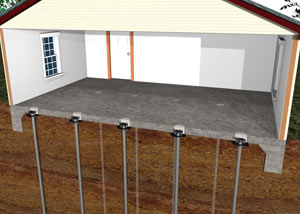
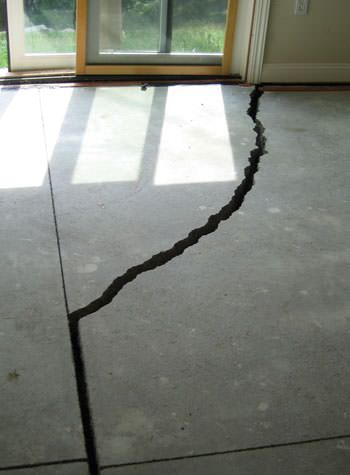
    Black cotton soil tends to soak water during the rainy season and expand and shrink during the dry season.
    This expansion and shrinkage creates up and down movements on the ground floor slab, resulting to cracks.
    To prevent this cracking, the black cotton soil is either excavated at a minimum depth of 1m or the building foundation raised and suspended above the ground level.

    1.5m minimum depth.

    Generally, if the black cotton soil is more than 1.5m in depth, its uneconomical to excavate it. This requires a suspended type of foundation whereby columns are dug till solid rock and protrude slightly above the ground level.

    Road works.

    Black cotton soil areas have costly road works as opposed to red soil or murram soil areas. The black cotton soil will need to be excavated and the voids left backfilled with hardcore, or murram, hence increasing the cost.

    Land Price.

    With the current land price increase in Kenya, the % of cost increase due to black cotton soil is negligible compared to the cost of the land. In earlier times, land buyers could choose not to buy plots with black cotton soils because there were other available better plots. Currently, the land available has become scarce and expensive so buyers have no choice but to think of solutions to construct on top of black cotton soil.

    The same applies to marshlands. Land buyers have no choice but to think out for solutions to construct. This is the case with Runda area which has several areas with march land or Karen area which has several patches of black cotton soil dotting the mainly red soil land.

    Francis Gichuhi Kamau, Architect.
    info@a4architect.com

  • How Architectural design service is provided by Architect to Client.

    How Architectural design service is provided by Architect to Client.

    Architectural design is governed by CAP 525 of the Laws of Kenya and the service is divided into 5 parts as per the law.See the law excerpts here.

    Part A.
    Inception.

    Here, the architect will give you the role of various consultants in the building industry eg qs, engineer. There are no fees to pay at this point.

    Part B.
    Outline proposals.

    Once you have your ideas in place, you can email the pictures or sketches to the Architect. He will then transform these into a workable building. Rough cost estimates will be derived. The theme, style and shape of the house is determined in this stage through back and forth exchange of drawings and sketches between Architect and Client.
    Fees at this stage are at 1% of total project cost.

    Part C.
    Scheme Design.

    At this stage, the design has taken shape and is now prepared for submission to the Local Authority for approval. Site boundaries, contours, levels and any other detail pertaining to the site is included. Sewer systems are also included.
    The fees for this stage are at 1.5% of total project cost.

    Part D.
    Detailed Design.

    At this stage, details such as the roof trusses, fascia board, window and door details, wardrobes, stair cases, stair case railings, floor tile patterns, ceiling patterns, chimney style, kitchen counter styles are included.
    Fees for this stage are at 2% of total project cost.

    Part E.
    Tender action to completion.

    This part deals with inciting building contractors to tender, advising on the tender and supervising the actual construction to finish.
    Fees for this stage are at 1.5% of total cost.

    Francis Gichuhi kamau, Architect.
    info@a4architect.com
    0721410684