Category: A4architect

a4architect posts

  • Construction Loan for Employees in Kenya. House Ownership using Affordable Solutions.

    In Kenya, particularly in Nairobi, the cost of housing is high mainly due to high bank interest rates and high land value appreciation.
    See below for details on this


    http://www.a4architect.com/2013/10/18/housing-costs-in-kenya-why-cost-of-acquiring-a-home-in-kenya-is-high/”

    http://www.a4architect.com/2013/07/12/7cost-of-housing-in-kenya-kitengela-vs-south-africa-594/”

    Employees in formal employment can have the advantage of huge bank interest rate discounts.

    With the huge bank interest rate discount, they can then stand to gain from lower housing costs than average.

    On the issue of land, ingenuine methods to resolve this problem have been sought by a4architect.com in terms of pooling resources and sharing land.
    The minimum land size permitted for subdivision under Kenyan laws is 1/8th acre. This land size is quite large for a single family considering many families are currently living in flats with no outdoor space at all.

    With 2 or more people coming together to share a 1/8th acre plot, the spiralling land cost issue can be resolved since this makes land more affordable.

    Employees in formal employment need to be as close to urban centres as possible so as to make it in time to and from work.

    The solution to majority of employees is to rent houses close to urban centres e.g. Kikuyu,Kitengela, Ngong, Kiambu etc.

    With their savings, they buy land in inaccessible places where they cant use it to live and effectively make it to and from work in time. This means the plots bought in far away places like Isinya, Kamulu,Joska, Juja farm, Kiserian pipeline, Limuru,Thika etc. are unusable for lving purposes hence the money used to purchase the plot not put into good use.

    To resolve this, a4architect.com assists employees to buy expensive land near tows eg Kitengela, Syokimau, whereby an average of 2 people share a 1/8th plot and construct 2 separate houses for each owner. This gives alot of privacy and room for future expansion.

    Ownership.
    To enable 2 people to legally won a 1/8th acre title, these 2 will need to jointly purchase the land whereby both their names appear on the title deed or they both register a limited liability company which has 2 shares then each owns a share of the company.

    A4architect.com will design 2 separate houses to the design requirement of each owner then this is taken to the local authority for approval. The ownership document then comprises of the house designs , describing how both owners should live together, similar to the sectional properties act which allows people to buy apartments , common around Nairobi neighbourhoods eg Lavington.
    Estimated cost of construction and initial designs can be viewed here http://www.a4architect.com/house-designs/”

    Forum.

    Someone can start a discussion forum topic here

    Someone can put their preferred area and preferred land budget eg Kitengela 1/8th acre selling for kes 2m.
    Other interested people can then also register and reply to the posting saying they are interested. Once a quorum is reached, if its 2 people sharing a 1/8th plot, they can then go ahead and purchase the plot after due diligence.
    a4arhitect.com will then design the 2 houses and submit the drawings to the local authority for approval.
    After approval, a4architect will then advice the 2 land owners on how to choose a contractor to build.

    After selection of a contractor, the bank laid procedures of disbursement fo construction funds to the contractor shall be used and a4architect.com will supervise the construction till completion.

    Francis Gichuhi Kamau, Architect.
    info@a4architect.com

  • Mombasa Diani Beach Road

    https://maps.google.com/?ll=-4.384677,39.549472&spn=0.006055,0.010568&t=h&z=17

    mombasa diani
    mombasa diani

    IMG_20131022_104001 (1)

    IMG_20131022_104040 (1)

    IMG_20131022_104047

    IMG_20131101_090753

    IMG_20131101_090801

    IMG_20131101_090836

    IMG_20131101_090947

    IMG_20131101_091132

    IMG_20131101_091222

    IMG_20131101_091408

    IMG_20131101_105514

    IMG_20131101_105522

    IMG_20131101_105532

  • Quantity of cement and sand in 1m2 of Masonry walling in Nairobi, Kenya.

    A 1m2 of masonary walling, assuming a 200mm/9inch stone thickness, will be as below.

    Horizontal mortar.

    Surface area =0.2m x 1m=0.2m2.
    5 Surface levesl in 1m2 =5 x 0.2m2=1m2 For horizontal mortar joining the stones.

    Vertical mortar.
    Surface area=0.2 x 0.2=0.04m2.
    15 vertical surfaces in 1 m2 of wall=15x 0.04=0.6m2.

    Total surface area =0.6 + 1=1.6m2.

    Volume = assuming a 1 inch/0.03m thickness =0.03 x 1.6=0.048 m3 of cement sand mortar per 1 m2.

    Ratio of cement to Sand for walling mortar.
    Assuming a cement/sand ratio of 1 to 8, the volumes will be as below.

    4 sand 1 cement.
    The usual mix by fundis in Kenya for cement sand mortar for joining and plaster is 4 wheel barrows of sand to 1 bag of cement.
    2 bags of cement are equal to 1 wheelbarrow.
    This translates to 2 bags cement to 8 wheel barrows of sand or a ratio of 1 to 8.

    Sand volume will be 8/9 x 0.048m3=0.042m3

    Cement volume will be 1/9 x 0.048m3=0.0053m3.

    Cost.

    Weight.

    SAND.
    Sand density is 1.6 tonnes per m3.
    Therefore, 0.042m3 of sand will weigh 0.07 tonnes=70kg.

    1 tonne of sand costs kes 2,000.

    0.07 tonnes of sand will cost kes 137 .

    CEMENT.
    Cement density is 1.6 tonnes per m3.
    Therefore, 0.0053m3 of sand will weigh 0.009 tonnes=9kg.

    1 tonne of cement costs kes 14,000, Equivalent to 20 bags cement @kes 700 per bag.

    9kg of cement will cost 9/50 x kes 700=kes 126 for 1 m2 of walling.

    Total cost of cement/sand mortar will be 126 + 137=kes 263 per m2.

    Labour.

    A fundi plus one mtu wa mkono will complete 150 stones per day.

    1 stone is 0.2 x 0.4=0.08m2. 150 Stones are 12m2 of stone wall surface per day.

    Labour cost is kes 800 for a fundi plus kes 400 for a mtu wa mkono =kes 1200 per day.

    Cost of labour for 1 m2=kes 1200/12m2=kes 100.

    Total cost of cement, sand plus labour =kes 363 per m2.

    In 1 m2 of masonry stone walling,

    costs are as below
    stone 13 pieces@kes 50=kes 650
    Sand=kes 137
    Cement=kes 126
    Labour=kes100
    Total =kes 1013

    Sand has increasingly become more expensive than cement.This is because of environmental concerns on river sand harvesting hence heavy taxes levied on sand harvesters. Labour is also threatening to surpass the estimates given due to the increased higher costs of living around Nairobi.
    Cement prices have even gone lower, with Simba cement reducing their prices to around kes 600 per bag recently.
    Stone prices will also increase due to rules limiting the tonnage of lorries travelling along Thika super highway. Juja is the largest supplier of machine cut stones in Nairobi hence affected by Thika road tonnage limit where the lorries are now carrying less tonnage for the same transport cost.

    Francis Gichuhi Kamau, Architect.

    info@a4architect.com

  • Comparison between Mabati walling vs Stone Walling in Kenya

    Mabati gauge 30. costs 570kes for a 2m by 0.8m wide sheet.
    Mabati Gauge 32 costs 470 for same.
    This translates to kes 350 per m2.

    Add cost of timber frame support, say 4m x kes 30 per foot.
    Cyprus 2 x2 costs around kes 24 to kes 30 per foot. This translates to kes 100 per linear meter.

    Assuming 1 square meter of mabati requires 4 linear meters of timber for support, this translates to kes 100 x 4 = kes 400.
    Add labour/nails say kes 200
    =kes 950 per m2

    Lets calculate cost of stone wall per m2.
    A machine cut stone, 6 x 9, costs kes 50 delivered to site.
    There are 12 to 13 stones per m2=kes 650 per m2.
    Add kes 200 labour/cement=kes 850 per m2.

    From this, we can deduce a mabati walling is kes 100 more expensive than a stone walling around Nairobi.

    Stone, apart from the advantage of cost, has several other advantages as outlined below.
    1. its a better insulator. This means the house stays warm at night and cool during the day , unlike mabati which is too hot during the day and too cold at night.
    This reduces comfrt levels of mabati houses hence lower rental income if ther are for rent.
    2. Security.
    Mabati houses are insecure in case of a burglar attack. This means owners of mabati houses will feel insecure and will also be at risk of loosing valuable goods due to the ease of breaking into a mabati house. This in turn leads to low rental income if its for rent.

    3. Class.
    Stone houses elevate the social class of the occupants .

    Upcoming informal settlements.
    New informanl settlements in Nairobi have already done their mathematics and are now using stone walling for their houses since this is the cheapest method of constructing a house.
    A look at Njiru, Chokaa areas will show this use of stone for informal settlements.

    In other developed countries such as Australia, only a very few high income group can afford to live in stone houses.

    Francis Gichuhi kamau, Architect.
    info@a4architect.com

  • Land Use in Kenya. Nairobi and its environs.

    Kenya land was first appropriated by the British colonists in the 1890s. All land in Kenya was then taken to be the property of the British colonists.

    In the 1920s, Britain then marked out the most productive land in Kenya, which is around 20% of Kenya’s land mass and sold it to British citizens in 1,000 acre chunks. These areas were referred to as the White highlands, namely central province, Rift Valley province and parts of Kitale.
    Kenya land size is 144 million acres.
    20% OF this land is arable, i.e 29 million acres.

    At attainement of independence in 1963/1964, land onwership change from the British to indigenous Kenyans was crafted.
    A solution known as the 1 million acre settlement scheme was hatched by the British and Kenya Governments whereby Kenyans were to buy back the land from the white settlers.

    This was funded by world bank.

    http://www.macalester.edu/geography/AGR/journals/1964_2_4.pdf

    The Swynnerton Plan, hatched in the 1950s, aimed at creating a middle and upper class indigenous Kenyans in central province. This was to be achieved by enabling a few central province Kenyans to own large tracts of farm land previously owned by the colonists then they employ the large masses of people.

    http://en.wikipedia.org/wiki/Swynnerton_Plan

    The British implemented the Swinnerton plan from the mid 1950s by rewarding loyalist Kenyans with large swathes of land and encouraging them to get into cash crop farming.
    The over emphasis on cash crop farming would in later years lead to lack of food since food crops were not being planted.

    The British land alienation policies which were not well designed to offer indigenous Kenyans access to land led to massive relocation of Kikuyu landless people into the Rift Valley former white highlands.

    Current land situation in Kenya.

    British interests and Government still continue to hold large chunks of viable land around Nairobi and within the white highlands.
    Delamere owns 100, 000 acres from Naivasha till Nakuru. Large British tea holdings still own large acres of land.
    A few indigenous Kenyans who were favoured by the British colonists and rewarded with huge chunks of land around Nairobi still own. Some of them have resold the land to other people.

    Way forward.
    The National Land Commission should come up with land use policies that ensure these large land owners are forced to utilise the land .This can be done through implementing taxes on idle land. This will force these owners to either ensure the land is used productively, hence offering employment or the land is sold to those with the entrepreneural skill to utilise it.
    It is really not a big deal as to who owns the land so long as the Government can ensure they are Kenyan citizens and are using the land to create employment.
    Agricultural areas around Nairobi such as Kiambu should be taxed higher so that the tax revenue raised can be used to support green house agriculture and irrigation in the arid areas.
    Francis Gichuhi Kamau, Architect.

  • Plastics in the Construction industry.

    Plastics are gaining entry itto main construction industry.
    We have the new uPVC ceilings, wood plastic wall and column coverings,uPVC floor coverings and PVC material used for roof.
    Its just a matter of time before an enterprising industrialist comes up with interlocking plasctic boxes that can be filled with soil and be stacked and joint together to form structural walls.
    This will solve alot of problems.
    This will make construction of walls and roofs much cheaper.
    This would also enable soil that cant be used to create stabilised soil blocks, eg black cotton soil or sandy/salty shoreline sand, be useful in construction as an insulating infill inside the plastic interlocking containers.
    This would also provide a method of recycling plastic.
    It can be moulded into various patterns, colours and textures.

    The plastic bricks interlock just like in a LEGO toy to create walls.
    http://www.youtube.com/watch?v=Rmg-g9u8y7o
    Interested venture capitalists/plastics manufacturers can get in touch so that we develop this into a commercially viable alternative construction method in Kenya.

    The usual Roto tanks supporting thousands of liters of water show that plastics are strong enough to be used for walling since walls dont support heavy loadings except roof loading.

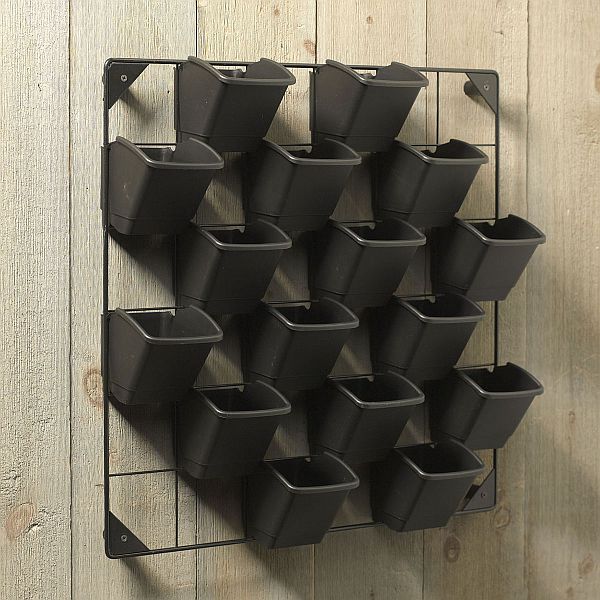
    Plastic wallings can also be used to create vertical wall gardens, complete with internal watering systems.

    http://www.alibaba.com/product-gs/252949808/Modular_green_wall_planter_Modular_green.html


    Plastics for Roofing.

    PVC sheets are a common roof feature for bars,restaurants,churches and out door tents all over Kenya.

    Use of PVC for roofing can be creatively introduced into residential housing. This can be used as an outdoor living area extension.
    Use of different pvc roofing sheet colour generates a desirable ambience to the space within it.

    For example, the outdoor sitting area for the Ehiopian restsurant at Utalli House in Nairobi CBD has a red colour which makes the interiors very exiting.

    Rafikiz restaurant along Langata road also has utilised an interesting pvc roof design.

    Tulips restaurant, Kileleshwa, designed by a4architect.com, is also a good example of pvc roofing being used to extend living areas of permanent buildings.

    Francis Gichuhi Kamau, Architect.
    info@a4architect.com

  • 3 D printing of Buildings.

    Research into making building construction more efficient using 3 d printing is on going . Soon we would be able to print our buildings directly from our computers.
    This technology is the latest in the field of construction.
    Dr. Behrokh Khoshnevis of the University of Carlifornia is leading this research through a method called contour crafting.

    In this method, a giant 3 d printer with a moveable flexible arm pours and moulds concrete from a pre mix concrete lorry along the contours of the building wall, slab , roof and other elements.

    The moveable arm interweaves the concrete to form a firm wall structure.
    Currently, concrete is the most widely used construction material.Ways and methods of making the concrete cheaper, such as creating fibre cement, can be utilised to reduce costs for bungalow type buildings that don’t require heavy structural walls.

    The robotic arm of the 3d printer can be controlled to print exactly as drawn on the computer.

    Currently, concrete prefab panel construction is made costly due to need for cranes to lift the heavy panels to the higher levels. With 3d printed buildings, there is no need for this since the pre mix lorry concrete pump will pump to the higher levels.

    Watch this video here on how the technology works.

    For Kenyan situation, much customisation will have to be done for this to be practical. Pre mix concrete lorries are already available here. The robotic printing arm design and programming will need to be undertaken by say, Numerical Machine Complex or any other private sector industry with a knack for innovative technology.

    A person can aid the printer to ensure it works perfectly till the mechanisms are fine tuned to perfection.
    Francis Gichuhi Kamau, Architect.
    info@a4architect.com

  • Housing costs in Kenya. Why cost of acquiring a home in Kenya is high.

    Housing costs in Kenya.  Why cost of acquiring a home in Kenya is high.

    On average, Kenya has one of the lowest construction rates in the world. Kenya also has one of the highest land prices in the world, much higher than in developed countries such as USA.

    Housing cost can be divided into 3 basic categories.

    1.Low cost

    2.Middle cost

    3.High cost

    Low cost housing.

    This costs an average of kes 20,000 per m2 to construct. These houses are mostly in areas such as Kayole, and over 2 km from tarmac in major towns around Nairobi.

    The breakdown is as below.

    low cost
    Cost Item

    Kshs

    %

    Land

    500,000.00

    16.58925017

    Preliminary

    20,000.00

    0.663570007

    Construction

    2,000,000.00

    66.35700066

    External Works

    20,000.00

    0.663570007

    Contingency

    4,000.00

    0.132714001

    Professional fees

    100,000.00

    3.317850033

    Project Management fees

    10,000.00

    0.331785003

    Marketing

    0.00

    0

    Financial Charges

    360,000.00

    11.94426012

    Total

    3,014,000.00

    100

    From this, we can see land cost is around 16.5 % of total housing costs. This is more or less within the international averages of 20%.

    This means that in low cost housing, bank interest at 11.9% of total housing costs is what needs to be adjusted so as to reduce costs.

    Middle cost housing.

    middle
    Cost Item

    Kshs

    %

    Land

    1,500,000.00

    32.34501348

    Preliminary

    20,000.00

    0.431266846

    Construction

    2,500,000.00

    53.9083558

    External Works

    25,000.00

    0.539083558

    Contingency

    5,000.00

    0.107816712

    Professional fees

    125,000.00

    2.69541779

    Project Management fees

    12,500.00

    0.269541779

    Marketing

    0.00

    0

    Financial Charges

    450,000.00

    9.703504043

    Total

    4,637,500.00

    100

    In middle cost housing, using the average cost of construction at kes 25,000 per m2 for a 100m2 house, the land cost is 32% of the total housing cost. This is higher than the international average of 20%.

    Such areas as Kitengela, Ngong, Ruiru where a 1/8th piece of land costs 1.5m will give the scenario above.

    The financial charges, with interest rate at 18% is also quite high.

    Solution will be for Government to look for ways that will reduce interest rates and reduce cost of land.

    High cost.

    high cost
    Cost Item

    Kshs

    %

    Land

    3,000,000.00

    40.62563478

    Preliminary

    20,000.00

    0.270837565

    Construction

    3,500,000.00

    47.3965739

    External Works

    35,000.00

    0.473965739

    Contingency

    7,000.00

    0.094793148

    Professional fees

    175,000.00

    2.369828695

    Project Management fees

    17,500.00

    0.23698287

    Marketing

    0.00

    0

    Financial Charges

    630,000.00

    8.531383303

    Total

    7,384,500.00

    100

    For high cost housing, an abnormally huge percentage of housing costs are taken up by land. The 40% land costs are way beyond the average 20% in other parts of the world.

    In high class neighborhood such as Kahawa sukari, garden estate etc, most of the housing cost is taken up by the land.

    Conclusion.

    Land price appreciation in Kenya on average has a rate of between 25 to 100% annually.

    Last year the price of 1 acre of land in Upper Hill CBD was kes 250m.

    Current asking prices for the same acre is kes 400m. This represents a 60% appreciation rate per year.

    Last year a residential plot in Syokimau 1km form tarmac was going for kes 1.5m. Its currently selling for 2.5m. This represents 66% appreciation annually.

    This appreciation on land price is higher than the international average of 5 to 10%.

    Construction cost for a middle class building in 2008 was kes 18,000 per m2. After 5 years, it has gone to kes 25,000.

    This represents 8% annual appreciation rate which is normal and in tandem with the international rates.

    Clearly, Kenyan land appreciation rates have gone viral and only the Land Commission can tame this with the introduction of Idle land taxation.

    Francis Gichuhi Kamau, Architect.

    info@a4architect.com

  • Natural stone cladding in buildings

    Natural stone cladding for walls ensures a building has unique aesthetic look which is easy to maintain.

    Natural stone cladding can be either thinly sliced quarry stone or Mazeras slate stone which is mined from the ground in sheets.

    High cost CBD Buildings.
    Its quite common to see high cost high rise buildings in Nairobi CBD being clad with such.
    Buidings such as Mayfair centre near Nairobi Hospital have even gone further and utilised Mazeras stone as road paving for pedestrians and cars.
    mayfair centre

    Disadvantages.

    Building entrances.

    Cladding with stone near entrances is not advisable. This is because stone tiles tend to be quite heavy and in case they are loose, can fall and cause serious harm to passers-by below. This Naivas Supermarket in Ngong town has been clad with mazeras at the busy entrance which poses danger when the stones fall to the ground.

    IMG_20131013_171811

    Conclusion.
    Natural stone is one of the best cladding materials that can be used in buildings. It costs around kes 2,700 per m2 which is not very expensive compared to the effect that it achieves.

    Francis Gichuhi Kamau, Architect.

  • Viability between bedsitter, 1,2,3 bedroomed apartment. Return on Investment

    area cost cost per floor no of units per floor rent Rent per year

    ROI

    bedsitter rent

    6000

    22

           550,000.00      5,500,000.00

    10

    60000

    720000

           7.64
    1 bdm rent

    8000

    30

           750,000.00      4,500,000.00

    6

    48000

    576000

           7.81
    2 bdm rent

    11000

    60

       1,500,000.00      6,000,000.00

    4

    44000

    528000

         11.36
    3 bdm rent

    15000

    100

       2,500,000.00      5,000,000.00

    2

    30000

    360000

         13.89

    Bedsitters and I bedroomed will give a faster RETURN ON INVESTMENT than 2 and 3 Bedroomed units. These are more desirable in terms of profitability.
    Francis Gichuhi Kamau, Architect.