Author: A4KENYA

  • Bungalow and Cabin Style House Plans

    Bungalow and Cabin Style House Plans
    By Alice Lane

    Potential bungalow home owners can choose from many styles of bungalow home plans. One of the more popular plans to look at if you are in the market for building a new bungalow would be the craftsman bungalow house plans. These plans consist of a prominent front porch beneath the main roof.
    Bungalows became popular during the time frame that was heavily influenced by the American Arts and Craft Movement. It was natural that homes of this time frame emulated the arts and craft feel of the time.

    Bungalows and cottages are synonymous with comfy warm fires, apple pies baking and that good feeling of constant comfortableness. I envision pods of quaint single level, wide, simply designed houses that offer easy access to major living areas like the living room and dining area. Everything that was needed for day to day living was compacted into these relatively small style homes. The bungalows that come to mind for me had nice enclosed porches in the front of the house and the most appealing amenities were their perfectly sized yards with surrounding trees. The foliage of the trees always provided the perfect amount of shade at the right times during the warm and cold seasons. Dogs were resting on porches, children were playing tag, birds were chirping and there was peacefulness that could not be duplicated in any other home design.

    Many books, children’s stories and cartoons reference the small quaint bungalow or cottage as a safe place to be, go or even seek out. The very words bungalow and cottage make me immediately shift my train of though to a more restful and relaxed state. It just feels right for me and many other folks as well.

    There are also cabin cottage home plan vacation design packages available in today’s home design markets. The cabin cottage design is another option that is similar to the bungalow home design. The main differences that stand out are that the bungalow is a little more rustic than cottage and not as quaint as a cabin cottage. Cabin cottages seem to stand in more solitary areas by themselves and not in pods like bungalows. One could not pick a better style of home to build when it comes to creating a dream vacation / recreation spot.

    Regardless of the minor differences between the cabin cottage and bungalow design, they are quaint in design and offer a unique tranquility that many other home designs can not offer.

    When you are ready to obtain more information about bungalow house plans, visit House Plans and More. At this sight you will be able to view detailed information regarding craftsman bungalow house plans and cabin cottage home plan vacation design packages to meet your specific home plan designs.

    Article Source: http://EzineArticles.com/?expert=Alice_Lane

  • The Design of Modern House Plans

    The Design of Modern House Plans
    By Alice Lane
    It is easy to confuse the terms modern architecture and contemporary architecture since the two words mean the same thing in casual usage. However modern architecture refers to the design which was inspired by the historical modernist art movement, so that in actual fact most examples of modern house plans are at least fifty years old. The modernist movement represented a rebellion against the traditions of classic architecture. Because this movement spanned almost sixty years, it embraces different architectural styles including Arts & Crafts, ranch, and Art Deco. The movement also produced giants in the pantheon of architecture, including Frank Lloyd Wright in America, Ludwig Mies van der Rohe in Germany, and Le Corbusier in Switzerland.

    The key elements which distinguish modern architecture are open living spaces, which is largely Frank Lloyd Wright’s contribution. Wright thought that separate rooms tended to impede the flow of living. Thus, modernist home plans are characterized by open floor plans which combine spaces for entertaining, relaxing, and dining. Modern country houseplans feature large plate-glass windows and outdoor patio areas to increase the living space and to bring the sense of the outdoors inside. Another key element of the modernistic style is its clean geometric lines and lack of adornment, instead of the embellished columns and arches characteristic of the classical style. Modernism also adopted technologically-advanced materials such as steel, glass, and concrete instead of the traditional stone, wood, and plaster. Another key element of modernism is the “form follows function” ideal, which is largely the contribution of Mies van der Rohe and his Bauhaus followers, whom you can thank for the office cubicle. Mies’ view was that homes and other buildings should be large and wide-open in order to accommodate various functions, and then be subdivided as needed with movable screens and walls. Mies believed that the open space would create a feeling of community.

    Although the concept of open space in modern architecture has visual appeal, probably Wright never thought for a moment about the difficulty of keeping all that open space clean. With an open floor plan, it isn’t possible to shove clutter into a corner and close a door on it. Indeed, in modern luxury home plans it is possible to see dirty dishes from the living room, so there is nowhere to hide from having to keep the kitchen spotless at all times. Also, although modernist architecture’s focus on using new technologies and materials was quite exciting in its time, by now the metal-and-glass boxes seem cold and sterile – not to mention that they show dust. While modern architecture honors the idea of freely flowing space, its slavish devotion to pure function tended to ignore human needs. As an example, towering modern condos and apartment complexes are an economical use of limited land space, but their lack of contact with nature and greenery and of common areas discourages human interaction and promotes isolation. Open space in the home can interfere with people’s need for privacy. Also few people really want to live with no sentimental objects in view.

    Modern house plans have been incorporated into contemporary styles by preserving the feeling of spaciousness of luxury home plans, while including the privacy and storage areas characteristic of country house plans.

    Article Source: http://EzineArticles.com/?expert=Alice_Lane

  • Can the Architects’ Secret Help Your Advertising Agency
    By: Mike Carlton

    Can the Architects’ Secret Help Your Agency? 

    by

     Mike Carlton


     Architects’ Secret?

    First, what do architects have in common with advertising agencies?  And, second, what’s their secret and what can we learn from it, anyway? 

    Surprisingly, there are some very interesting similarities between architects and agencies.  And, there are some just as interesting differences.  And therein lies the importance of their secret. 

    What Architects Do

    According to the dictionary, an architect is someone who, “Designs buildings and supervises their construction.”  That’s simple enough.  But that just covers the functional side.  Good architects are expected to address the psychological side, too. 

    Thus making the building more than just functional.  So that it lifts the spirit of those who experience it and benefits the interests of the building owner as well as society as a whole.

    Frank Lloyd Wright believed, “Architecture is a great inclusive through which humankind adapts the environment to human needs and, reciprocally, attunes human life to its cosmos, making human life more natural and nature more humane.” 

    That’s a whole lot more than just designing buildings and supervising their construction.

    What Agencies Do

    According to the same dictionary, an advertising agency is, “A business that prepares and issues advertising.”  That’s also simple enough.  But, like the description of an architect, it just covers the functional side.  The strength of good agencies is built on the psychological side, as well.

    A good agency creates and communicates ideas that change consumer perceptions and behaviors in ways that enhance their lives while benefiting the client, humankind and our planet.

    That’s a whole lot more than just preparing and issuing advertising.

    Parallels

    Architects and agencies share similar responsibilities. 

    First, each is charged by their clients with creating a concept for a building or communication program that touches the spirit and changes the perception, and ultimately the behavior, of those who will experience it. 

    Of course, the proposed concept must also work functionally, too.

    Perceptual and behavioral change is the primary responsibility of each.  It is the highest value that architects and agencies bring to their clients.  It is in this conceptual area that outstanding architects and outstanding agencies differentiate themselves from mediocre practitioners of their craft.

    But both do more than just conceptual work.  Both take those concepts on to designs.  These are the representations of what the final building or ad will be like.  They transform the concept into a vision of what the deliverable will be.

    With client approval of the concept and design, the next step is supervising the fulfillment of those designs.  Architects supervise the contractors.  Agencies supervise the producers, media and suppliers.  Both have the same objective; assuring that the concept and design are faithfully executed.

    Both are ultimately outcome based.  Both are held accountable by their clients for the realization of those outcomes.  This is at the core of the architect or agency compact with their clients.

    Buying the Yet-to-Be

    The clients of architects and agencies have a lot in common, too.  Most are prepared to spend considerable amounts of money to achieve their building or marketing objectives.  They expect to spend only a minor portion of that for the services of their architect or agency.  Typically no more than ten to twenty percent of their total spending.  The rest is for construction or media, etc. 

    In both cases they are betting big time that their architect or agency will be able to deliver the outcomes, both practical and psychological, that they want.  They know that the intellectual and managerial capabilities of their architect or agency are crucial to success.

    Thus, they select their architect or agency largely on faith. 

    For they are buying something that doesn’t yet exist.  So the reputation and imagination of the architect or agency are the primary criteria in their choice.

    Here Comes the Secret

    With so much in common, there is one gigantic difference.  And that is in their respective business models.

    Agencies, as the name implies, act as agents for the client and usually buy the media and production work necessary to implement the idea. 

    Architects, on the other hand, do not act as agents for their clients.  They may select the contractors.  They may direct them.  They may audit their bills.  But, they don’t pay them.  They leave that chore up to the client. 

    This is their secret.  It makes a huge difference.  And one that needs to be explored.

    A Look Back

    Agencies are called agencies because originally they acted under common law as “true agents” for their clients.  Under the true agent business model agencies were authorized to buy media for their disclosed clients and were paid a commission from the media for doing so. 

    The net cost of that media was paid for by the agency which had billed the client for the gross cost.  The agency’s compensation was the difference between that net and gross amount.  Usually 15% of the total.  All very simple.

    From its origins in common law, in the true agent model the disclosed principal (the client) was responsible for the actions of the appointed agent.  And thus bore full legal responsibility for liabilities incurred while the agent was acting on that principal’s behalf.

    As time went by, a slightly different business model gained support by all the major advertising industry groups. It was called the “sole liability” business model.  For many years the American Association of Advertising Agencies was a staunch proponent of sole liability.  

    That meant that the media or suppliers held the agency solely liable for the client’s advertising spending, regardless of whether the client ever paid the agency or not. 

    The attraction of sole liability was that it made it easier for the media to authorize credit, thus making their sales process faster and cleaner.  As well as helping to justify the commission the medium paid to the agency.

    This approach worked well for agencies, media and clients for many years.  But after a number of client bankruptcies, which were catastrophic for their agencies, that policy was changed by the 4As to the “sequential liability” business model.

    Sequential liability means that the media or suppliers may look to the agency for payment only after the agency has been paid by the client  Until then, the client remains on the hook.  Significantly reducing the agency’s financial risk. 

    Obviously, sequential liability is not very popular or well supported by the media.  Or by other suppliers like talent, production houses, printers, web shops, etc.

    From this confusing background, determining liability today can be a murky picture, at best.  With each situation generally controlled by the specific agreements between the client, the agency and the media or supplier.  Agreements that can often differ between each client, agency and medium.

    This means that any collection problems can quickly escalate into a big mess.

    What does it Cost?

    Even though the commission compensation system has largely dissolved in favor of fees, most agencies continue to act as agents for their clients.  They continue to buy media and materials for their clients, rebilling the clients and paying the media or suppliers.  Today, it is not uncommon for these transactions to be at net, with no financial benefit for the agency handling the transaction.

    Yet, when acting as agent, the agency continues to issue purchase orders, probably incur some level of liability, bill the clients for those items, and collect the client payment, and pay the media and suppliers. 

    Lots of administrative paperwork, which is time consuming and prone to error.  And the risk of continued financial liability to the media and suppliers.

    Clearly, this bill-paying accommodation for clients has costs: 

    1. In People

    The folks who buy the client media and production services, the ones who issue media and purchase orders, the ones who bill the client for that media and production, the ones who collect and receive the client payments, the ones who pay the media and suppliers and the ones who manage the cash flow.  How many are there, how much time do they spend on this, and what does it cost?

    1. In Capital

    If the client does not pay the agency before the agency’s payment to the media or supplier is due, the agency must have the money to cover that time period.  Now this capital can come from a number of sources.  But most often it is in a working capital line of credit from a bank.  And the bank must be paid, sometimes handsomely, for making those funds available to the agency.

    1. In Systems and Support

    To provide client bill-paying accommodation, agencies need specialized computer software to process the client’s purchases and financial transactions.  They need more hardware and IT support, too.  As well as continually dealing with complex tax issues and the increased cost of independent audit services.

    1. In Risk

    Managing money that belongs to others is not a responsibility to be taken lightly.  The typical agency is responsible for client funds that are many times greater than the resources of the agency itself.  Even with sequential liability, failure of the client to pay is a big, expensive hassle at best.  And at worst, a financial disaster that can destroy the agency.

    1. In Management Diversion

    Yet few agencies get paid to cover these costs.  They become just obscure overhead items.  Lots of small line items that in total are quite significant.

    On close scrutiny, these costs are usually much greater than agency management realizes.  All to provide client bill-paying accommodation. 

    What Does the Client Want?

    At this point, it is not clear what value clients place on bill-paying accommodation by agencies.  Sure, they all expect it.  It is the way agencies have always worked and what they are accustomed to.  Most client internal systems are set up to accept these bundled bills. 

    However, since few agencies have figured out what this bill-paying accommodation costs, fewer still have asked their clients how much they are willing to pay for this service.

    We suspect that the value most clients would place on this service would be considerably less than what it costs the agency.

    What Business is the Agency In?

    The basic truth is that intelligent marketers hire agencies for ideas that will change consumer behavior.  Clients need ideas that will move their customers.  And, that is where agency value lies.  It’s as simple as that. 

    Sure, clients need ads and commercials and brochures and blogs and websites and lots of other stuff.  And sure, they need management of the entire program.  And stewardship reports on how things are progressing and how their budget is being spent.  And, they need to get bills and they need to pay them.

    But, who has ever heard a client say she selected an agency because of the way they bill or pay?  Or the fact that they aggregate all the media and supplier expenses so that it easy for her accounting department?  Or that because the agency acts as an intermediary, they can get more float in their cash flow? 

    Smart marketers understand that there is no intellectual value in this sort of thing.  They accept this business model because it is traditional.  But, it is truely questionable if they really need it.

    If that is the case, and since every client has its own internal bill-paying capability, would it make sense for the client to just pay the agency to manage the relationships with media and suppliers, and then let agency approved media and supplier payments be made directly by the client’s own accounts payable people?

    Back to Architects Again

    Architects don’t provide their clients with bill-paying accommodation.  They have unbundled services in which the client can pay one fee for the concept and design.  And if the client so chooses, the architect can supervise the construction for another fee. 

    The architect can also select contractors, scrutinize their contracts, supervise their performance, audit their bills and pass them on to the client for direct payment. 

    All of this is done under a well defined scope of work.  All of it is compensated by fee.  Now, that fee may be related to the total cost of the building or related to hours, or in the best cases, related to the value the client receives.

    But the architect does not act as agent.  The architect does not buy bricks and mortar and rebill them to his client.  The architect does not pay the craft labor. 

    As a result, the architect avoids a significant risk and back room cost that the agency blissfully accepts.

    And, we wonder why it is so hard for agencies to make a reasonable profit!

     Marketing Architects

    Against this background there are the beginnings of an unbundling process within the agency industry.  For some time Sanders Consulting has been advising agencies to spin-out their strategic services into marketing consulting firms.  And act like marketing architects. 

    A number of agencies have done this successfully.

    More recently, start-ups driven by former agency talent have been specifically describing themselves as marketing architects.  They develop the insights and concepts and then will separately supervise the implementation. 

    Often using traditional agencies for the execution, as well as all kinds of other specialized service providers.  

    This business model may well be a harbinger of the future.  These kinds of consultative organizations can be much more nimble than big agency ad factories.  They don’t have as many mouths to feed.  Nor do they have big traditional infrastructure to support. 

     And, an increasing number of leading edge clients are beginning to test the benefits of this approach.

    What’s an Agency to Do?

    If exploring unbundling looks like it might make sense to you, here is a step-by-step way you might want to proceed:

    Determine Your Back Room Costs

    What does it cost you to provide bill-paying accommodation for your clients?  This requires looking at your people costs, computer hardware and software, space, cost of money if you are financing client payments, outside auditors/advisors, management time, etc.  In short, all the costs that you wouldn’t have if you did not act as an agent for clients.

    This number will probably be bigger than you expect

    Note: You might want to be careful about who does this evaluation.  It would be unfair to ask your people who make a significant portion of their living providing client bill-paying accommodation to conduct this evaluation.

    Find Out What it is Worth to Your Clients

    Here, it gets a bit trickier.  The best way to approach this is one client at a time.  Start with the client you feel has the most reasonable approach to business.  And, one you are also doing very good work for.  Figure out what their share of the above back room cost is. 

    Tell him what it is costing you to provide him with bill-paying accommodation.  And, that you don’t believe that this is the best way for him to invest money with you. 

    Tell him that you would prefer to put that money into improving the quality and quantity of work you are providing.  This would mean that he could get more media, better production and improved strategic agency service all without paying a penny more.

    Begin the Weaning Process 

    It is unlikely that you will be able to get out of the client bill-paying accommodation business overnight.  But by approaching it one client at a time, with particular emphasis on new clients and new people at existing clients, you should be able to phase out smoothly over time. 

    This approach should also enable a more humane way of addressing the back room staff reductions that should come with this change.

     A Sobering Thought

    As this is written, Chrysler and General Motors are in bankruptcy.  It is reported that together they owe their agencies between a quarter and a third of a Billion Dollars.  It is also reported that much, but not all, of that money is for media and promotional materials the agencies bought for their clients.

    And now who gets paid what is ultimately in the hands of a Bankruptcy Judge. 

    Those agencies did not cause their client’s bankruptcies.  Those agencies played by the accepted rules.  Yet a judge’s decision can determine their very survival.

    Is that a position you or any advertising agency would ever want to be in?

    About the Author

    Mike Carlton has spent most of his life in and around advertising agencies. For over a quarter of a century he served in various agency functions, including general management and ownership in a 150-person shop. Along the way he held offices in the American Association of Advertising Agencies, agency networks, and became a frequent writer and speaker on agency issues.

    In the 1980s he founded Carlton Associates Incorporated, a consulting firm that focuses on agency business and leadership challenges. He was also a founder of World Systems, a first generation accounting system supplier for agencies, and 600 Monkeys (now a part of Computer Associates), a provider of new technologies for agencies and other professional service firms. In addition, he founded Centre for International Business, which has assisted advertisers and agencies globally.

    (ArticlesBase SC #1114649)

    Article Source: http://www.articlesbase.com/Can the Architects’ Secret Help Your Advertising Agency

  • Steel Buildings – The Modern Construction Design

    Steel Buildings – The Modern Construction Design
    By Adriana N.

    The popularity of steel buildings has increased over the years. This type of construction has always been popular for commercial and heavy use buildings, but now it is often found in homes, apartments and retail outlets. The benefits of steel construction include design, construction and durability factors. Here are some specific ways in which steel will provide a better choice for your next construction project.

    Buildings constructed of steel are more cost effective in two ways. The initial cost of the steel is comparable to traditional framed buildings. Other building materials such as concrete, brick or stone can be even more expensive than steel.

    Another way that you save money with buildings of steel is in their durability. With steel framing, you never need to replace studs due to termite damage. Steel doesn’t get dry rot and doesn’t warp or twist in the way that timber can. Steel framing is not subject to splitting and cracks that can affect buildings framed in the traditional way.

    Buildings of steel usually don’t use conventional erection methods. The framework of the building is bolted or welded in place and a skin is placed over the framework. The insulation and interior finishing proceeds in much the same manner as would be done with traditional construction methods.

    Because many steel buildings are pre-engineered, they arrive at the building site as a complete package. Experienced builders can put up an engineered building quickly. Typically, the structure is designed to be in compliance with local building codes, so there is less downtime while waiting for building inspectors to arrive and inspect completed portions of the building.

    Steel structures are more versatile than traditional buildings. They are often designed as units that can be adjusted as needs change. You can expand the size of the building even after the structure is in place. Just add additional framework and more panels to cover the increased wall space. The basic structure may be added to, shrunk and redesigned into a different floor plan if needed. A steel structure could be moved to a different location if necessary.

    Structurally, steel is stronger than timber. This makes it possible to create buildings that are larger or taller without additional structural support. Steel construction is better able to withstand the forces of nature. Steel will stand up to hurricane force winds, to heavy snowfall and to earthquakes in many instances. It can stand through conditions that would cause a wooden framed building to collapse.

    Every time steel is used in a building, a tree is saved. Whether the structure is original construction or is a remodeling project, you can be sure that an engineered steel structure is easier on the environment. Timber is a diminishing resource in the world, but steel is renewable.

    Steel buildings are attractive, with clean, modern designs that blend with existing structures in the neighborhood. If you choose steel for farm or industrial buildings, they can spruce up the surroundings with attractive colors that blend into the surroundings. Harmonious blends of window designs, roof colors and wall panels make this style of building appropriate for almost every application.

    When constructing buildings, the choice of materials is very important. Durability, quality, and other factors come into play. If you are looking for steel buildings Ontario or Carports Canada, then look no further.

    Article Source: http://EzineArticles.com/?expert=Adriana_N.

  • What Are Shop Drawings?

    What Are Shop Drawings?
    By Brian M. Curran

    I started back in the AEC industry in the late nineties, and it probably wasn’t long after that when I first heard the phrase “shop drawings”. I’m sure the phrase conjured up pictures in my imagine as I thought about the meaning of that phrase, and now many years later I’ll answer the same question that put my imagination in gear back then, namely “What are shop drawings?”

    Since I have years of experience in the AEC Industry, through which hands-on I have learned a thing or two about shop drawings, for this article I think the best way to answer the question at hand is to: Do a short web query on the topic, then to quickly parse through a few of the results, and finally to offer up a consolidating statement by tying together my experience and web query results.

    With having just mentioned my web search method to collecting some definitions, I actually didn’t start on the web, if that makes sense! Rather I first started on my bookshelf and found that The Means Illustrated Construction Dictionary Third Edition Unabridged defined shop drawings as, “Drawings created by a contractor, subcontractor, vendor, manufacturer, or other entity that illustrate construction, materials, dimensions, installation, and other pertinent information for the incorporation of an element or item into the construction.”

    Then I moved onto the web as I said I would, and dug up two more definitions. The first of my web definitions was from the online AIA Document Commentary, A201-2007 General Conditions of the Contract for Construction which stated in section 3.12.1, “Shop Drawings are drawings, diagrams, schedules and other data specially prepared for the Work by the Contractor or a Subcontractor, Sub-subcontractor, manufacturer, supplier or distributor to illustrate some portion of the Work.”

    Lastly, my web query results turned up Wikipedia’s site. They externally cited R Pietroforte (1997)(PDF), Construction Management & Economics, Taylor & Francis Retrieved 2007-02-23, which gave a definition of, “A shop drawing is a drawing or set of drawings produced by the contractor, supplier, manufacturer, subcontractor, or fabricator.”

    With these three definitions I have a mini sample set of definitions, so that I can check for consistency amongst them, and compare them to my life’s experience within the AEC Industry. Considering just that I think the definitions are fairly consistent, and do pretty good job of explaining what shop drawings are without needing any extra explanation. Regardless though, let me further clarify what the definitions are saying through a hypothetical example.

    Lets say that there is a man who wants a 20 story building constructed, and so he hires an Architecture / Engineering firm to put together the construction documents for doing so. Well, the construction documents, which will be taken in hand by a Contractor who will actually construct the building, some times don’t have all the information that the Contractor will need in order for him to complete the construction of the building. This is where shop drawings come in. They act as the bridge that fills in the gap between the contract documents and the Contractor.

    This example admittedly doesn’t cover all the varying scenarios in which shop drawings are used, but I do hope it can be extrapolated upon in order to better understand a different shop drawing situation.

    About the author: From New York City Brian M. Curran runs a CAD drafting service that provides outsourced AutoCAD drafting services to AEC industry companies, homeowners and others with CAD drafting needs throughout the entire United States. His CAD services include, but are not limited to: Building Surveys / As-built drawings of: building systems, building elevations, roof plans, floor plans, and reflected ceiling plans. Also, hand sketches converted into AutoCAD format, Paper-to-CAD conversions, structural drawings, steel detailing, rebar placing drawings and construction logistics drawings. For more information on Brian M. Curran’s Computer Drafting Business, please visit: http://www.draftingservices.com

    Article Source: http://EzineArticles.com/?expert=Brian_M._Curran

  • DIAMOND HOUSE PLANS– As the Dust Settles.

    Phased Design House Plans for Haitians as they rebuild their country.

    From DIAMOND HOUSE FLAT ROOF

    INTRODUCTION
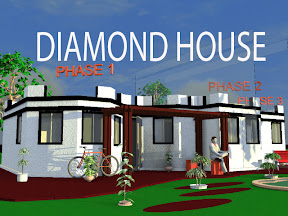
    The Diamond house plan is inspired by the Botswana Diamonds and was designed by www.a4architect.com to offer the most efficient housing solutions to the people of Haiti after the 2010 earthquake.
    The Diamond House is made of materials readily available in every hardware shop in Kenya. The efficiency is attained through unique architectural design and construction technology.

    [youtube https://www.youtube.com/watch?v=E0Mj13V7fTk?rel=0&w=420&h=315]

    The walls are made of the usual masonry quarry stone or interlocking stabilized soil blocks,roofs made of the usual iron sheets, doors from the usual wood door Kenyan manufacturers and window frames from the usual aluminum/Louvre systems.

    From HAITI HOUSE FLAT ROOF

    *The Diamond House Plan was conceived by www.a4architect.com to provide the most efficient ‘GREEN ARCHITECTURE’ designs as a housing solution to the People of Haiti after the devastating 2010 Earthquake. It was a philanthropic gesture to the People of Haiti to help reconstruct their country after the earthquake.

    Phased residential house construction.

    From HAITI HOUSE PLAN

    This is whereby the architect designs the house in such a manner that the house occupants can continue adding more rooms in future as their needs increase.
    The house starts with 1 bedroom which can easily be added to become 2 bedroomed ,3 bedroomed and 4 bedroomed.

    https://picasaweb.google.com/s/c/bin/slideshow.swf

    See the house below designed by www.a4architect.com for more information.

    From HAITI HOUSE PLAN

    As the family size grows, the house also grows concurrently.
    This architectural design aids greatly in planning for the future.
    The beauty about this design is the fact that one can start with the low price 1 bedroomed house. After a period of time as the space need increases, the 2 bedroomed unit is added then the 3 and 4 bedrooms consecutively.

    DIAMOND HOUSE PITCHED ROOF VERSIONhttps://picasaweb.google.com/s/c/bin/slideshow.swf

    The use of Structural Insulated Panel technology assists in that with these panels, its very easy to add extra rooms to the building. SIP houses are light weight so there will be no settlement cracks as witnessed in the normal masonry house types whenever new additions are extended from the main house.
    With the normal masonry stone houses, people are forced to buy larger houses-3 bedroomed houses-yet maybe they only require to use just 1 or 2 bedrooms.
    This way, they are forced to buy and pay for space that they are not using.
    In this design, the occupant pays for the exact space that they require in that if the occupant only requires just 1 bedroom for the time being, that’s the only space they pay for.

    DIAMOND HOUSE FLAT ROOF VERSIONhttps://picasaweb.google.com/s/c/bin/slideshow.swf

    In the era of the 21st Century, its important that consumers make decisions that avoid unnecessary waste of money and resources .

    PAYMENTS
    To obtain the Diamond House Plans, click here for a cost breakdown.

    [youtube https://www.youtube.com/watch?v=IDbb2ivWmh0?rel=0&w=425&h=349]

    Frank Gichuhi.
    Architect.
    www.a4architect.com
    +254721410684

    From HAITI HOUSE FRONT TYPE
  • Post Format: Quote

    Only one thing is impossible for God: To find any sense in any copyright law on the planet.
    Mark Twain

  • HOW TO DESIGN AN ECO CITY

    HOW TO DESIGN AN ECO CITY

    An Eco City helps to encourage future urban redevelopment plans to consider sustainability. Sustaniability will be best achieved using the Mottainai campaign.

    Mottainai campaign

    Mottainai is an ancient Buddhist term from Japan that means to have respect for the resources around you, to not waste resources, and to use them with a sense of gratitude. The concept is closely associated with the conservation practices that people most commonly recognize as the three R’s – reduce, reuse, recycle – with a fourth R for respect.

    In Kenya, the Mottainai campaign was initiated by Professor Wangari Maathai to eliminate waste plastic from littering the natural environment.
    The proposed Eco City will include the following key features in its aim to reduce the Carbon footprint in line with the Mottainai campaign.

    • Well designed squares, gardens and open spaces which will be landscaped. Existing trees will be preserved where possible. These gardens will act as socializing spaces where people can take a well deserved rest as they socialize with each other. Nooks will be designed within the landscape for additional tree planting.
    A target of 20% of the surface to be green should be envisioned.
    Developers should be encouraged to include balconies with planters in each floor level to increase the ‘green’ vertically. Mechanisms to ensure this is vertical landscaping is achieved should be well laid out to potential developers.

    • Use of renewable energy resources should be encouraged. Use of Solar powered curtain walling on the façade of tall buildings will bcouraged. Companies that manufacture solar curtain walling such as SHARP-SOLAR will be approached and given priority in allocation prominent space at the entrance to advertise their products.
    Kenyans pay 4 times the European average for electricity (19 US cents/kwh) – in Europe it is 4 or 5 US cents).
    South Africa[2008], Nigeria[2008], Tanzania[2009] , Kenya[2009] and Ethiopia[2010] recently experienced power rationing so this will ensure electricity is available incase of power rationing.

    Use of Bio-Gas from the sewage generated should also be encouraged. Companies that deal with Bio-Gas generation such as KENYA PUXIN RENEWABLE ENERGY CO.LTD should be approached and requested to invest in generation of Bio-Gas from the sewage. This will reduce the burden on Nairobi City Council sewage systems.

    Recycling of surface run-off should also be encouraged. Side drains will be designed to flow in a controlled manner to enable harvesting.
    Surface runoff will be directed to a deep dam that will serve as a water reservoir and as a recreational feature whereby people can enjoy boat-riding and other features such as a pool-bar[similar to Uhuru Park Inn]. The dam should be well positioned near the shopping mall so as to increase the water-front recreational land value. This will reduce the burden on the Nairobi City Council storm water drainage system.

    Companies dealing with supply of water should also be requested to invest in rain-water harvesting for re-sale to Nairobi. Currently the water supply for Nairobi City is inadequate hence a ready market for water. This water will be very useful in maintaining the vast landscapes within the scheme.

    • Reduction of energy used in Air-Conditioning and Lighting: This is achieved by careful plot subdivision whereby all plots have an open front and back to enable cross-ventilation of air and ingress of Natural Light. The green landscaped areas will also help in increasing air quality.

    • Reduction of Car emissions: Some roads within the scheme should be pedestrian only so as to reduce vehicular traffic. Housing units within the scheme will also reduce car emissions since people can now live within the CBD and be able to walk to work.
    A comprehensive green transport network, i.e. non-motorized and public transport, should be envisioned in the Eco-city.

    Francis Gichuhi B.Arch [U.o.N ] M.A.A.K[A]
    www.a4architect.com