


Development of Flats at Ngong. Return on Investment in Sale vs Rental options.
| Cost Item |
Kshs |
% |
| Land |
2,500,000.00 |
2.945889894 |
| Preliminary/council approvals |
294,000.00 |
0.346436652 |
| Construction |
63,000,000.00 |
74.23642534 |
| External Works |
3,150,000.00 |
3.711821267 |
| Contingency |
1,260,000.00 |
1.484728507 |
| Professional fees. 4% |
2,520,000.00 |
2.969457014 |
| Project Management fees. 1% |
630,000.00 |
0.742364253 |
| Marketing |
170,000.00 |
0.200320513 |
| Financial Charges. 18% p.a interest |
11,340,000.00 |
13.36255656 |
| Total |
84,864,000.00 |
100 |
| Financing Plan |
Kshs |
% |
| Developer |
21,864,000.00 |
25.76357466 |
| Debt Finance |
63,000,000.00 |
74.23642534 |
| Presales |
12,000,000.00 |
14.14027149 |
| Total |
84,864,000.00 |
114.1402715 |
| PROFIT | ||
| SALE OPTION | ||
| TOTAL SALES FOR 30 UNITS |
120,000,000.00 |
|
| TOTAL EXPENDITURE |
84,864,000.00 |
|
| NET PROFIT |
35,136,000.00 |
|
| % Profit Margin |
41.40271493 |
|
| Take home ammount. |
37,636,000.00 |
|
| RENT OPTION | ||
| Rent per unit | 18,000.00 | |
| No. of Units | 30.00 | |
| Rent for 30 units monthly | 540,000.00 | |
| Annual rent | 6,480,000.00 | |
| Return on Investment. Years. | 13.10 | |
Conclusion.
If the project is sold at 100%, the Returns are quite high. If the project is rented out, returns will be in 13 years which is within the 15 year period hence a viable option.
The project can have 50% of units for sale to cater for the high interest rates cost of financing then the 50% of the units that remain are rented out.
This way, the high cost of finance/borrowing is mitigated by sale of units and the client remains with 15 units from which to collect rent from.
Francis Gichuhi Kamau, Architect.
Development of Flats at Ngong. Return on Investment in Sale vs Rental options.
| Cost Item |
Kshs |
% |
| Land |
2,500,000.00 |
2.945889894 |
| Preliminary/council approvals |
294,000.00 |
0.346436652 |
| Construction |
63,000,000.00 |
74.23642534 |
| External Works |
3,150,000.00 |
3.711821267 |
| Contingency |
1,260,000.00 |
1.484728507 |
| Professional fees. 4% |
2,520,000.00 |
2.969457014 |
| Project Management fees. 1% |
630,000.00 |
0.742364253 |
| Marketing |
170,000.00 |
0.200320513 |
| Financial Charges. 18% p.a interest |
11,340,000.00 |
13.36255656 |
| Total |
84,864,000.00 |
100 |
| Financing Plan |
Kshs |
% |
| Developer |
21,864,000.00 |
25.76357466 |
| Debt Finance |
63,000,000.00 |
74.23642534 |
| Presales |
12,000,000.00 |
14.14027149 |
| Total |
84,864,000.00 |
114.1402715 |
| PROFIT | ||
| SALE OPTION | ||
| TOTAL SALES FOR 30 UNITS |
120,000,000.00 |
|
| TOTAL EXPENDITURE |
84,864,000.00 |
|
| NET PROFIT |
35,136,000.00 |
|
| % Profit Margin |
41.40271493 |
|
| Take home ammount. |
37,636,000.00 |
|
| RENT OPTION | ||
| Rent per unit | 18,000.00 | |
| No. of Units | 30.00 | |
| Rent for 30 units monthly | 540,000.00 | |
| Annual rent | 6,480,000.00 | |
| Return on Investment. Years. | 13.10 | |
Conclusion.
If the project is sold at 100%, the Returns are quite high. If the project is rented out, returns will be in 13 years which is within the 15 year period hence a viable option.
The project can have 50% of units for sale to cater for the high interest rates cost of financing then the 50% of the units that remain are rented out.
This way, the high cost of finance/borrowing is mitigated by sale of units and the client remains with 15 units from which to collect rent from.
Francis Gichuhi Kamau, Architect.
This year’s wordpress word camp event was held last weekend at Sportsman’s arms hotel in Nanyuki.
This is an annual meeting held by wordpress bloggers and coders.
I presented on how i use wordpress to enable many Kenyans afford accessible housing through crowd sourcing . Using a wordpress plugin called bbpress, this enables creation of a forum whereby various participants can meet and discuss on where to settle on buying land for construction.
With the rising cost of land, potential home owners can get a 1/8th acre and decide to share it amongst 12 people then build bedsitters which can be increased vertically into several storeys as time progresses.
Someone can create the initial bedsitter then add other bedrooms vertically on top in future developments.
This enables the barrier created by high land prices be broken into acquiring land and housing.
Whive.
Mr John Karanja of Whive presented on how he enables people tap into crowdsourcing and moving new projects from initial concept stage into actual reality on the ground.
We are in talks to team up a4architct.com and so as to move the real estate crowd sourcing to tap into a largest market. This will enable more and more Kenyans be able to access housing at affordable rates.
Dukapress.
The founder of Dukapress also presented an exciting way of using mobile money such as Orange money and mpesa to connect to wordpress front end for record keeping purposes.
A4architect.com will in future team up with him so as to enable contributors into the real estate crowdsourcing be able to top up their contributions using mobile money/mpesa.
The beauty of this is that the interphase allows for the info to be publicly viewed hence accountability for the people contributing to purchase land and construct houses at the a4architect.com forum.
Orange Telkom.
Orange Telkom was the main sponsors of this event.
Their involvement and encouraging of innovation into the IT sector is great.
Having personally used Orange internet through their dongle, I can testify that they offer one of the fastest internet speeds. Watching YouTube videos and streaming tv online is very smooth with no breakages and at very low costs compared to others in the market.
With such speeds, this enables people working on wordpress or watching YouTube movies and online tv a much better and comfortable working atmosphere.
Francis Gichuhi Kamau, Architect.
info@a4architect.com
This year’s wordpress word camp event was held last weekend at Sportsman’s arms hotel in Nanyuki.
This is an annual meeting held by wordpress bloggers and coders.
I presented on how i use wordpress to enable many Kenyans afford accessible housing through crowd sourcing . Using a wordpress plugin called bbpress, this enables creation of a forum whereby various participants can meet and discuss on where to settle on buying land for construction.
With the rising cost of land, potential home owners can get a 1/8th acre and decide to share it amongst 12 people then build bedsitters which can be increased vertically into several storeys as time progresses.
Someone can create the initial bedsitter then add other bedrooms vertically on top in future developments.
This enables the barrier created by high land prices be broken into acquiring land and housing.
More of this can be seen her www.a4architect.com/discuss
Whive.
http://whive.org/
Mr John Karanja of Whive.com presented on how he enables people tap into crowdsourcing and moving new projects from initial concept stage into actual reality on the ground.
We are in talks to tam up a4architct.com and whive.com so as to move the real estate crowd sourcing to tap into a largest market. This will enable more and more Kenyans be able to access housing at affordable rates.
Dukapress.
http://dukapress.org/
The founder of Dukapress also presented an exciting way of using mobile money such as Orange money and mpesa to connect to wordpress front end for record keeping purposes.
A4architect.com will in future team up with him so as to enable contributors into the real estate crowdsourcing be able to top up their contributions using mobile money/mpesa.
The beauty of this is that the interphase allows for the info to be publicly viewed hence accountability for the people contributing to purchase land and construct houses at the a4architect.com forum.
Orange Telkom.
Orange Telkom was the main sponsors of this event.
Their involvement and encouraging of innovation into the IT sector is great.
Having personally used Orange internet through their dongle, I can testify that they offer one of the fastest internet speeds. Watching YouTube videos and streaming tv online is very smooth with no breakages and at very low costs compared to others in the market.
With such speeds, this enables people working on wordpress or watching YouTube movies and online tv a much better and comfortable working atmosphere.
Francis Gichuhi Kamau, Architect.
info@a4architect.com
Acreage -1.7766877 Acres (Approx)
Built area (House roof)- 208 sq m
2 Villas each 4 bedrooms
2 Swimming pool Approx 5mx12m
Built in 2005
Approx 600m from the beach
Single title.
Expected rent for short stays 20-30k per villa
Monthy rent 120-160k per month
Price. Offer invited.


 |
| From the Tao |
Feng Shui Architecture.
The words Feng – Shui literally mean Wind- Water.
Feng Shui originated from China 4,000 years ago. China ushered in therir new year on February 14th ,2010[Valentines Day]. This year is the year of the Tiger. 2010 is Year 4707 in the Chinese Calendar.
Feng Shui aims to assist in locating buildings in the most perfect condition so as to release positive energy known as Qi[chi]. A building that merges well with nature and the environment also produces good Qi.
Coincidentally, Frank Lloyd Wright-June 1857-April 1959, the great American Architect who designed the Falling Waters House used the concept of merging his buildings with the environment. His works became so unique and famous due to this. Maybe he has long seen the benefits of Feng Shui Architecture by then.
Yi Yang.
Feng Shui is made up of 5 elements-Water, Wood, Fire, Earth/Soil and Metal under the concept of Yin –Yang..
Water has more Yin than Wood for example.
Feng Shui aims at balancing the forces of Yin and Yang within a building.
Practical Examples.
A practical example of good Feng shui is whereby the architects avoid to run beams across the living rooms or bedrooms. This creates negative energy in Feng Shui terms. Any decent architect will advice his client that such a beam defines space vertically hence if it’s a large room for example a sitting room that is supposed to be used as one room, the overhead beam that cuts across it makes the occupants feel as if there is something that is dividing the space into 2 parts. This feeling will affect the occupants negatively, reducing the occupant’s optimum performance. This is what the Feng Shui practitioners will call negative Qi.
Qi.
The flow of Qi is the same as the universal order of the Tao. Tao is Chinese meaning ‘way’. It is the flow of the universe, the force that keeps the universe in a natural order. If you have watched the movie ‘The Secret’ by Rhonda Byrne, you will definitely get the drift.
According to Feng Shui practitioners, Qi enters the house through the front door. A good architect is trained to articulate the main entrance through use of columns, expensive and attractive wall and floor finishes so as to make the entrance area unique. This is a sub-conscious attempt to bring in positive energy to the house.
Decisions such as putting up a decorated main door will also attract good Qi to the house. Grande Hand-curved Swahili doors are a good example to this even though the Swahili have never heard of Feng Shui. Each and every organized community has its own localized form of Feng Shui.
African Architecture.
Traditional African houses were made of natural material-Earth walls and thatch roof. In Feng Shui terms, these materials give the most positive energy to the occupants.
The planning arrangement of an African traditional homestead was also to a specific order such as the position of the mans house, 1st wifes house, cow pen, granary, sons house e.t.c.
This shows that these houses were designed to unlock positive Qi to the occupants though they had never heard of Feng Shui.
Currently, in the modern world, the natural construction materials are more expensive than the artificial materials.
A floor finish like hard-wood parquet or blocks is very expensive compared to an imitation such as the HDF wood laminate floors. Another example is a solid hardwood door compared to an MDF door. The solid hardwood door is more expensive than the MDF door. MDF glue also contains carcinogens. In roofing, the stone-coated roofing tiles that imitate thatch are the most expensive roofing materials that we have at the moment. A thatch roof will give much more positive energy than the expensive stone coated roof at any given time.
This shows that you get more positive energy when you use more natural materials.
Conclusion.
A well designed house that has been designed to the occupant’s satisfaction will definitely assist in giving him the positive energy required for optimum performance.
Design aspects such as colour of the rooms, orientation of the house, position of doors and windows, finishes and the overall shape of the building should all be considered for each individual by their architect so as to come up with a house that gives the most Qi.
Frank Gichuhi
+254 721 410684
www.a4architect.com
Analysis of the cost of construction of a concrete slab in Kenya. Comparison between prefabricated and in situ.
Concrete slabs can either be constructed as prefabricated, meaning, they are fabricated off the site and transported to the site for erection.
Prefab concrete


They can also be cast in situ, meaning that a form work to retain the concrete mixture is set up and concrete is poured into the shape to form the slab.
Lets check out the costs for both situation.
In Situ concrete.
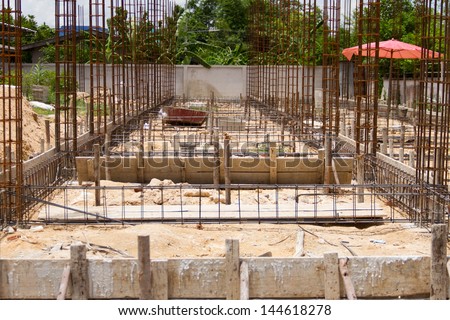
A concrete ratio of 1 to 3 to 6 for cement, sand and ballast produces class 15 concrete, mostly used in mass concrete to level out foundation footings.
A concrete ratio of 1 to 2 to 4 for cement, sand and ballast produces a much stronger class 20 concrete , mostly used for suspended slabs, beams and columns, which are self supporting.
In Kenya, the fundis and contractors mix 1 bag of cement to 3 wheelbarrows of sand to 4 wheelbarrows of ballast.
This is a ratio of 1 to 6 to 8.This is a weaker concrete strength than the recommended class 15 hence not suitable for high-rise buildings.
This can hold for light structures such as maisonettes. In the case where fundis and contractors don’t have engineering consultancy to guide them, they may mistakenly use the same ratio for a building with more than 2 storey levels, leading to building collapse.
In buildings higher than 2 storey levels, the fundis and contractors use buckets to measure.
The ratio is for 1.5 buckets of cement to 5 buckets of sand to 8 buckets of ballast for slabs and beams, which carry lesser weight than columns.
This makes out a ratio of 1 to 3.3 to 5.3, which is closer to class 15 concrete strength.
For columns, the cement ratio is increased to 2 buckets of cement , 5 buckets of sand and 8 buckets of ballast.
This makes out a ratio of 1 to 2.5 to 4, close to class 20 concrete strength recommended.
In this case, lets work out the costs using the recommended ratio of 1 to 2 to 4 for high rise structures.
We will assume a 1m2 surface of concrete slab, 150mm thick.
This surface has a volume of 1m x 1m x 0.15m=0.15m3.
This volume has the below volume of sand, cement and ballast.
Cement.
Cement volume=0.15m3 x 1/7=0.021 m3 of cement.
Weight of 0.021m3 of cement.
Cement density is assumed to be 1,500 kg per m3.
0.021m3 of cement will weight 32kg.
A 50kg bag of cement costs kes 700.
32kg of cement will cost kes 448.
Sand.
Sand volume=0.15m3 x 2/7=0.043 m3 of cement.
Weight of 0.043m3 of cement.
Sand density is assumed to be 2,000 kg per m3 when wet.
0.043m3 of sand will weight 86kg.
A tonne of sand costs kes 2000.
86kg of cement will cost kes 172.
Ballast.
Ballast volume=0.15m3 x 4/7=0.086 m3 of cement.
Weight of 0.086m3 of cement.
Ballast density is assumed to be 2,000 kg per m3 when wet.
0.086m3 of ballast will weight 172kg.
A tonne of ballast costs kes 2000.
172kg of cement will cost kes 344.
Total cost.
Total concrete cost will be cost of cement,sand ballast =kes 964 per m2 pf concrete.
Add cost of water and labor, say 30%=kes 1,250 per m2.
Add cost of steel reinforcement.
Assuming a bottom reinforcement of Y10 at 200 mm centre to centre and top reinforcement of Y8 at 200mm centre to centre, this will be as follows
Y10
12 Meters long @ kes 600 per 12 meter length.=kes 600
Y8
12 meters long at kes 400 per 12 meter lenght=kes 400
Cost of steel per m2 of slab=kes 1,000.
Cost of steel plus concrete=kes 2,250 per m2.
Cost of formwork.
Formwork can be hired or purchased.
In case of purchase, Grivellia timber is mostly used.

This is because the wood from this tree tends to warp and crack hence cheap compared to cypruss which is more expensive and more long lasting.

Grivellia wood 6 x 1 foot costs kes 21 compared to cypress at kes 34 per foot for the same length.
Grivellia can only be used for formwork once.
In a 1m2 slab, this will cost as below.
6 inches convert to 0.25m
1 foot converts to 0.3m
6 X 1 Timber has a surface of 0.075m2, costing kes 21.
1m2 surface will cost kes 280.
Add labour and nails, say 30%=kes 360 per m2.
The total cost of in situ concrete slab will now become kes 2,250 plus kes 360=kes 2,610 per m2.
Cost of prefabricated concrete slabs.
The selling price for eco slab prefabricated slabs is kes 1,600 per m2.Add cost of cement screed to level the surfaces and plaster at the bottom part of the slab. This estimates to kes 2000k per m2.
Conclusion.
Casting the slab in situ is at a higher cost than buying prefabricated slabs.
Francis Gichuhi Kamau, Architect.
Building Materials in Kenya.
1.What are the most common building materials used in Kenya?
For walls, we have machine cut quarry stones and cement.
For roofs, we have gauge 30 and gauge 32 steel roofing sheets, concrete and clay tiles and stone coated steel roofing tiles.
For windows, we have steel casement frames with glass infill. Aluminium framing is also increasingly becoming common.
For doors, we have timber doors on wooden frames for internal doors. For external doors we have steel doors on steel frames and hardwood doors on hardwood frames.
For internal finishes, we have cement plaster and paint.
For ceilings, we have chipboard, uPVC.
2.What causes buildings to collapse with reference to building materials?
Collapsing of buildings is usually a structural integrity issue. Structural integrity has the building materials and labour/engineering consultancy aspect.
Building can collapse if the labour and or engineering consultancy is not certified to offer such service hence poor quality.
Buildings can collapse also if the materials used , mainly cement, sand, ballast and steel, are not of the specified quality.
In case of cement, the cement could be weak, hence not strong enough when contractors use the usual mix ratios to make the building structure.
In case of sand, the sand could be flaky, as in the case of the dark Naivasha sand, hence not offering the much needed grip as in the case of the granulated yellow river sand.
In the case of ballast, the size could be too big to offer the much needed ratio strength.
In the case of steel, the quality of steel may be too malleable or too brittle, hence not offering the needed strength requirements.
All these are to be checked by registered structural engineers and Kenya Bureau of Standards, in the case of cement and steel, which require tests to ascertain quality.
Most cement sold in Kenya has the mark of 32.5 Kn/mm2 as the strength. Its up to Kenya Bureau of Standards to carry out random periodic test strengths to ensure these companies actually sell cement of the said strength.
In the case of steel, I have never seen any tests done by Kenya Bureau of Standards or if KBS have ever carried or do carry out random periodic steel malleability tests, they don’t advertise to the public. Same case with cement strength. In this case, the public will therefore need to carry out their private tests to confirm this,or KBS carries these tests out publicly for all the public to see and benefit.
In my hands on experience on day to day workings with structural steel, I come across some steel which is too brittle and breaks easily when fundis are working on it .
3.How do local building materials promote the structure of a building?
Some local building materials, eg quarry stone is structurally strong, hence increasing the structural strength of the building.
4.What types of local building materials can be used for construction?
Local building materials are machine cut masonry stone, timber doors, clay roofing tiles, locally manufactured paints, locally manufactured ceramic and concrete wall and floor tiles, locally manufactured ceiling boards etc…
5.Why are local building materials not often used in Kenya?
In some instances, some people believe imported materials , which tend to be more expensive due to high cost of shipping and high tax, are better quality. For example, stone coated roofing sheets are imported from America, Europe ans Asia into Kenya. These are imitations of clay roof tiles. These costs kes 2000 per m2 while natural clay tiles cost kes 600 per m2. The reason for the high cost is because of import tax, high transport costs and cost of factory manufacturing. This high cost is not necessarily a translation of higher quality.
Another example is mazeras slate stone compared to ceramic tile look alike. Mazeras slate stone is better quality at a much lower cost. An immitation of this sells for twice as much as the real tile since some people tend to equate quality with price.
Mazeras tile imitation.
![IMG_20131108_141822[1]](http://www.a4architect.com/wp-content/uploads/IMG_20131108_1418221.jpg)
Real Mazeras tile

6.What are the advantages and disadvantages of using local materials for building
Advantages of using local materials is that they cost less, are of higher quality and help to improve economy and create jobs.
Disadvantages are that in some instances, some clients are willing to pay high rents or buy apartment units only if buildings are made of imported materials such as mdf boards, textured paints etc. hence imported materials results to higher rents.
7.Are local building materials expensive to obtain?
Local building materials are not expensive to obtain.For example, cost of steel Structural Insulated Panels SIP used to construct prefab units is the cheapest from of housing in China.
For this cheapest method of constructing in China to be brought to Kenya, if you add the cost of shipping, import duty and transport/storage to Nairobi, the SIP prefab panels will actually be more expensive than local masonry stone.
This means that the local materials for a particular region are only cheap if used there. If transported to another region, they cease to become cheap.
Francis Gichuhi Kamau, Architect.
info@a4architect.com