







Waterproofing in Buildings.
Buildings require waterproofing depending on their design and shape.
Buildings with flat roofs and basements require more advanced forms of waterproofing owning to their shapes.
Flat roof buildings.
Waterproofing flat roofs require the screed to be sloped slightly, like 4 degrees, which to the naked eye cant be seen or felt, but aids in draining the rain water away to the gutters. Waterproofing membrane can then be applied on top of the cement screed then another cement screed cover applied on top to protect it from the elements of weather. For heavy duty flat roof waterproofing where there will be roof gardens, the membrane thickness can be increased so as to give better waterproofing.
Basements.
Underground water needs to be kept off from leeching through the walls and floor of a basement. A waterproof membrane is applied on the outside and inside of the wall to prevent moisture from entering into the building.

Swimming pools.
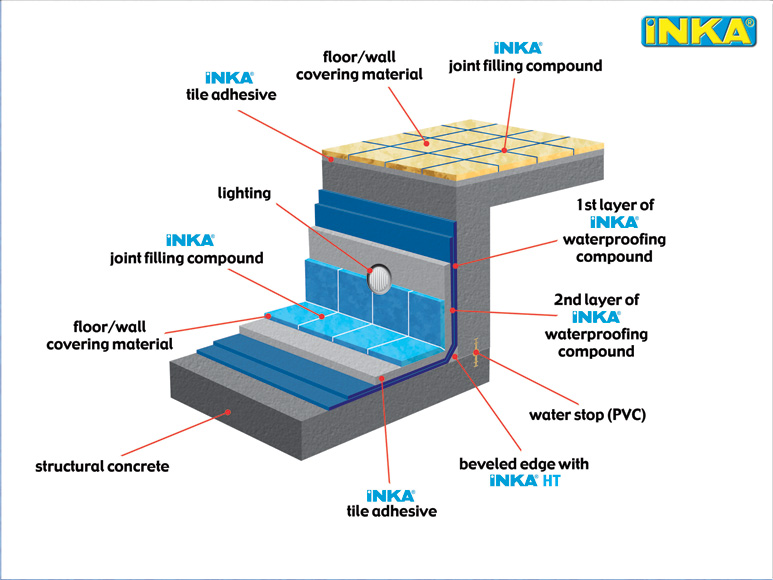
The swimming pool walls are made of concrete. A waterproof type of plaster cement is done on the inside wall, then covered with normal cement screed then finished with special ceramic tiles. This is done same way for the floor of the swimming pool.
Damp proofing course.
The ground floor of all walls requires a damp proof course that separates the walls from the ground floor slab. This can be made using pvc or bitumen.
Architect Francis Gichuhi Kamau
0721410684
info@a4architect.com
The biodigester Septic Tank (BST) is an on-site sanitation unit that utilizes anaerobic technology for the disposal of toilet (black) wastewater as well as of kitchen and bathroom (grey) water, in a closed system. The treated water can then be used for other functions like watering gardens, irrigation flushing toilets and so on.
Advantages of biodigesters septic tanks
They are simple to construct and inexpensive.
Reduces fuel cost, as it is more cost effective to use biogas than Liquid Petroleum Gas (LPG) as fuel.
Why we require biodigester septic tanks?
When doing an environmental impact assessment on buildings, the NEMA expert recommends a biodigester septic tank especially on commercial and residential buildings so as to conserve the environment from pollutants.
Mercy Wangui (NEMA EXPERT)
0715827209
60 acres Ridgeways for sale.
Behind Nakumatt Ridgeways.
Email info@a4architect.com