Month: April 2015

  • 700 km Kenya-Somalia Border wall construction.

    Kenya Government has recently proposed to construct a 700km boundary wall to separate Kenya from Somalia.

    Assuming its a stone wall, the surface area will be 700km x 7m height=4.9 million m2 of surface. Assuming the average rate per m2 for wall construction of kes 1000 per m2, this will budget at kes 4.9 billion.

    Source of stone.

    Juja area of Nairobi is the source of machine cut stone for the whole of Kenya, sometimes spreading to parts of Uganda and Tanzania. Other parts of Kenya have machine cut stones but the stones are too hard to cut hence unfeasible, with low production eg Kiserian, Kitengela, Athiriver, Kedowa-Kericho and Coast region.
    The Juja stone is quite soft, hence easy to cut using machines. Cost of each stone varies from kes 55 shillings per piece in 30 km radius from Juja to kes 100 per piece in areas 500 km away from Juja.

    Construction time.
    Assuming construction time of 30 minutes for 1 m2 of stone, 4,900,000m2 of stone will take 279 years to construct, day and night . Therefore, unless mechanization process comes in whereby time for 1m2 of stone surface is shortened to say 15 minutes, the time taken will be 15 minutes x 4,900,000m2=73.5 million minute=1.2m hours=51,000 days=139 years.

    Therefore, stone wall will take literally forever to construct, hence a faster method such as razor wire chain link fence on concrete posts would be more appropriate.

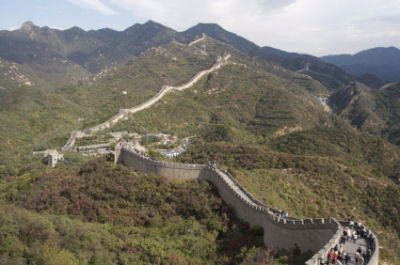
    The Great Wall of China, which is 6000km long took approximately 1700 years to build from 220BC to 1700 AD during the Ming Dynasty (1368-1644).
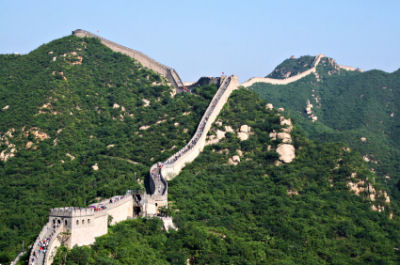
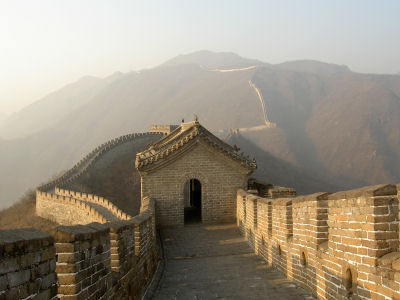
    The wall was constructed to keep China safe from Mongolians led by Genghis Khan, which was not as successful since Genghis Khan and his army demolished part of it, which was later rebuilt using stronger materials.

    USA-MEXICO Boundary wall.

    This wall is 3000km long and constructed using barbed wire , chain link fence, steel and concrete posts.

    The fence is estimated to cost usd 49 billion.
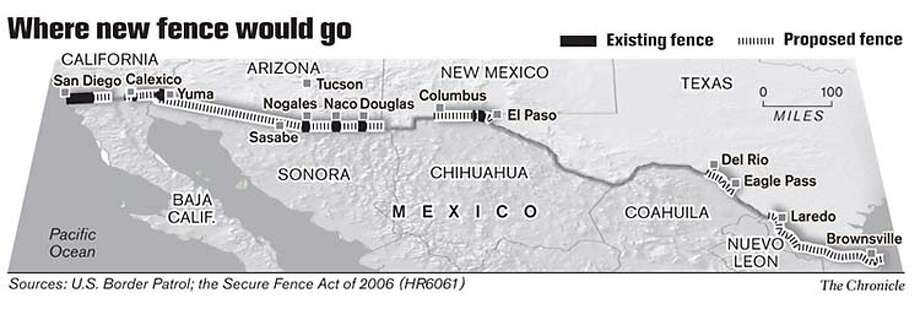
    Assuming its 7 meters high, the surface area is 7m x 3000km=21million m2.
    Cost per m2 =kes 200, 000 per km.

    Budget.
    The Kenya-Somalia wall budget is kes 23.6 billion . This is roughly kes 4,800 per m2 which is enough to construct to completion, including watch towers,gates, telecommunication equipment and maintenance.

    Francis Gichuhi Kamau, Architrect.
    info@a4architect.com
    0721410684
  • High Strength Concrete use in Kenya. Athi River Mining Cement presentation.

    Early this week on Tuesday 14th April 2015 there was a presentation by French Architect Thierry Bogaert on High Strength Concrete and its advantages. This was at Athi River Mining Cement company’s new offices at Westwood Park, Ring road, near Westgate in Westlands, organised by Athi River Mining Company Managing Director Mr Pradeep Paunrana who had invited me for the event.

    The usual cement available in the Kenyan market has an average strength of Class 32.5. Athi River Mining cement has a wide range of strengths available, including Class 32.5, 42.5 and 52.5 cement.

    This class 42.5 and 52.5 strength cement which is much stronger than the usual class 32.5 found in hardware shops around the country has numerous advantages as listed below.

    1. Saving on plinth area usable space due to low volume and foot print. With a stronger concrete mix, for the same support, the columns will be thinner hence suitable for internal spaces where thin columns are much appreciated e.g social halls, churches, lecture halls etc.

    2. Savings on form work. Since the columns and beams will be much thinner for the same strength, the form-work needed to support the wet mix will have less surface area, ensuring a considerable savings towards construction costs.

    3.Reduction of overall building self weight. With stronger cement used, the columns, beams and slabs can be thinner, hence lighter, meaning the overall building weight is reduced hence lower costs of construction achieved.

    4. For open spaces eg halls, lecture rooms and churches, stronger cement can enable longer spans in between columns, freeing much needed space for increased visibility.

    5. Strong cement allows for higher water permeability and minimal chances of cracking.

    6. High strength cement enables very high rise tall structures to be constructed safely.

    With the introduction of class 42.5 and 52.5 strength cement by Athi River Mining cement company, Kenya’s construction sector is set to change dynamically for the better as developers tap in to the added benefits for their projects.

    Francis Gichuhi Kamau, Architect.
    info@a4architect.com
    0721410684

  • Anti-Terrorism Architecture in Kenya.

    Securing buildings against terrorism needs all solutions from security experts e.g RECCE Company, sociologists to give solutions to prevent radicalization and architects to design safer buildings. Terrorism is now becoming a usual occurence worldwide and there seems to be no immediate remedy in the near future, hence need to secure oneself in advance.

    There are ways that buildings can be designed to inhibit, discourage and minimalise life lost during terror attacks. Previous architectural designs usually prevent the usual type of intruder who would want to break in and steal. Currently, this type of crime is less life threatening than terrorist attacks hence need to design buildings with terror attack in mind more than in petty break-in crimes.

    For malls, i have analysed design solutions here below
    https://www.a4architect.com/2013/09/terrorism-in-malls-how-to-use-architecture-to-prevent-attacks/

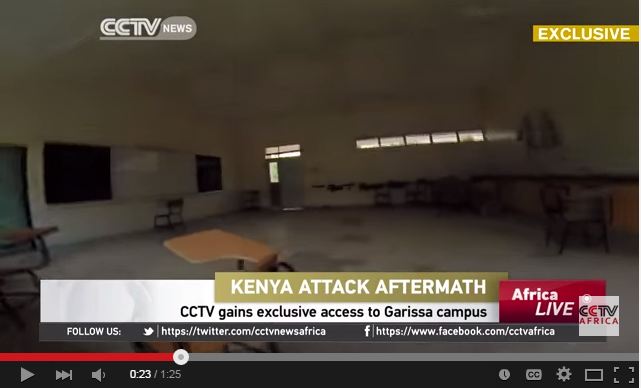
    For Educational institutions, the windows facing the corridors can be designed to be longer as opposed to being high. This will increase visibility such that students can be aware of impending attacks. The Garissa university class room windows on the side facing the corridors were high such that the students cold not be able to see the terrorists before they entered the classrooms.

    1

    Window grills.

    All windows in classrooms and accomodation rooms should have no grills. This will provide easy escape in times of peril eg from teror attacks or fire. This window below saved many lives. If the other windows opened easily like this one, many more lives would have been saved.

    Use of window films can also help in case of grenade attacks in keeping the glass together to prevent injury.
    Exterior planning.

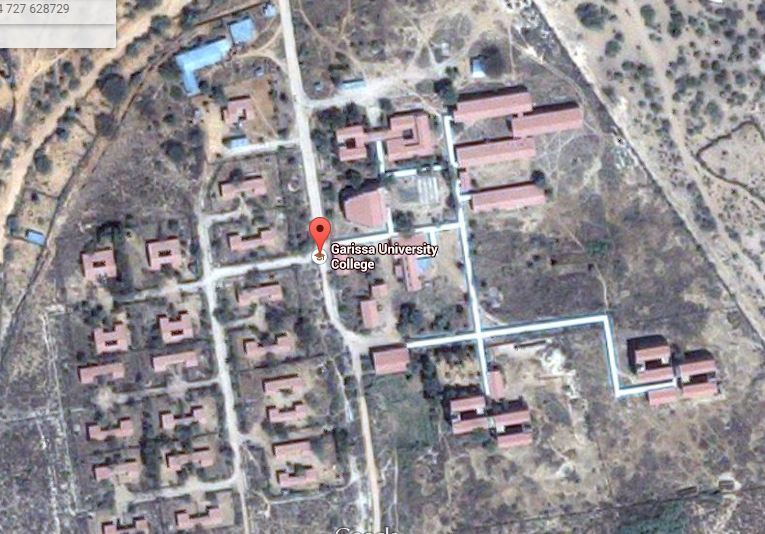
    Educational buildings should be planned without a central focal point atrium in the middle. This design where rooms surround the building with a central courtyard in the middle is what made the Westgate siege and Grarissa University attack so successful since terrorists could be able to heard the victims to the centre point and keep vigil at the entrances.
    The central courtyard design forms a perfect death trap for terrorists.

    courtyard

    From the aerial view above, most buildings have the same central enclosed courtyard design similar to Westgate mall, providing perfect scenarios for terror attacks.

    In future, Kenya Government can work out redesign solutions for all Government buildings which can be easy target for attacks such as schools and hospitals. Shopping Mall developers should also ask their architects to incorporate safe design typologies in case terrorists attack.

    Francis Gichuhi Kamau, Architect.
    info@a4architect.com
    0721410684