
Earthbag houses have the ability to significantly reduce the cost of construction for decent shelters in Kenya. They have thick walls which take up floor space. To make maximum utility out of a small restricted space, earthbag buildings can be storeyed into 2 levels.

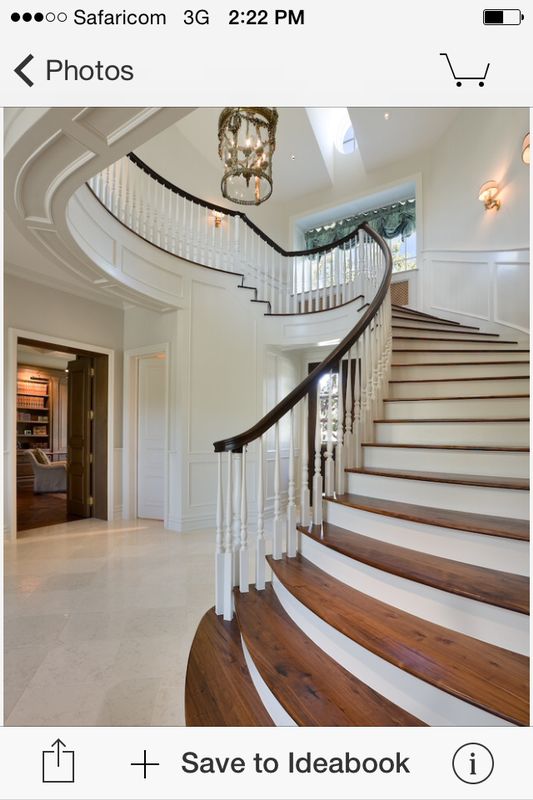
This building, designed by MMA Architects of South Africa, has 2 storeys and is made of earthbags.

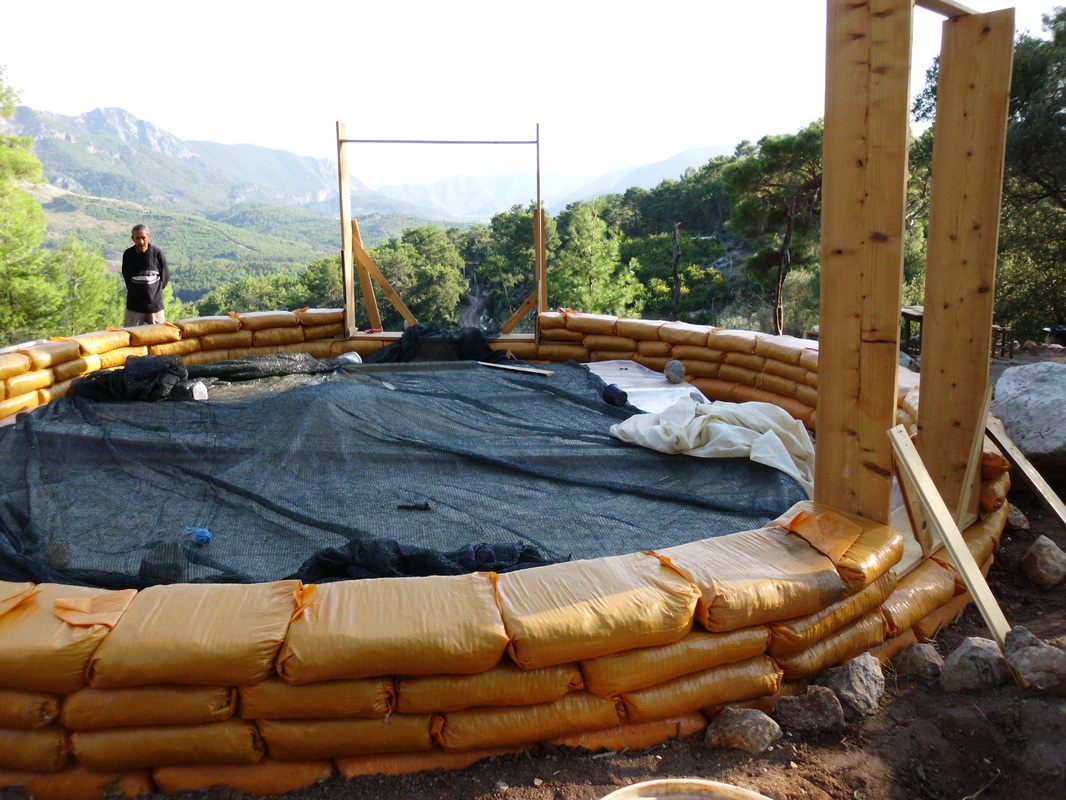
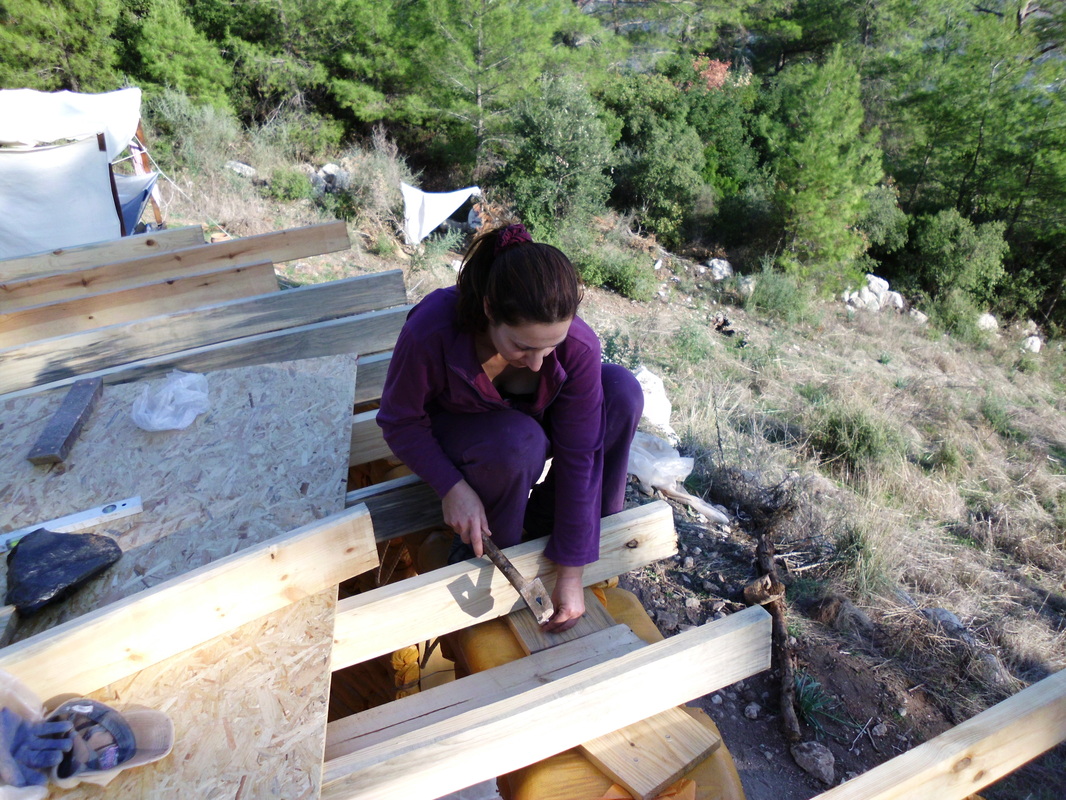
A wooden truss with blockboard surface can then be fitted to create the 1st floor surface.
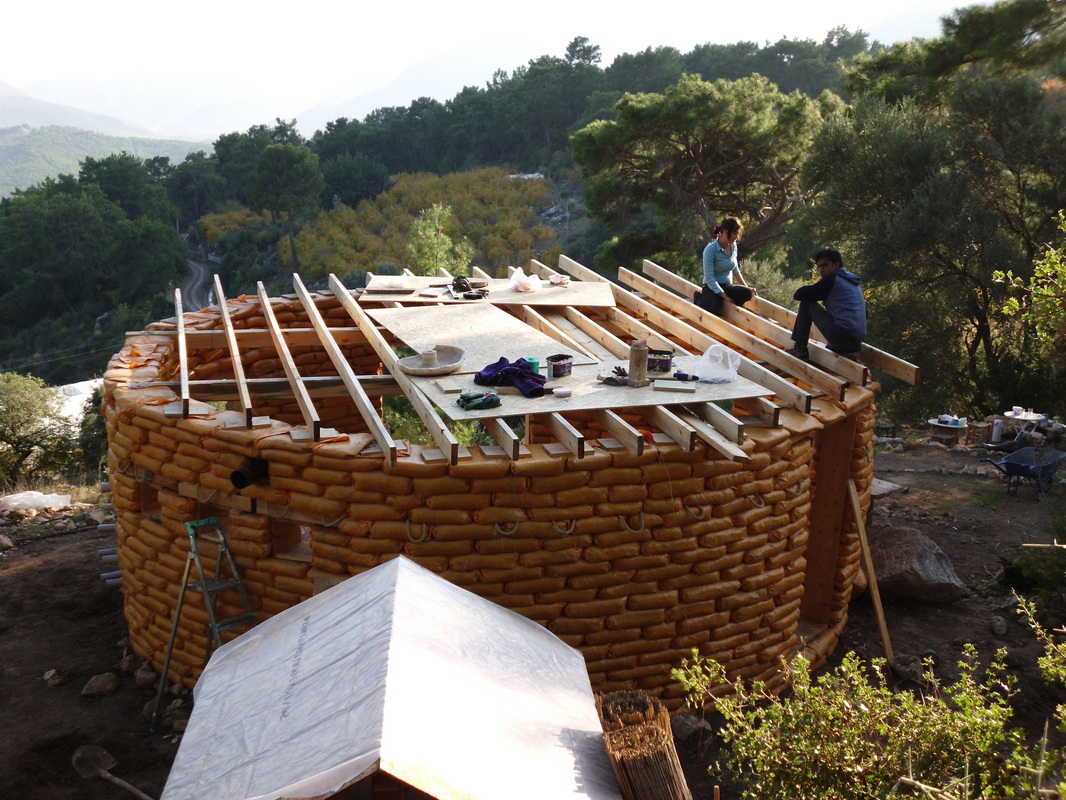
Hardcore on the foundation trenches help reduce foundation costs and make the building much stronger for the much needed support.
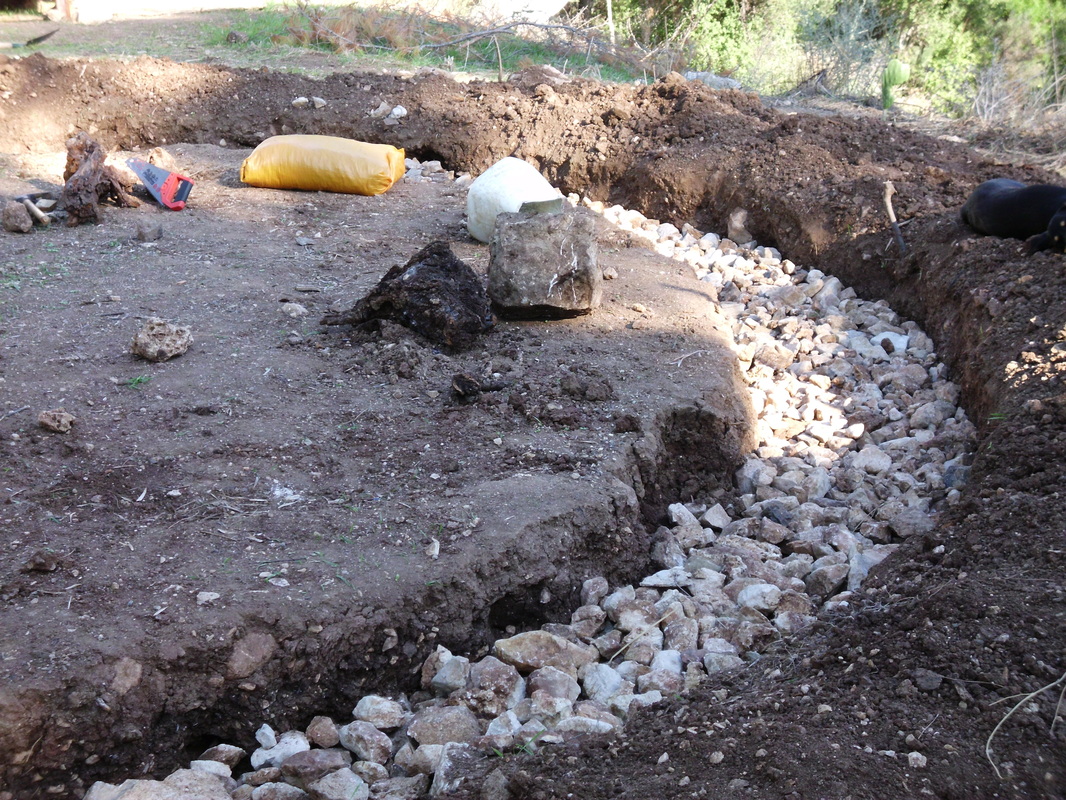
Barbed wire is introduced in between the bags to hold the bags together for a much stronger wall.
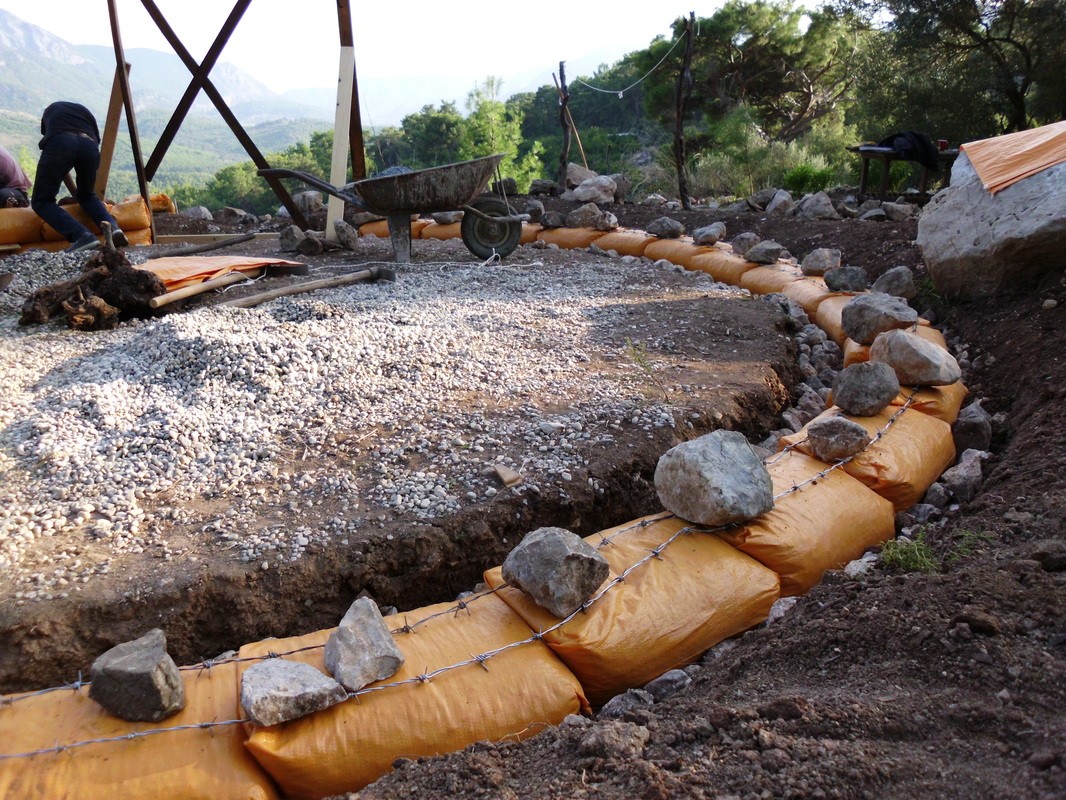
Round shaped walls are naturally structurally stronger than straight walls.
The roof structure is laid on a thick wall plate to spread the weight evenly along the wall.
Internal wall plaster can be done with decorative patterns to increase aesthetic appeal.


Earthbags also have the advantage of being easily dismantled and reconstructed in a different location, like prefab panel buildings. Earthbag buildings tremendously save the environment with their low carbon footprint .
Recrerational buildings.
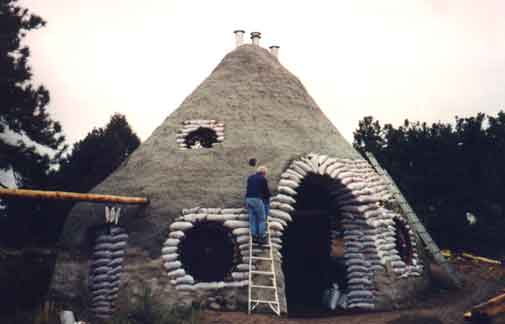
In hotel resort projects, where uniqueness of a building matters most, earthbags can enable use of curvilinear structures which usually come out more unique than the regular rectilinear buildings we are all used to seeing.
Earthbag buildings can also be easily converted into live green buildings.
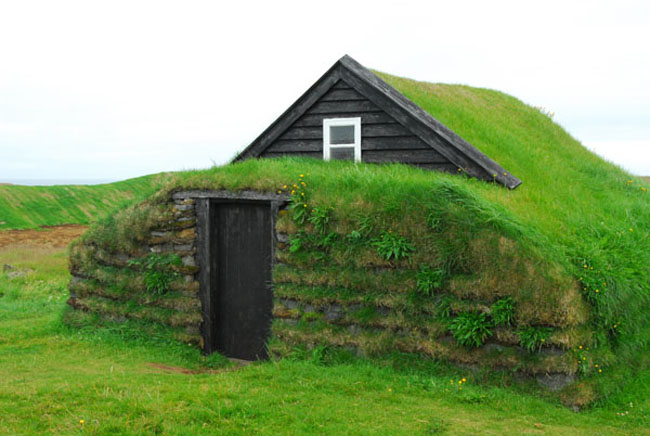
Hardcore foundations well raised above ground level will go a long way in keeping moisture from the walls.


Student hostels are a profitable method of investing in Kenyan real estate. In towns like Ongata Rongai, where there is proximity to Multimedia University, Catholic University, Adventist University and Nazarene University, demand for student hostel is quite high . The hostels charge around kes 10,000 per person, sharing a single room with 2 or 3 others. This includes breakfast and Supper. Assuming 50% profit per person, this works out to kes 10,000 to kes 20,000 per month from a single room. This is a better return compared to renting the single room as a bedsitter.
Attracting students.
Investors need to create systems that are friendly to students such as christian themes eg FANUSI hostel near University of Nairobi Main campus and Flora girls Hostel in upper hill.
YMCA and YWCA are also another god example of hostels with a christian theme. Strict discipline and adherence to set rules and christian morals will go a long way to give parents the confidence that their children will be housed in a sober manner.
Construction costs.
For high rise structures which are several storeys high, construction cost will be same as for normal buildings/apartments at between kes 25,000 per m2 to kes 45,000 per m2.
For low rise structures, since they don carry much weight, low cost construction methods such as stabilised sol blocks, earth bag walled buildings will go a long way in educing the construction costs to around kes 15,000 per m2 .
Shared ablution blocks will also ensure lower costs of construction.
Prefabricated buildings also come in handy. Use of light steel structures with prefab wall infill can allow for 2 or 3 storey height buildings.

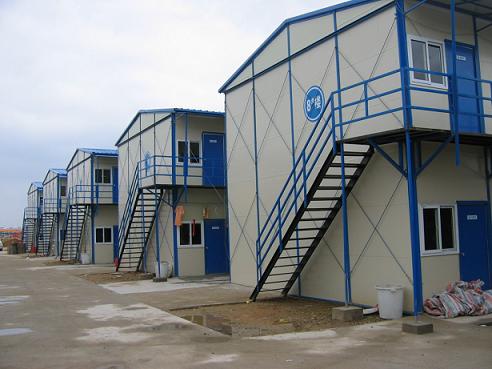
In China , there are many 2 or 3 storeyed prefabricated buildings . Such can also be introduced to Kenya.
The cost per m2 is slightly less than using the usual stone and concrete hence not very much in demand. One Juja quarries dry up, this will become a common feature of Kenyan construction landscape.
Earth bag buildings.
These are good for low rise single storey buildings. The cost per m2 is very low. The disadvantage is that in small plots, he walls take up to much space due to their 400mm wide thickness, compared to the usual stone walls of 200mm width.
Earthbag buildings have an advantage of low cost foundations.


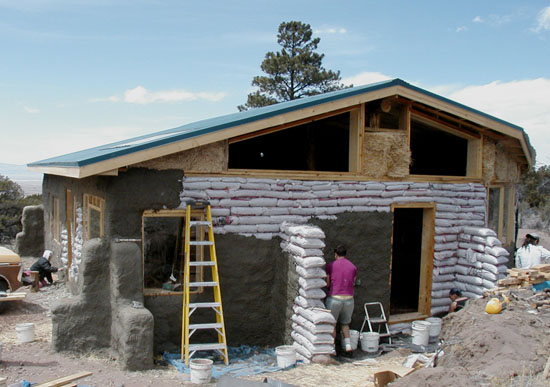
Check out the hardcore surface in the picture below. The ease of foundation, walling, openings make earth bag buildings construction cost quite low.
The walls are then plastered with cement to give an aesthetically appealing look , both internally and externally.


https://edgeofseven.wordpress.com/category/nepal-building-project/


http://truexcullins.blogspot.com/2013_03_01_archive.html
Use of earthbag walls and timber poles for roof trusses will go a long way in reducing construction cost.

Barbed wire is used to hold the bags together as shown below.

This below is a student hostel in Nepal made using earthbags. Salleri girls hostel.

The earthbag wall plaster can also be profiled to flow with the bag shapes as below.

Using spray plaster machine will enable such a shape.

Sand Bag houses are buildings with walls made of sand bags. Sand bags are gunny bags/gunias that are filled inside with soil of any type and stacked high up to form a wall. This offers a good method of walling a house in areas where there are no quarry stones nearby . Any type of soil, including black cotton soil and sandy soil as found along the coast, can be filled inside the sand bags and stacked high up to from a wall.
Curvilinear shapes.

Sand bag houses can easily be shaped into curvilinear round shapes. These shapes are good for resort types of buildings where occupants are wiling to pay for recreation eg holiday homes in Maasai Mara or along the Kenyan coast.


http://www.inspirationgreen.com/earthbag-construction.html

Cost.
Sandbag houses cost far much less than traditional houses . Soil is the most abundant and cheapest building material on earth. It costs very little to dig up sand and fill it into sand bags. Sand bags also cost very little, not more than kes 20 per piece in Nairobi. The cost of walling per m2 can come down from the average kes 1000 per m2 when using stones to around kes 400 per m2 when using sand bags.
Environmentally friendly.
Soil building has the lowest impact on carbon footprint to the environment since it only takes soil from the building site and sandbags to construct most of the parts compared to other methods where stones have to be transported to the site, hence using up diesel which in turn harms the environment.
Time saving.
Constructing using sand bags is quite fast compared to other methods.
Climate control.
Sand bag buildings usually retain heat from the sun during the day and make the house warm at night and vice versa, making the interiors very comfortable to live in even in harsh climates where its too cold eg Limuru, Molo areas and where its to hot eg Mombasa, Lamu, Garissa and Turkana areas.
Structure.
Barbed wire is fitted in between the sand bags to offer traction in between bags and make the walls stronger. Others have a wooden support structure spaced around 3 meters apart to offer support. The wide bag shape and wall bracing at right angles offers ample support for sand bag buildings.
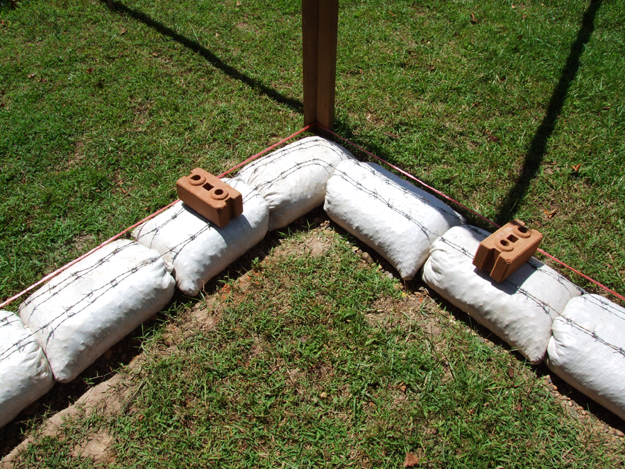

Sandbags can also be used to construct ground + 1 storeyed buildings.

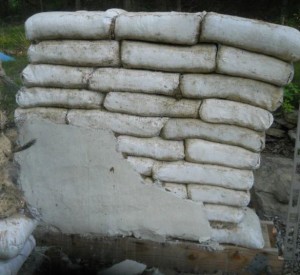
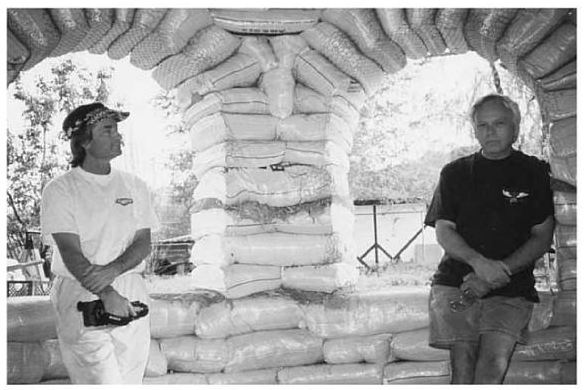
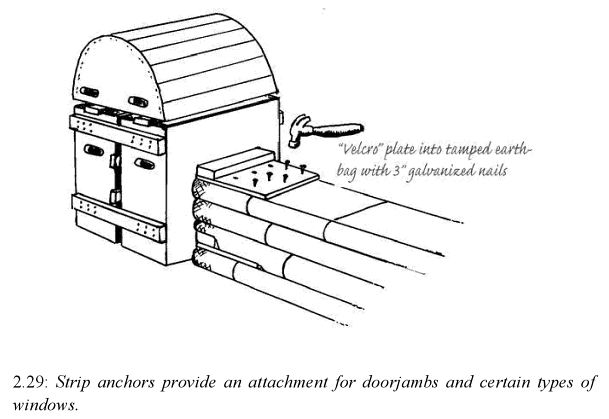


This form of building is yet to take shape in Kenya as residentials . Its mainly used by road contractors as retaining walls. Once people learn and experiment with ths, it will become a household feature, now that Kenyan quarries in Juja/Thika, Kedowa/Kericho and Kilifi are slowly drying up. In the next 5 to 10 years, i can predict that machine cut building stone from quarries in Kenya will all be completely finished, so Kenyans will have to turn to sandbags and other building technology options to build their houses.
Francis Gichuhi Kamau, Architect.
info@a4architect.com
100 years ago.
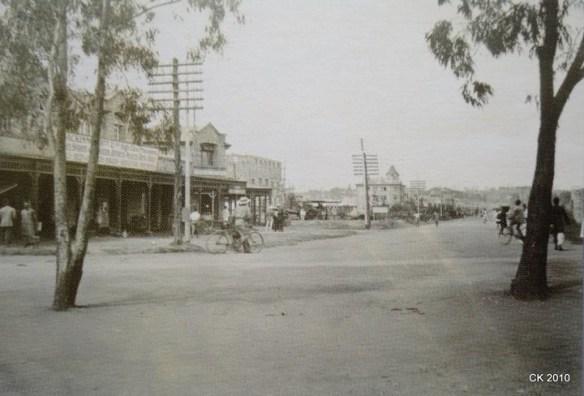
Kenyatta avenue now.

Investors who could foresee into the future and speculate on the land are now laughing all the way to the bank with an acre costing nearly kes 1 billion along the same road.
Map of Nairobi 100 years ago.
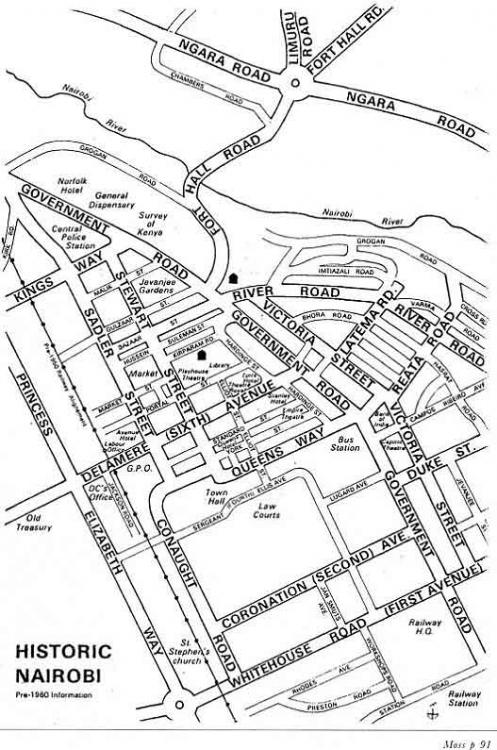
As long as the world’s population will keep increasing, demand for land will continue to rise astronomically since land is a constant and cant be increased. High rise buildings come in handy to enable more horizontal space increase to accomodate the population increase. Government has a role to lay infrastructure eg roads, sewer, electricity so as to enable more people be able to extend habitation on vacant land. Nairobi population has for the last 100 years been expanding , with the Government lagging behind to extend infrastructure such as sewer and roads to the surrounding areas of Ngong, Kitengela, Thika, Kiambu, Ruai and Athi river, which will easen the burden on Nairobi City expansion. We now have Westlands , Upper Hill, Kilimani recently being rezoned to allow for high rise structures.
Bye laws Precedence.
Yaya centre played a very key role in creating precedence to enable Nairobi City council byelaw amendment for allowing high rise buildings in Kilimani area. We now have numerous high rise buildings coming up in Kilimani, helping to ease housing,office and commercial space demand to Nairobians.
Urban Sprawl.
With the lagging behind of Government to lay down supporting infrastructure and byelaws to enable the city’s expansion, this has created huge demand for building space, hence a need for high rise structures where prime land well serviced is available, eg upper hill . This can be looked at positively in that it will spurn growth of new building industry related services such as scaffolding, ready-mix concrete, cranes, and lifts. The stacking up of buildings vertically in form of high rise buildings also mean that urban sprawl is curtailed, enabling freeing of important arable ground space, hence a boost to agriculture. If Nairobi CBD concrete jungle extends into fertile Kiambu and Limuru areas, food production will decrease, causing high food prices, causing inflation, which causes high bank interest rates, eventually leading to a poor economy for all Kenyans.
Developed Nations like USA, China and Europe usually encourage high rise building construction as opposed to urban sprawls spread of the city into agricultural lands, hence keeping the ecosystem in check.
In the 1890S, Lake Naivasha had nearly dried up. Currently, its bursting in its seams, 100 years later after ecologically protective steps have been carried out.
Lake Naivasha with dry bed in the 1890s

Currently, Lake Naivasha and Bogoria have increased in size to the extent of submerging nearby roads, trees and buildings.
This shows that as population is increasing, we are also becoming more concerned with the environment, with NEMA taking charge to move the country forward as time progresses.
This house below, in Lake Bogoria, built 60 years ago, is now totally submerged as Lake Baringo slowly begins to grow itself to its former giant glory of hundreds of years ago.

http://sirikoi.blogspot.com/2013/05/baringo-underwater.html

With more and more highrise structures coming up to accomodate increasing population, we will have less urban sprawl hence freeing land from buildings to balance the ecology. In Belgium, Architect Vincent Callebaut has gone furthe ito futiristic design whereby he has designed a highrise building that has vertical gardens and farmlands incorporated within so as to increade the ammount of food production within 1 acre piece of land to sustain the growing population. This is where Nairobi architecture should also point towards.
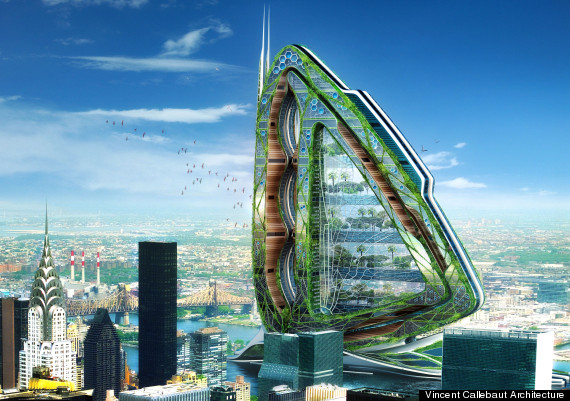
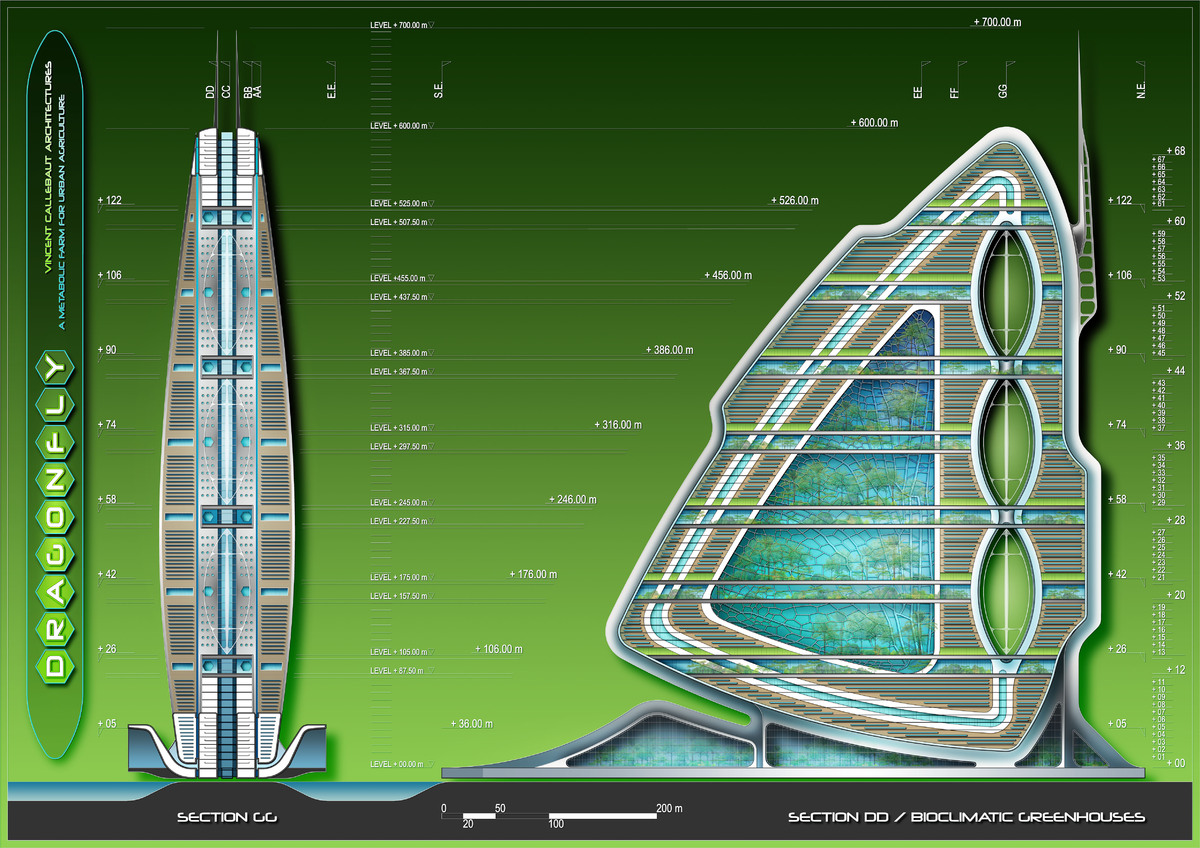
http://vincent.callebaut.org/planche-dragonfly_pl11.html
Architect Francis Gichuhi Kamau. 0721410684.
Price guide kes 40m per acre.
56 acres karen
Investing in Kenyan real estate requires that investors think out of the box to make profits. Land cost around Nairobi continue to appreciate , making it quite costly to own.
Lease solution.
The solution to this lies in leasing land instead of buying. The standard lease of 5 years 3 months is good enough.
A potential investor can then lease vacant prime land for 5 years then carry out their business and keep renewing the lease indefinitely if land owner agrees.
Prefabricate construction.
In this case, prefabricated construction that can be easily dismantled and moved to another location is recommended.

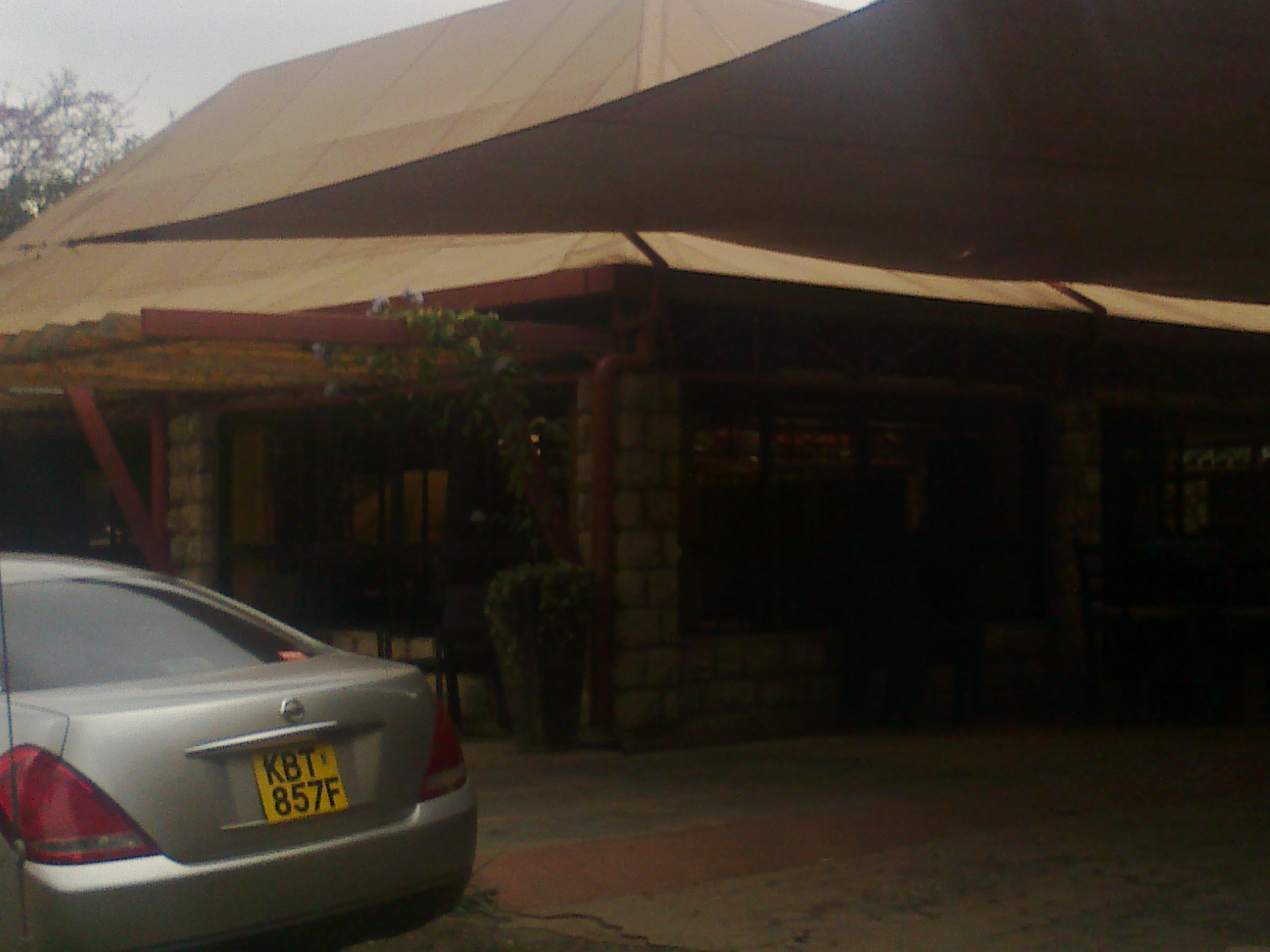
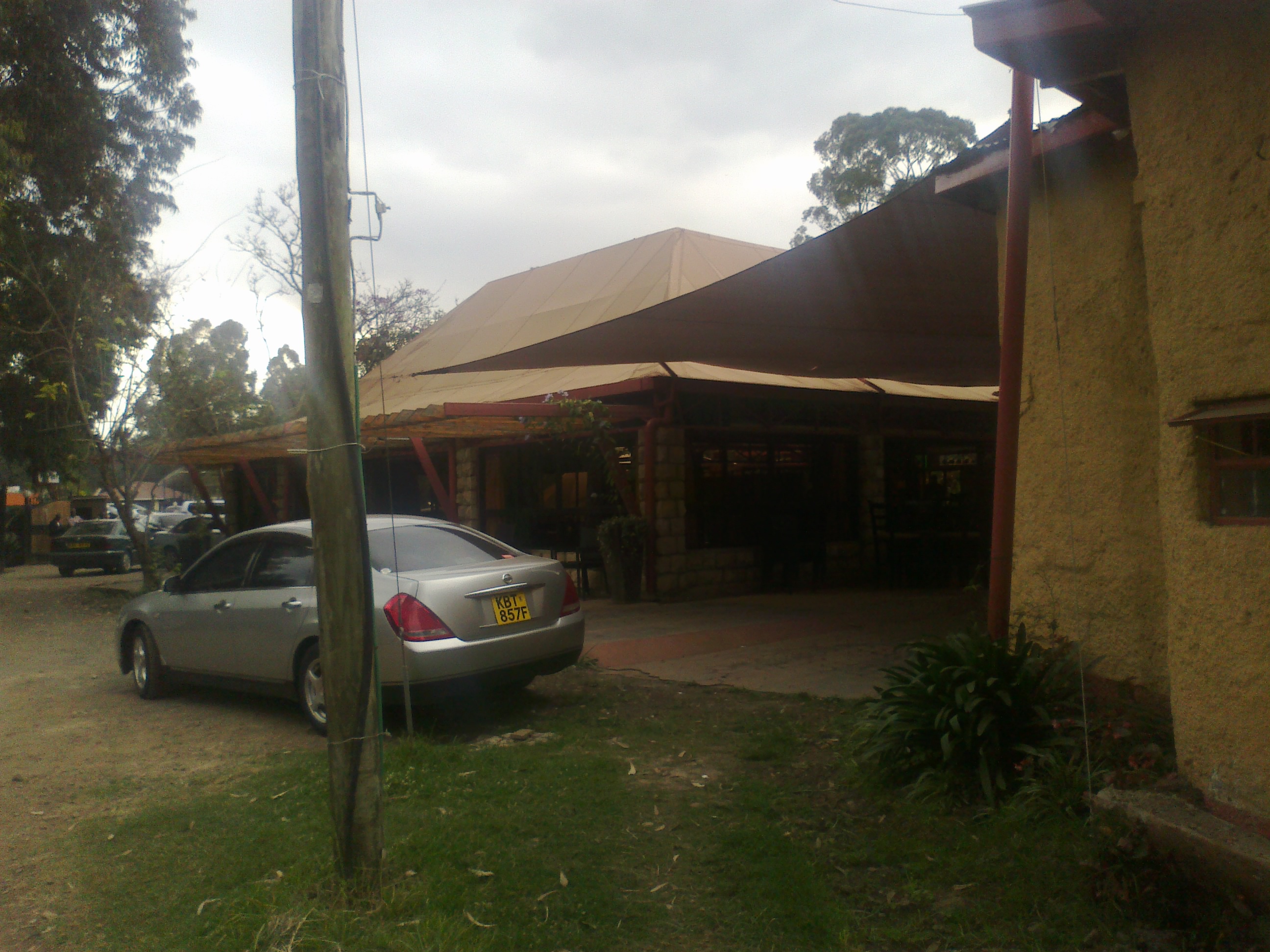
The restaurant above, situated in Karen along Ngong road , is a good example of this. The construction is made of materials that can be easily dismantled once the lease is terminated.
Tulips restaurant in Kileleshwa, designed by a4architect.com, is another good example of how a 5 year lease on land that can accomodate additional buildings can work out.


Leasing vacant prime lands as in the case above makes it a very easy way to embark on Kenyan real estate without paying through the nose with an arm and a leg.
Residential.
Most leases are for business premises.The same concept can be utilised in residential projects whereby an investor leases a vacant plot then puts up buildings for rent within the 5 year 3 months period.
Return on Investment.
Assuming an investor leases a 1/8th prime vacant property in a busy town like Kitengela for say kes 50,000 per month, then he constructs 15 shop spaces for rent at a cost of kes 3 million, he can collect rent of 15 x20,000=kes 300,000. Assuming kes 50,000 rent plus another kes 50,000 for running costs/maintenance, the profit will be kes 200,000 per month.
Repayment period.
This will take kes3,000,000/kes 200,000= 1.25 years to repay the initial costs. You can then benefit from the profit for the next 4 years, making kes 200,000 x12 x 4=kes 9.6 million which can then be reinvested in the same scheme.
Interested investors can contact info@a4architect.com to start the process of locating viable land and setting up the prefabricated buildings.
Architect Francis Gichuhi Kamau.
The easiest form of real estate investment in Kenya is through buying land and letting it appreciate. Kenyan laws allow for this unlike USA, South Africa, Europe or Asian laws which somehow discourage investment through speculation by taxing such profits.
With land laws encouraging this, land in Kenya around urban centers has become scarce and in very high demand, with appreciation rates at a minimum of 20% per annum. Vacant land appreciates faster than built up land, hence a better option to invest in vacant land.
Since land is a finite resource, the more the population increases, the more the demand for land hence higher prices.
The minimum sub-divisible land in Kenya is 1/8th acre or 50 ft by 100ft plot size. This creates a situation whereby investors willing to invest in smaller lands are locked out.
Solution.
To resolve this, we have come up with a solution whereby we work with land owners to enable subdivisions of less than 1/8th acres through sectional property laws.
The process is simple.
1. Land owners approach a4architect.com for subdivision.
2. a4architect.com carries out feasibility to determine viability and best land plot size.
3. a4architect.com comes up with a master plan for the subdivision similar to as below built up projects.
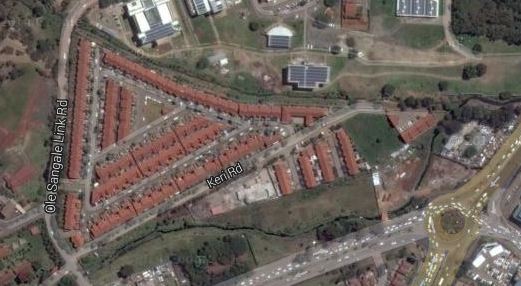
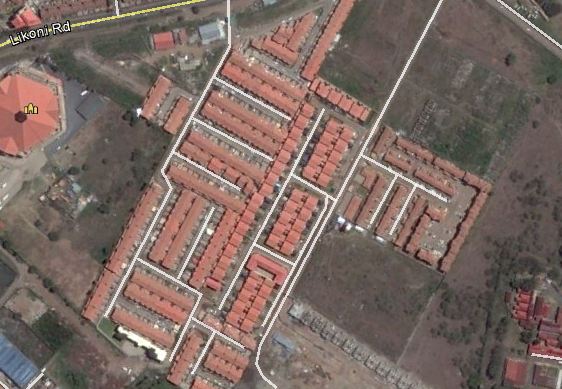

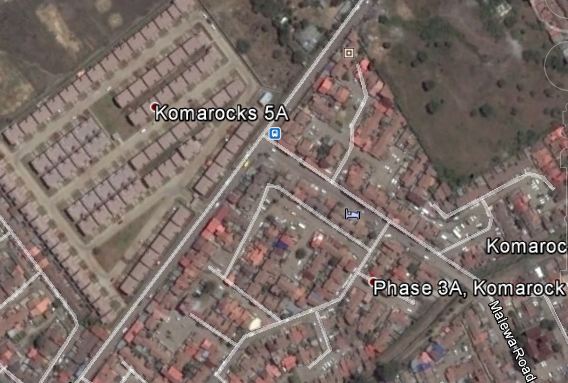

The design is done such that all buyers adhere to the same style to create an organised harmony in terms of colour scheme, materials, size, height, shape of the houses. This is managed through the lease agreements with the new owners whereby they all sign and agree to abide to the set rules regarding their buildings.
4. a4architect.com gets county planning department approvals and works with conveyancing lawyers to come up with sectional title documents or sub leases for the plots.
5. land owner can then embark on selling the plots as sub leases or sectional property titles.
Double profits.
With the above process, the land owner will have a chance to double his profits compared to when land is sold in 50 ft by 100 ft portions.
The land owner can also opt to develop some units then sell and gain from more profit.
Architect Francis Gichuhi Kamau.
Last Updated: 23 May 2013
Article by Galina Khmarksaya
Frishberg & Partners
The moratorium on alienation of Ukrainian farm land has long prevented meaningful foreign investment into the Ukrainian agricultural sector. To somehow obtain access to agricultural land, instead of outright ownership foreign investors had to register Ukrainian companies that entered into lease agreements with landowners, most with a “right to buy” option if and when the moratorium will be lifted. However, if the current amendments to the legislation will be approved, the lifting of moratorium will not allow any legal entities to purchase their leased land despite any provisions to the contrary in their lease agreements. To add insult to injury, the suggested taxes and other mandatory payments to the state, will decrease any profits generated from the leased land.
By way of background, at the end of 2012, the Verkhovna Rada (the Parliament) adopted Law №11315, further extending the moratorium on selling agricultural land until January 1st, 2016, right after the next Presidential elections. Under the draft law, privatization of farm land will benefit the Ukrainian government first and foremost, followed by select Ukrainian citizens. For instance, potential buyers of farm land can only be (a) the Ukrainian government; (b) regional state authorities; (c) the State Land Bank; or (d) Ukrainian citizens. Moreover, only the first three categories have the priority right to purchase any agricultural land that is offered for sale. All individuals who wish to own more than 100 hectars will need to obtain permission from GosZemAgenstvo (the State Land Agency). This is a highly controversial requirement because it allows government bureaucrats to decide which Ukrainian individuals can own large parcels of farm land.
Significantly, even after cancellation of the moratorium, all legal entities (including those with foreign investment) would only be able to lease farm land, rather than buying it outright. The minimum term has been proposed to increase from 5 to 7 years, while the maximum term would remain at 50 years. Moreover, the minimum amount of lease payments would increase dramatically: if the draft law passes, the minimum lease amount will be 3% of the land’s value. Additional land tax of 1% of the value of 1 hectar will also be levied. If the farm land is not used according to its zoned purpose, the above taxes will increase by 1.5 times, which will be further increased on a yearly basis by 20%.
Taking the above into account, unfortunately, the Ukrainian agricultural sector would remain stagnant (yet stable) for foreign investors for the unforeseeable future. Besides prolongation of the moratorium on sale of agricultural land, foreign investors would still be prohibited from owning agricultural lands even after cancellation of the moratorium. Thus, lease arrangements will remain the only way for foreign investors to gain access to agricultural lands (including land for personal farming or gardening). By way of exception to the general rule, a foreign legal or natural entity may inherit agricultural land. However, even in such case, the land will be subject to alienation within one year from the time of inheritance; otherwise, the ownership rights thereto would be revoked.
In conclusion, there still have been no significant movements in Ukraine towards the liberation of the agricultural land market for foreign investors. If the draft law is of any indication, foreign investors will still not be allowed to purchase Ukrainian farm land despite any “buy-out” options that may exist in their current lease agreements. Instead, all legal entities (including foreign-owned companies) will be required to seek alternative ways attain agricultural land on a temporary basis by entering into short, medium and long-term lease agreements.
The content of this article is intended to provide a general guide to the subject matter. Specialist advice should be sought about your specific circumstances.
http://www.mondaq.com/x/240812/agriculture+land+law/Article+Update+On+Foreign+Investment+In+Ukrainian+Agricultural+Land