Month: June 2014

  • Cost of Tarmac roads in Kenya.

    Tarmac road cost per km varies from the kes 20 million per km used in Governor Alfred Mutua’s Machakos county roads to over kes 300 million per km used in Thika super highway and Southern Bypass roads in Nairobi.
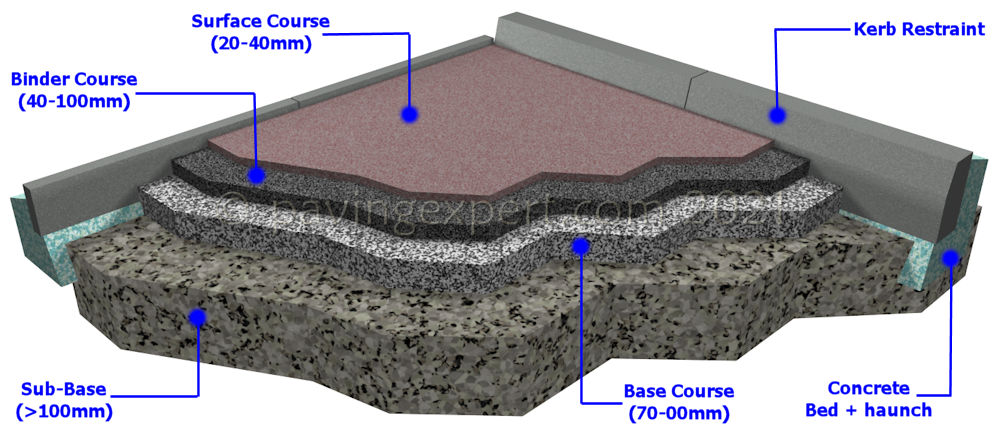
    The thickness of the tarmac/top layer/asphatic concrete is determined by the traffic envisaged. For heavy traffic eg super highways, the tarmac is thicker.
    Dr Alfred Mutua managed to use kes 650 milllion to tarmac 33 km of road. Thika road, designed for heavier traffic, costed kes 31 billion for 50 km of road. This translates to kes 620 million per km which can be broken into 2 since it has 4 lanes hence around kes 300m per km.

    The Southern bypass road,also designed for heavier traffic, with 28km of main carriageway and 22km of service roads, totals 50km at a cost of kes 17 billion. This works out to kes 300 million per km.


    Machakos County roads.

    Machakos county, through use of British standard as compared to the American/Chinese Standard of road construction where the base and sub base are made of stabilized soil has managed to achieve full construction at a very low cost, though the bitumen cover will need to be increased over time to at least 50mm thick compared to what looks like 20mm thick cover from the pictures.

    Thika and Southern Bypasses are using American/Chinese standards of road construction where there has been allot of back fill, cutting into hills, filling up valleys and lifting of the road surface high from ground level.

    This excessive lifting makes the roads expensive and also reduce the road interaction with businesses at the sides of the roads. In future, these highway designs need to involve the locals so that their needs such as ease of access and ease of customers manouvering their cars to buy goods off the roads are considered. Thika road design was done by Indian consulting engineering firms which should have designed the road such that it offers easy access to businesses and residences along the road side.

    Users are forced to stay on the road, hence little access to roadside shops. This leaves the communities where the road is passing without the much needed economic ingredient benefit from the road.
    This excessive lifting also necessitates for expensive service roads for road side access. This cost for service roads could have been used to lay more tarmac to inaccessible areas. Eg the Southern Bypass has 30km of main highway carriageway and 20km of service roads since plots next to the roads cant use the highway due to its high level from the ground.

    The 30km highway could have been designed similar to the Machakos county roads whereby its easy for vehicular access to the road side hence saving on the 20km used for access road.

    Architectural point of view.

    Governor Mutua’s Machakos roads, from an architectural point of view ,built using British standards, offer better interaction betwen road users and businesses at the road sides than the Thika superhighway and Southern Bypass roads, built using American/Chinese standards of soil stabilization because of the below.

    1. Less excavation and back filling hence lesser costs.
    2. Easy for vehicles to pull over the road side hence economic boost to communities living along the road side.

    Disadvantages.

    The American/Chinese standard of road construction as utilized in Thika superhighway and southern bypass is relatively new worldwide, not more than 20 years in use. Use of stabilized soil to support a road and lifting of the road surface high away from ground level, probably to protect it from water could be a better way of protecting tarmac from water , which erodes tarmac easily.

    Going forward.

    County roads should embrace stabilised soil road base construction similar to Thika road and Southern bypass road construction. The design can be done such that it allows for the road to interact and offer easy access to lands next to the road for ease of economic empowerment of the communities living and doing business by the road sides.
    With stabilised soil bases, a thinner layer of bitumen cover can be used or concrete bamburi blocks laid on top as the cover. This will go a long way to ensure locally produced building materials are used in Kenya, creating employment to many.

    Francis Gichuhi Kamau, Architect.
    info@a4architect.com

  • Real Estate in Kenya analysis.

    Land % to total construction cost.

    How much does land contribute to the real estate sector?

    Land contributes between 10% to 50% of the total const of a project in Kenya.

    Land where the project is low-rise such as bungalow or maisonette works out at between 25% to 50% of the cost of construction.
    In upmarket areas such as Karen, Runda, where there is a restriction on land size to 0.5 acre for only 1 house, land works out to 50% of the cost.
    In middle class areas where bungalow construction is the norm such as Kitengela and Rongai, land works out to 35% of the cost of construction.

    In Nairobi CBD where buildings are on average 10 floors high, land works out to 15% of the total construction cost.
    In middle class areas where flats/apartments are constructed eg Rongai, land works out to 20% of the total const of construction.

    In short, people who have constructed several storeys high do not feel the effect of high land price.

    Energy.

    How can the contribution of energy be quantified in the real estate sector?

    Energy contribution in real estate is mainly used in heating bathroom water, cooking, lighting, electronics such as TV,Fridge etc.
    With solar power panels becoming cheaper, cost of energy in residential houses can be reduced through use of solar power for heating and lighting purposes. Other countries such as Germany have very high use of solar power, nearly 74% of energy generated by wind and solar.
    Solar power installation is expensive in the storage part where a huge battery capacity is needed. Countries such as Germany have a system whereby solar power generated during the day by houses is distributed through the electricity network which subtracts at the electricity meter and then the house uses normal power at night which cancels out at the meter.


    Kenya should study the German model carefully and follow it so as to achieve the same results, more so because Kenya, being on the equator, gets more solar energy from the Sun than Germany.

    Taxation.

    Possible revenues from VAT on commercial property.

    Rental income tax is charged on commercial property in Kenya.
    The effect of this tax is an increase in rent since land lords simply add on the tax to new tenants. This increases the cost of living, resulting in high inflation hence lower productivity hence a poorer economy.

    Land Value taxation/idle land taxation, same as implemented in South Africa, USA, South Korea and Denmark, is much better since it works in a win win situation for the economy. Land Value taxation ensures land owners build and utilise their lands to the maximum so as to afford the tax. In the process, this creates employment whereby land owners need to hire labour to plan if on agricultural land, or build if on urban land, hence reducing unemployment.

    Possible revenue generation from landlords rental income.

    Revenue generation from rental income tax will in the long run cause higher rents which in turn cause less productivity which in turn cause a poorer economy since the tenants will be over burdened by the tax hence unable to produce more.

    Steel.

    How much does steel and iron products contribute to the overall construction costs?

    Steel is used mainly in concrete reinforcement works for high-rise storied buildings. In Kenya, structural designs are mostly to the British standard, which specifies concrete and steel for structural support eg slabs, beams, columns.

    Reinforced concrete uses less steel hence the overall const of steel not much. In American/Chinese standards, steel is used as structural support for beams .columns and slabs eg in Pre engineered buildings coming up in Nairobi eg next to Mutula Kilonzoo advocates along Ngong road and near Yaya centre in Hurlingham.

    Steel is also used to construct window frames , security grills and doors.
    Francis Gichuhi Kamau, Architect.
    info@a4architect.com

  • Leaf House, Rio De Janeiro, Brazil.

    [youtube https://www.youtube.com/watch?v=qRkDsRegS1U&w=420&h=315]

  • Shahrukh Khan House at Bandstand in Bandra West India

    [youtube https://www.youtube.com/watch?v=6BiL7yxnr98&w=420&h=315]

  • Burj Khalifa in Dubai

    [youtube https://www.youtube.com/watch?v=9Byp4Jux094&w=560&h=315]

  • Fire resistance in Buildings.

    Fire resistance in buildings is measured based on how long fire takes to penetrate through a room confinement. Windows and doors are the easiest methods that fires use to travel from one space to another.

    Windows.

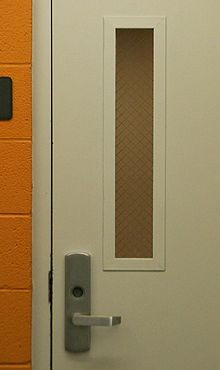
    The best types of window glass to protect from fire are the wired glass  types . These have a wire grid sandwiched in between 2 layers of glass. These types are commonly seen in corridor doors.


    The wire sandwich can be patterned to increase aesthetic appeal.

    Spaces that are ideal for solid fire barriers eg corridors are best suited for this type of window on the doors.


    Doors.

    Fire resistant doors have a seal to prevent smoke from moving from one room to the other. The glass on the door is usually fitted with metal sandwich to provide high temperature resistance.

    Common fire rating for doors are 30, 60, 90 and 120 minutes of fire containment.

    The heavier and more solid a door is, the better it is in preventing fire from moving from the outside space into the inside.


    Gypsum ceilings.

    These ceilings are fire resistant and are best used in areas prone to fires such as kitchens.


    Service ducts.

    In large high rise buildings, fires usually spread vertically from one floor to the other using service ducts such as water pipes, electrical conduits and sewerage pipes. These can be detailed using special materials to prevent fire spread.


    Smoke.

    Most fire deaths are usually caused by the smoke choking inhabitants, resulting to fainting hence not being able to escape.

    This smoke comes from wall paint, plastic fabric and other plastics such as electrical wiring within the building.

    Burning plastics produce Hydrogen Cyanide and Carbon Monoxide gas which  kills within minutes.

    Causes of fires.

    Most fires are caused by

    1.Cooking equipment.  When stoves are forgotten and the food burns to high temperatures, this excess eat can ignite surrounding materials.

    2. Smoking . Carelessly discarded Cigarette buts can cause fires.

    3. Faulty electrical wiring

    4.Candles.

    5. Arson.


    Francis Gichuhi Kamau, Architect.

    info@a4architect.com
  • Advantages of rent vs Buying of office space in Nairobi, Kenya.


    New office space in Nairobi continues to be constructed on a daily basis. Areas such as Upper Hill, Kilimani and Westlands are currently being constructed into high rise office space whenever there is empty available land.

    Since land around Nairobi which is commercial and suitable for office space is expensive, developers construct vertically upwards. The high rise buildings are then resold or rented out.

    The average smallest space in most of these new buildings is 1000 square feet in area. The average rent per sq ft is between kes 100 to kes 140.

    The average sale price is between kes 100,000  to kes 150,000 per sq meter.

    Sectional title.

    The office spaces are sold using sectional titles as described under sectional properties act of the laws of Kenya.

    The buying process is similar to the process of buying an apartment. Only the rules/regulations pertaining to cohesive living with neighbors are different, reflecting office living compared to residential living.

    In most buildings, 1 car park space is provided per office and off street city council parking space is used by visitors.

    Other methods whereby owners get to own 1 share in the company LLC that owns the building are also used to enable ownership.

    Buying vs Renting.

    Lets take an example of  The Watermark, in Karen. Lets assume 1000sq ft office space.

    Cost of buying is on average kes 16,000 per sq ft. Total cost =kes 16,000x 1000=kes 16m.

    Cost of renting the same is kes 140 per sq ft=kes 140 x 1000=kes 140,000 per month.

    This is kes 1.68m per year.

    Repayment period.

    The rent will be equal to the cost of purchase within 9.5 years.

    The average usability/time period of usage will be around 20 years.

    Therefore, this means that after 9.5 years, the buyer will offset the rent and will use the remaining 10 or more years in the office at no cost, hence making buying the office a better option.

    Francis Gichuhi Kamau, Architect.

    info@a4architect.com

  • Runda Paradise Lost Housing.

    Cost Item Kshs %
    Land 150,000,000.00 19.91767362
    Preliminary 4,000,000.00 0.531137963
    Construction 450,000,000.00 59.75302085
    External Works 22,500,000.00 2.987651042
    Contingency 9,000,000.00 1.195060417
    Professional fees 22,500,000.00 2.987651042
    Project Management fees 9,000,000.00 1.195060417
    Marketing 5,100,000.00 0.677200903
    Financial Charges 81,000,000.00 10.75554375
    Total 753,100,000.00 100
    Financing Plan Kshs %
    Developer 303,100,000.00 40.24697915
         
    Debt Finance 450,000,000.00 59.75302085
    Presales 110,000,000.00 14.60629398
    Total 753,100,000.00 114.606294
    PROFIT
    TOTAL SALES FOR 50 UNITS 1,100,000,000.00
    TOTAL EXPENDITURE 753,100,000.00
    NET PROFIT 346,900,000.00
    % Profit Margin 46.06293985


    RUNDA 1 RUNDA2